
Business News
Trump found a new way to impose tariff on India. Now 25 US states are suing

4 min read | Updated on August 04, 2026, 16:13 IST


SUMMARY
The lawsuit contends the tariffs are a pretext to preserve the administration's wider global tariff policy after earlier tariff programmes were struck down by courts.
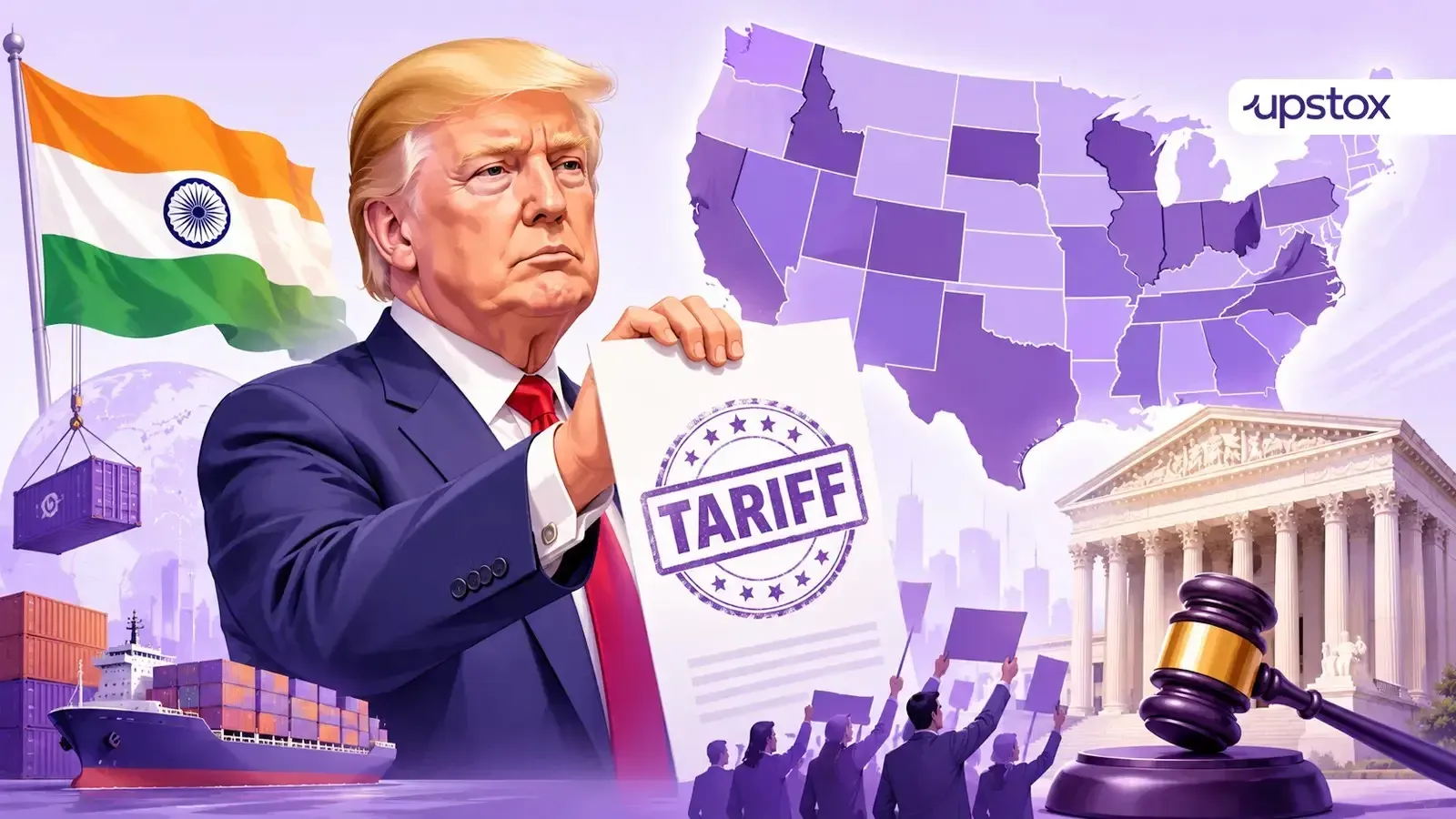
The Trump administration is increasingly relying on Section 301 after a US Supreme Court ruling limited the president’s ability to impose sweeping tariffs.
A coalition of 25 Democratic-led US states has sued the Donald Trump administration, challenging a fresh round of tariffs imposed under Section 301 of the Trade Act, including a 10% on imports from India, arguing that the president has again exceeded his legal authority to tax imports.
The lawsuit, filed on Monday in the US Court of International Trade in New York, contends that the latest tariffs are an unlawful attempt to preserve Trump's blanket global tariff policy which has already been struck down by courts.
The complaint says the administration is using a forced labour investigation as a pretext to continue sweeping import duties.
The legal challenge comes days after the Office of the US Trade Representative (USTR) announced additional tariffs of 10% and 12.5% on imports from 60 economies following a Section 301 investigation into whether trading partners had failed to prohibit and effectively enforce bans on imports of goods made with forced labour.
India has been placed in the lowest tariff bracket of 10%, along with 16 other economies including Canada, the United Kingdom, Mexico, Bangladesh, Pakistan, Malaysia, Indonesia and Sri Lanka.
According to the USTR, these economies either already prohibit imports of goods produced with forced labour, have committed to introduce such prohibitions under reciprocal trade agreements, or have partial enforcement mechanisms.
India amended its Foreign Trade Policy on June 14 to prohibit imports of goods produced using forced labour after the proposed tariffs were unveiled in June.
Countries assessed to have weaker or no comparable measures face a higher tariff of 12.5%.
Certain products from the European Union, Japan, South Korea, Taiwan and Switzerland will attract either 10% or 12.5% tariffs after adjusting for applicable most-favoured-nation duties.
The lawsuit argues that the administration's latest action mirrors earlier tariff programmes that courts had already found unlawful.
It notes that after the US Supreme Court ruled that the International Emergency Economic Powers Act (IEEPA) could not be used to impose tariffs and another court invalidated tariffs imposed under Section 122 of the Trade Act, the administration turned to Section 301 to continue imposing broad-based duties.
“The USTR timed and structured its investigation and the Tariff Action to replace the expiring Section 122 tariffs without interruption,” the lawsuit says.
“"The confluence of these factors...confirms that the Tariff Action is pretextual, arbitrary, capricious, and contrary to Section 301’s statutorily constrained purpose,” it adds.
The complaint alleges there is no rational link between the stated objective of combating forced labour and the blanket tariffs imposed on almost all imports from 60 trading partners.
It also argues that the USTR failed to identify how countries could have the tariffs removed by strengthening enforcement of forced labour import bans.
Oregon Attorney General Dan Rayfield said the tariffs would hurt American families and businesses rather than foreign governments.
"Despite losing every step of the way, Trump is trying yet again to inflict more chaos on working families and homegrown Oregon businesses. We're all paying the price for these unlawful tariffs, not foreign governments," he said.
Rayfield's office cited an analysis by researchers at the Federal Reserve Bank of New York, saying nearly 90% of tariff costs in 2025 had been borne by American consumers and businesses.
White House Spokesperson Kush Desai said the United States was using its lawful authority to address practices that burden American businesses and that countries failing to curb imports of goods produced with forced labour were engaging in "unreasonable" practices that warranted action.
US Trade Representative Jamieson Greer said the tariffs were intended to address both a human rights issue and a trade practice that disadvantaged American workers.
"President Trump recognises that decades of moral suasion have not eradicated forced labour from global supply chains," Greer said.
The USTR said it conducted two rounds of public hearings, received more than 2,100 public comments and consulted over 45 governments before issuing the final action.
The forced labour investigation is one of two major Section 301 probes involving India.
A separate investigation is examining whether India and 15 other trading partners contribute to structural excess manufacturing capacity that depresses global prices and harms US producers.
About The Author
Next Story

