
Business News
PM Modi asks fintech sector to move beyond payments, expand global reach of UPI
.png)
3 min read | Updated on September 08, 2026, 20:50 IST


SUMMARY
Prime Minister Narendra Modi said India's fintech ecosystem should now focus on bringing people still underserved by traditional banking into the formal financial system.
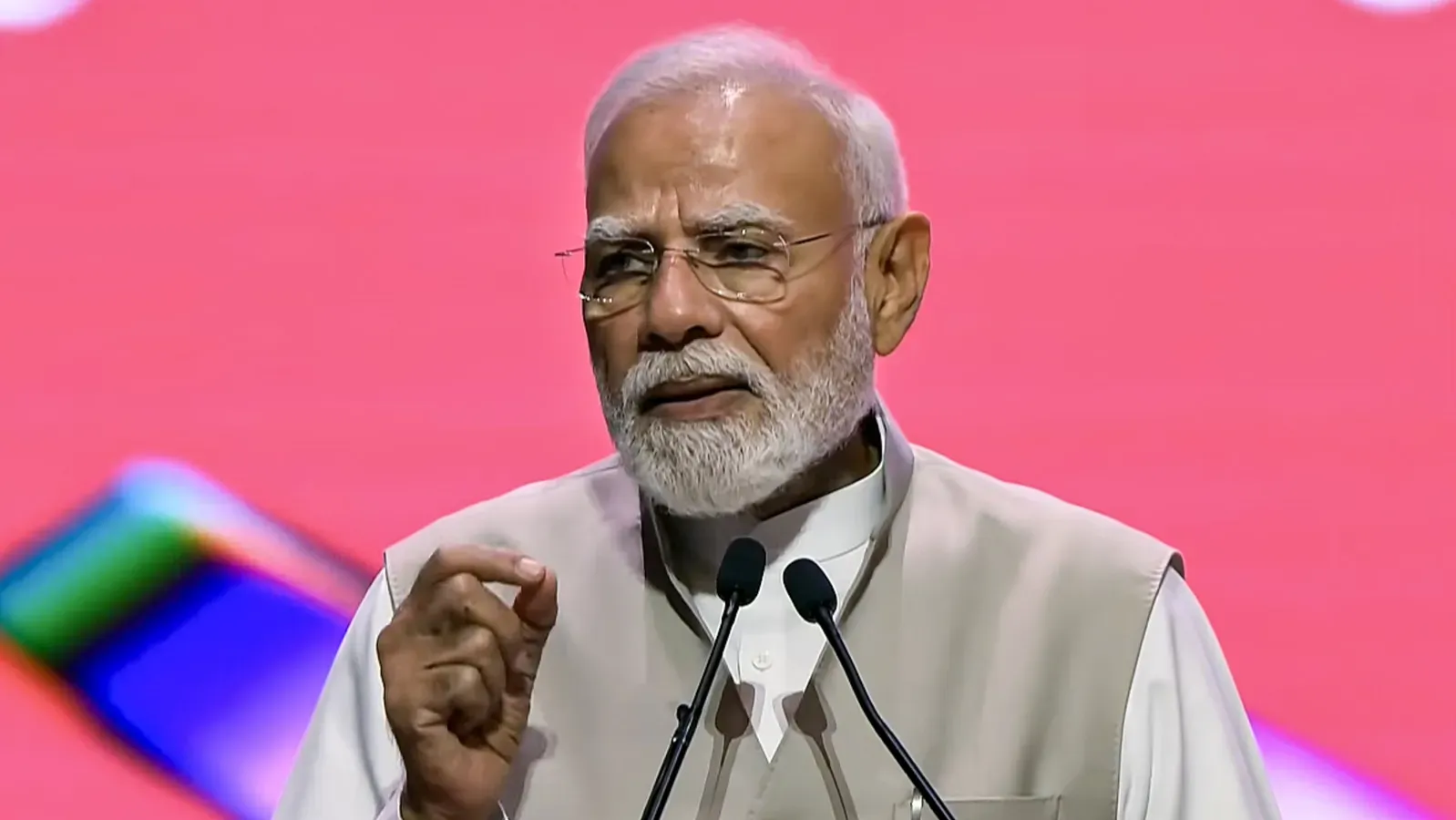
Prime Minister Narendra Modi speaks during the inauguration of Global Fintech Fest (GFF) 2026, in Mumbai.
Prime Minister Narendra Modi on Tuesday called on India's fintech industry to expand beyond digital payments into credit, insurance, savings, investments and pension products.
Addressing the Global Fintech Fest 2026 in Mumbai, Modi said India's fintech success story, led by the Unified Payments Interface (UPI), should now enter its "next chapter" by taking financial services to sections of the population that remain outside the reach of traditional banking models.
"Now, we have to go to the next level, and go rapidly," he said.
The prime minister highlighted how UPI, in 10 years, has transformed access to banking for millions of Indians who had previously remained outside the formal financial system.
UPI is now live in 11 countries, Modi said, adding that India should move beyond enabling UPI payments abroad and work towards linking the Indian payment system with the payment systems of other countries.
"This is essential because Indians work in large numbers in foreign countries. They are the largest remitters of money. A part of the remittances goes away as transaction costs; UPI can help in saving on these costs and the money can also reach families faster," he said.
Modi also called for India to develop its own standards and rules for digital payments and financial technology, instead of continuing to rely on standards developed elsewhere.
"Now we have our own option. Now we can make our own rules and standards and connect them with the world," he said.
The prime minister said technology had emerged as an effective tool for financial inclusion, with UPI taking banking services to people and locations where traditional banks and branches had struggled to reach.
He cited the PM SVANidhi scheme as an example of fintech-enabled financial inclusion, saying it had brought lakhs of street vendors into the formal credit system.
He said fintech could help small businesses obtain credit by analysing their digital payment and business patterns, particularly in cases where conventional lenders found it inefficient to serve very small borrowers.
"The next chapter of fintech will be written here," Modi said, referring to the potential of technology to study the economic activity of such businesses and design tailored financial products.
He also urged fintech companies to widen access to savings, pension and insurance products for gig workers, delivery partners and other people earning regular incomes but lacking access to such services.
The prime minister said emerging technologies such as agentic artificial intelligence, tokenisation and quantum technologies were opening new possibilities in financial services.
He suggested four areas for the fintech industry to focus on: making India's cyber security "top notch", developing ethical data protection standards, creating a strong fintech regulator-industry innovation ecosystem and establishing a fintech consumer protection index.
The index, he said, could enable transparent ratings of fintech companies on consumer protection.
The prime minister also said his presence at the Global Fintech Fest for the third consecutive year reflected the importance of the sector to India's development ambitions.
"Digital India's success story is now ready for a new chapter," Modi said, calling on the fintech sector to focus on next-generation innovation while retaining the core strengths of scale, scope, secure systems, democratisation of technology and public trust.
About The Author
Next Story

