
Business News
Will West Asia tensions force RBI's hand? Here's what economists expect from June MPC meet
.png)
5 min read | Updated on June 01, 2026, 15:22 IST


SUMMARY
RBI June MPC meet: Most economists and market participants expect the six-member panel to maintain the status quo on rates and retain its neutral policy stance, although some analysts anticipate a more cautious or mildly hawkish tone in the policy statement given the uncertain global environment.

The RBI’s Monetary Policy Committee is widely expected to keep the repo rate unchanged at 5.25% in its June 3-5 policy meeting.
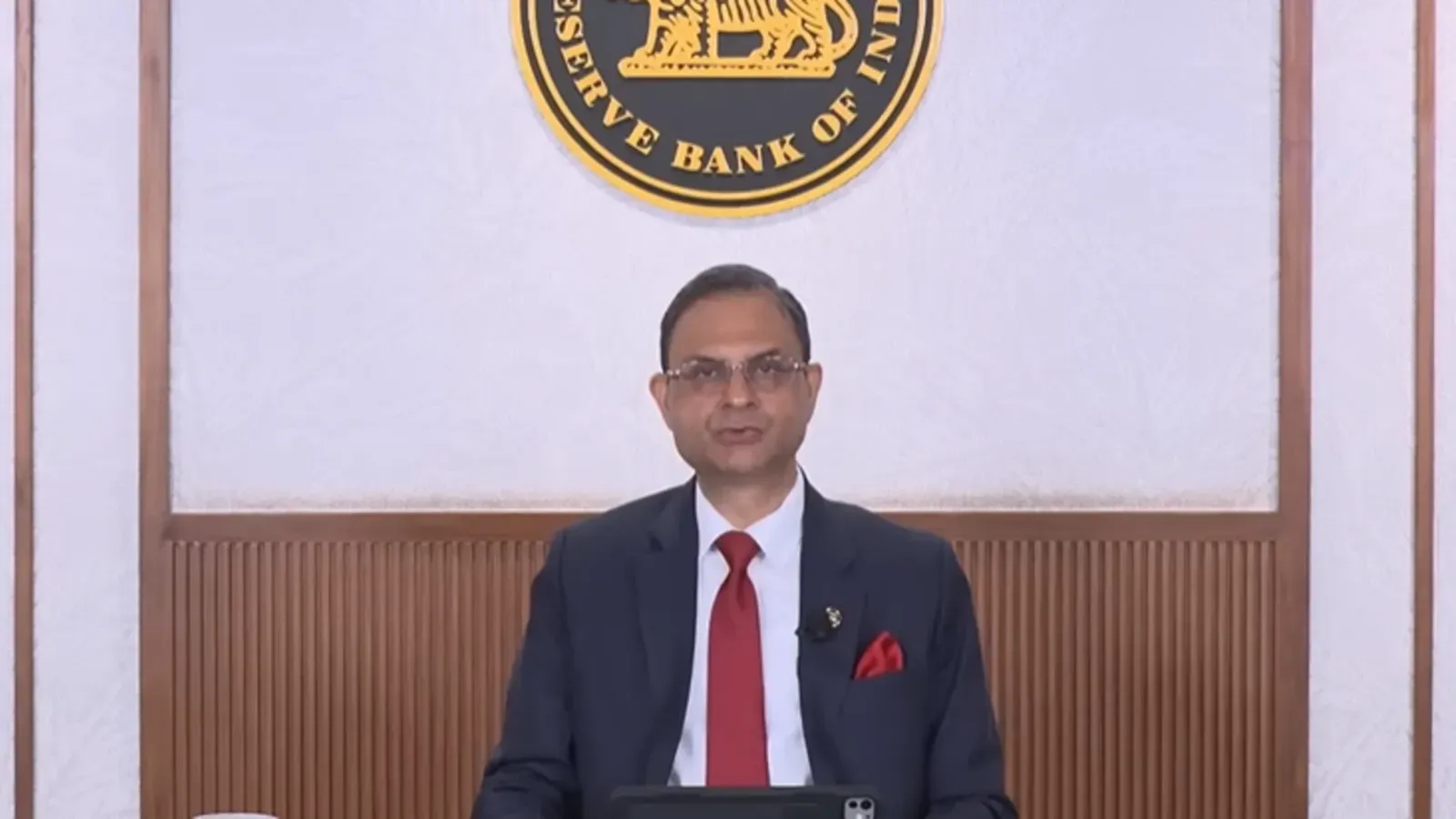
The Reserve Bank of India’s rate-setting Monetary Policy Committee (MPC) is expected to keep the benchmark repo rate unchanged at 5.25% at its June 3-5 meeting, according to economists and market participants.
The policy review comes at a time when the West Asia conflict has pushed up global energy prices, raising concerns over imported inflation and putting pressure on the rupee.
Market participants will also be closely watching the RBI’s revised growth and inflation projections for the fiscal year ending March 2027.
A report by SBI's economic research department said the central bank is likely to maintain status quo in the June policy review amid a volatile global backdrop.
The report said the current inflation trajectory could indicate consumer price inflation remaining above 5% over the next three quarters.
SBI projected real GDP growth of around 7.2% in the fourth quarter of FY26 and 7.5% for FY26 as a whole, while estimating FY27 growth at 6.6%, subject to revision as geopolitical developments unfold.
"Our call is along 'hold the rates' with a data-driven future dependency. However, an inflation targeting central bank can always use interest rate tools like Operation Twist that address market microstructure," the report said.
Economists see inflation risks rising
Bank of Baroda Chief Economist Madan Sabnavis said he does not expect any change in either the repo rate or policy stance.
"However, the tone will be cautious, leaning towards being hawkish. We can expect RBI to increase their inflation forecast towards 5% and lower that on GDP more towards 6.5% from 6.9%," he said.
According to a Reuters poll conducted between May 22 and May 29, nearly 80% of economists expect the MPC to leave rates unchanged.
A separate Moneycontrol survey of economists and treasury heads also projected no change in the policy rate this week.
"Inflationary pressures at present are largely supply-driven, stemming from elevated fuel and input costs, along with a weaker rupee. As such, the MPC may choose to look through these supply-side pressures in its policy assessment," said Dipti Deshpande, Principal Economist at Crisil Ratings.
She noted that prolonged disruption around the Strait of Hormuz has heightened upside risks to inflation and that policymakers would closely monitor the extent to which higher global energy prices are passed through to domestic inflation.
Deshpande also said the MPC would assess evolving El Nino conditions and their potential impact on the monsoon and food inflation.
The India Meteorological Department (IMD) last week said that India is likely to receive below-normal southwest monsoon rainfall this year at 90% of the Long Period Average (LPA).
The RBI, in its annual report released on Friday, acknowledged that the agriculture sector faces downside risks in 2026-27 from a likely El Nino-driven weak monsoon.
"The outlook for the agriculture sector in 2026-27 remains contingent upon the progress and distribution of the south-west monsoon. The likelihood of El Nino conditions poses downside risks to agriculture output," the RBI said in its Annual Report 2025-26.
ICRA Chief Economist Aditi Nayar said concerns over the monsoon outlook and uncertainty surrounding the durability of the ceasefire in West Asia are likely to keep the RBI cautious.
"We expect the MPC to remain cautious and maintain rates and stance unchanged," she said.
Could the RBI turn more hawkish?
However, some analysts have argued for a precautionary rate increase to support the rupee and contain inflationary expectations.
Vinay Pai, Managing Director and Head of Fixed Income at Equirus Capital, said markets are pricing in the possibility of a 25-50 basis point rate hike, though recent RBI actions suggest a preference for liquidity management and currency stabilisation over immediate monetary tightening.
"For the upcoming June policy, the RBI is expected to maintain rates, while possibly adopting a more hawkish forward guidance stance, though the official policy stance is likely to remain unchanged in the near term. A rate hike remains contingent on sustained macro stress," he said.
In its annual report, the central bank said it would review and strengthen its GDP growth and inflation forecasting framework during the current financial year.
According to the report, inflation in 2026-27 is likely to remain aligned with the target on the back of adequate foodgrain stocks, sufficient reservoir levels and stable agricultural prospects despite possible El Nino conditions and above-normal summer temperatures.
The government has mandated the RBI to maintain headline consumer price inflation at 4%, with a tolerance band of 2-6%.
RBI forex strategy in focus
Foreign exchange markets will also remain in focus after RBI Governor Sanjay Malhotra recently reiterated that the central bank does not target any specific level for the rupee against the US dollar.
In an interview to Mint, Malhotra said the RBI intervenes only to curb abnormal and excessive volatility and ensure orderly movements in the foreign exchange market.
He said the central bank would act if undue speculation emerges and stressed that the RBI has sufficient tools and foreign exchange reserves of around USD 700 billion to maintain orderly market conditions.
Related News

About The Author
Next Story

