
Upstox Originals
The aviation paradox: Why we fear flying despite its stellar safety record

5 min read | Updated on March 05, 2026, 16:00 IST


SUMMARY
Despite recent tragedies like the Air India 171 crash and numerous technical snags, air travel remains statistically safer than driving. While secondary trauma and intense media coverage increase passenger anxiety, here are some reasons why fliers are still safe in the skies.
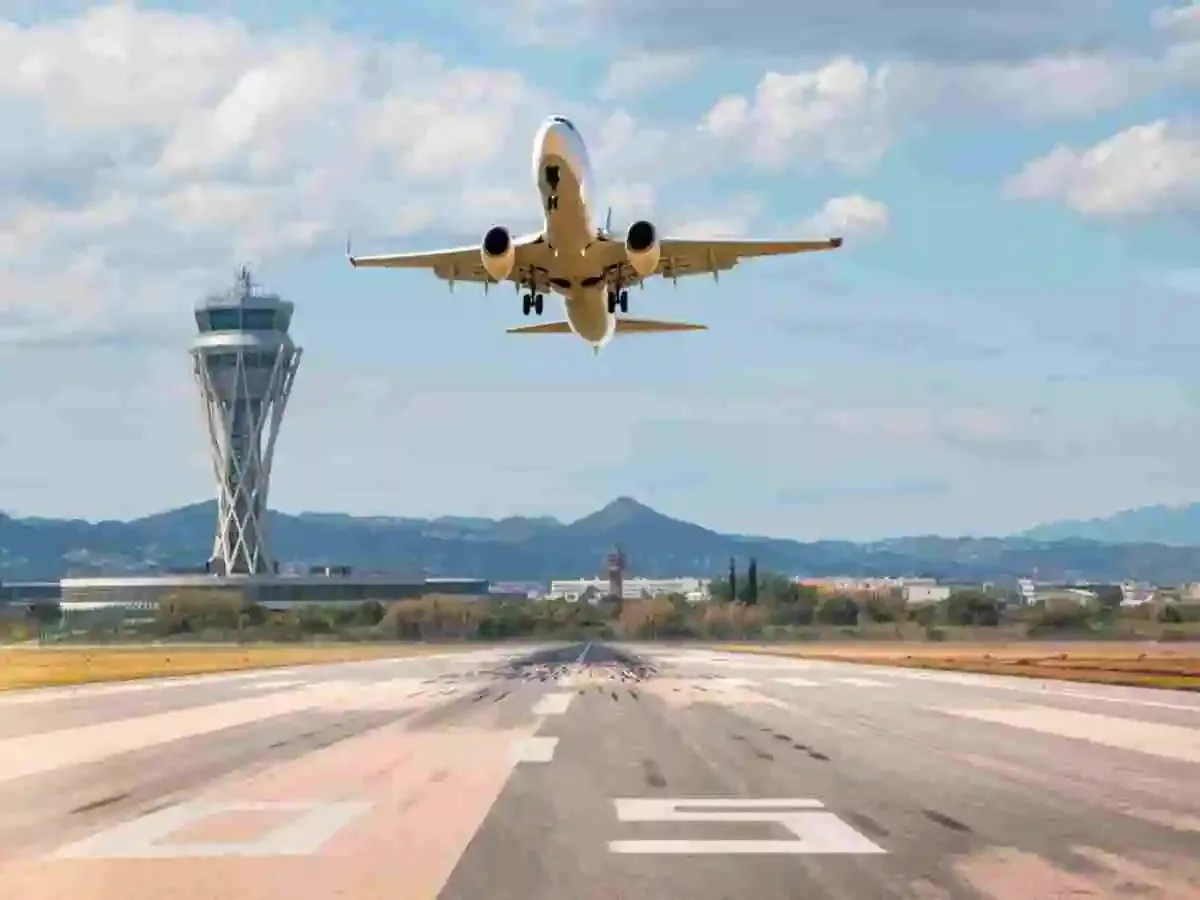
The lifetime odds of dying in a plane crash are 1 in 13.7 million | Image: Shutterstock
The tragedy of Air India Flight 171 in Ahmedabad felt like a bolt from the blue last year. Even though flying is statistically much safer than driving, a major accident like this creates a fear that is hard to ignore. It was also the first major loss of life since the Kozhikode crash in 2020. Even though years had passed between these two accidents, this new disaster in Ahmedabad reignited old fears.
While statistics show that you are safer in a plane than in a car, the graphic news coverage created a ripple effect of anxiety. This secondary trauma was so strong that many people ditched their flight tickets, choosing to travel by trains or road instead. For a shaken public, the sky no longer felt like the safest place to be.
The fear factor
In the week following the crash, Air India’s bookings dropped by 20%, with international cancellations jumping by nearly 18%. To ensure utmost safety, the airline even grounded 15% of its big international planes to double-check every small detail. To win people back, it eventually slashed ticket prices by up to 15%, but the anxiety had already spread to other airlines, causing daily passenger numbers across India to drop by 30,000.
Psychologists call this phenomenon the "contagion effect." When we see tragic images on the news, our brains go into a primal defence mode, making us feel like the whole world is unsafe. For many, the anxiety was so strong that they ditched the skies entirely. Instead of flying, they chose to travel by trains or packed up the family car for long road trips, seeking safety in a mode of transport they could control.
What’s interesting is that a car crash involving two passengers does not make big news but a plane crash involving 200 people is a global event. This publicity around a plane crash adds to the fear. In fact, according to data from the International Air Transport Association (IATA) and the National Safety Council (NSC), the lifetime odds of dying in a plane crash are 1 in 13.7 million but for a car is 1 in 95.
The technical snags
While there have been just two major accidents involving commercial jets in the last five years in India, what worries fliers are the technical snags that have been coming to light especially after the Ahmedabad crash. This led to the massive fleet-wide safety audits seen in late 2025 and early 2026. It revealed that out of the 754 aircraft analysed 377 planes (nearly 50%) were flagged for recurring technical defects that reappeared despite repairs. Daily reports of emergency landings, technical snags and unruly passengers have all heightened the anxiety around flying.
Air travel is still the safest mode of transport
Statistics can put your mind at rest. According to 2025 data, more people died on roads globally in 2 hours than they did in plane crashes in an entire year.
In 2024, there were approximately 40.6 million flights globally. Despite a few incidents, the fatal accident rate remains at a historic low—one fatal accident for every 5 to 7 million flights.
This shows that despite popular perception, air travel is still safer than most other modes of travel. This is because modern aircraft have sophisticated systems, which can handle many complex tasks like take-offs, landings and even navigation in the air.
A single failure doesn’t lead to disaster
Critical systems on a plane like hydraulics, engines and electronics are designed in a way so that if one fails, others can automatically take over. This ensures continuous operation. Multiple independent systems ensure that a single failure does not lead to a catastrophe.
Rigorous pilot training
Pilots undergo mandatory simulator training at regular intervals. Training needs to meet civil aviation authority standards.
Learning from mistakes
In aviation, safety comes first. Every mistake is treated as a lesson rather than a reason to punish. The industry knows that when people feel safe to learn, everyone stays safer. Because of "non-punitive reporting," pilots can be completely honest about what went wrong after a flight without fearing they will get in trouble. This way errors can be minimised.
Not alone in the sky
Pilots are not alone in the sky. They are monitored by the Air Traffic Control and the Flight Dispatchers. Multiple professionals are responsible and must agree on safety decisions.
The fear of flying exists because our primitive brains are not wired for statistics but can relate better to stories. We do not see the successful flights that fly around the globe but notice the ones that did not make it. But data shows that we are safer at 35,000 feet supported by sophisticated technology and a network of professionals, than in the familiar seat of our own cars.
About The Author
Next Story



