
Upstox Originals
Is India one “critical” step closer to years of energy independence?

4 min read | Updated on April 09, 2026, 18:11 IST


SUMMARY
India recently announced that the Prototype Fast Breeder Reactor in Kalpakkam has achieved criticality. What does this mean for India’s energy independence? Would it surprise you to learn that India’s energy problem isn’t a shortage at all? Because the country may already have access to 358,000 GW-years of electricity. The key lies in thorium, a resource we have in abundance but barely use.
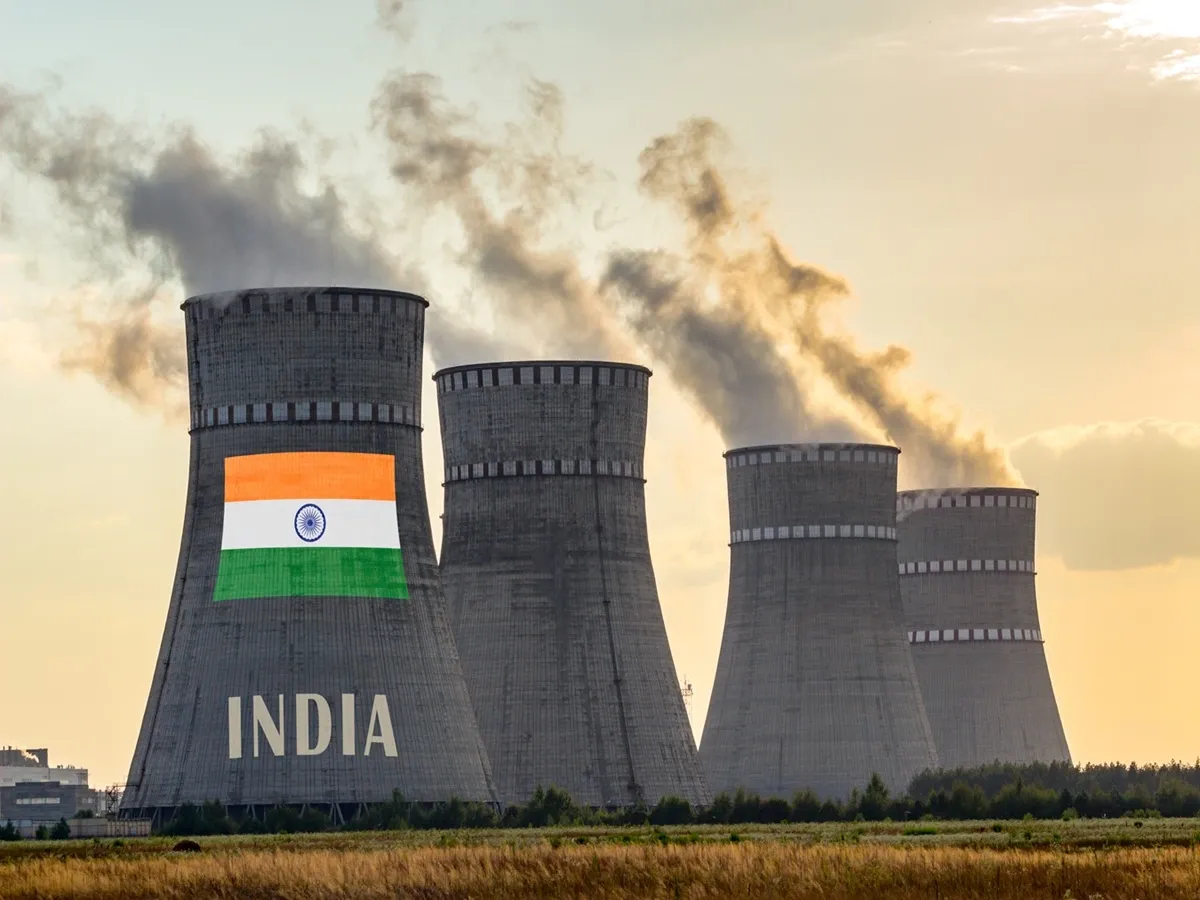
India may already have access to 358,000 GW-years of electricity.
The recent west-east crises have once again raised the question of India’s energy independence. While India’s efforts to diversify its oil supply chain are commendable, the reality remains that we are reliant on external sources. In simple words, we just don't have enough oil.
But what if there were other options? And here is the twist, India might already be sitting on enough reserves to generate nearly 500 gigawatts of power!
Does not seem correct, right? Why would we then be so dependent on external players? India’s biggest energy advantage is hidden in sand?
Uranium is at the heart of global nuclear power. And for good reason - a single uranium pellet can generate as much energy as one ton of coal, 149 gallons of oil or 17,000 cubic feet of natural gas.
But, India has only about 1–2% of the world’s uranium reserves. That means we end up importing over 70% of the uranium we need. Not ideal for energy security. Well, here’s something that might actually surprise you. India has a hidden alternative - thorium.
Thorium is a silver-coloured metal that could generate roughly 358,000 GW years of electrical energy, enough to power the nation for a century.
We hold nearly 25% of the world’s thorium reserves.
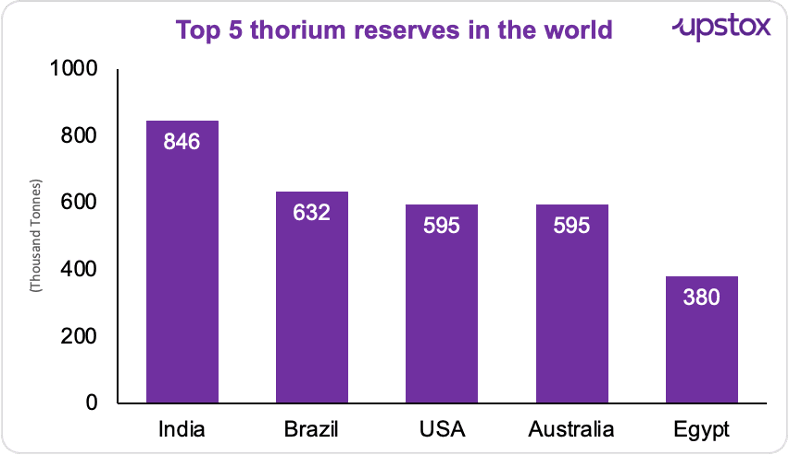
Source: World Population Review
And yet, nuclear still contributes just ~3% to India’s electricity mix.
Where is thorium found in India?
Thorium is extracted from a mineral called monazite, which is found in sand deposits. These sands are spread across India’s coasts; in states like Kerala, Tamil Nadu, Odisha, Andhra Pradesh; and even in some inland pockets like Jharkhand and West Bengal.
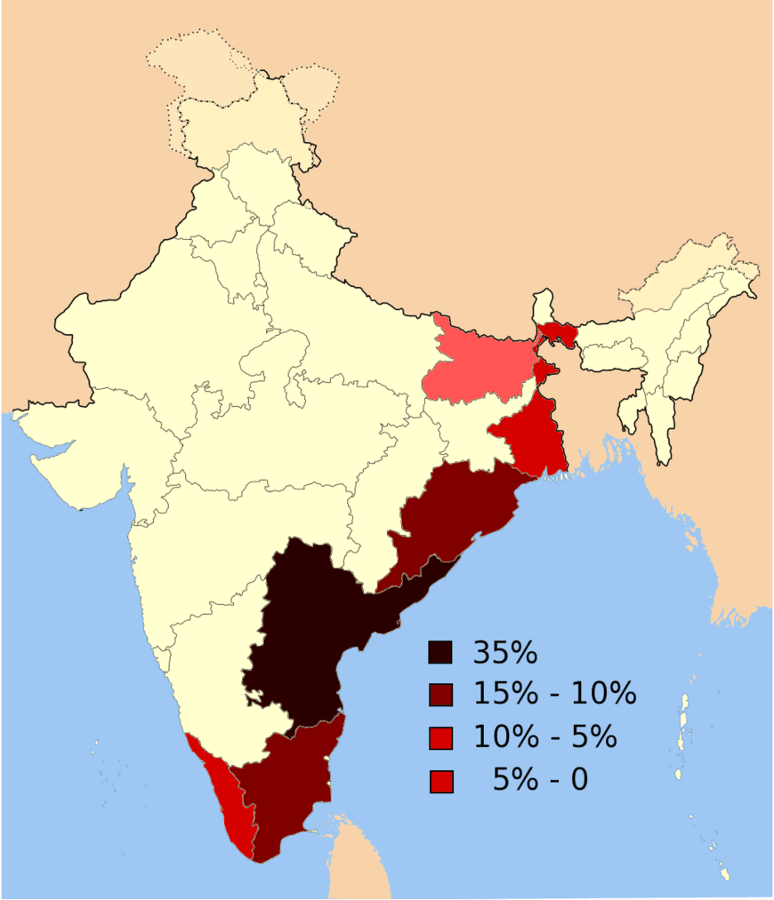
Source: Stanford University Research, 2024
So if India has so much thorium, why aren’t we using it?
Thorium, unlike uranium, cannot be directly used as fuel in a reactor. It first needs to be converted into uranium-233, a usable nuclear fuel. Today, India has over 20 nuclear reactors, and most still run on uranium.
In order to exploit the thorium, India has been building the Prototype Fast Breeder Reactor (PFBR) in Kalpakkam. It has a capacity of 500 MWe, and was launched in 2003. It was supposed to be ready by 2010, but delays pushed timelines.
On April 6, 2026, it reportedly attained criticality, meaning the reactor was able to start and sustain the nuclear reaction on its own.
Now, over 20 years later, the commercial operations are expected around September 2026.
Does this mean we will produce electricity from September 2026?
Not really.
The reactor still needs testing and time to fully start working.
This marks Stage 2 of India’s nuclear programme, which uses uranium and plutonium to create more fuel for the next steps, but it doesn’t use thorium yet.
In Stage 3 (the final stage), thorium is finally used, but even then, it first needs to be converted into usable fuel (uranium-233).
Is there a cost of converting thorium to uranium?
First, even extracting thorium. As per a study on ResearchGate, producing thorium oxide, the usable form of thorium, can cost around $335 per kg (≈₹28,000/kg) at an optimal scale.
Then, the conversion happens inside advanced nuclear reactors, starting with the cost of building them. For instance, India’s Prototype Fast Breeder Reactor has already cost around ₹6,840 crore, up from ₹5,677 crore due to delays.
And these are just the primary costs. Besides this, there are costs associated with reprocessing fuels, safe disposal, etc.
So, is thorium-based electricity cheaper than uranium-based in India?
Electricity from uranium-based nuclear plants costs around ~₹6 per kWh in India today. Thorium-based electricity, once the technology scales, could be 20–30% cheaper, bringing costs down to ~₹4–₹5 per kWh.
Before you go
So what’s the smarter way forward?
India can keep progressing on its three-stage plan, but at the same time, it could also explore quicker routes, like newer reactor types such as molten salt reactors (like China) or accelerator-driven systems (which use a machine to control the reaction, so it stays safe while helping turn thorium into usable fuel)
Instead of waiting decades for entirely new tech, India could start putting thorium to use much sooner, while still building toward the bigger vision.
About The Author
Next Story



