
Upstox Originals
Can renewables actually replace fossil fuels in India?

7 min read | Updated on March 12, 2026, 20:12 IST


SUMMARY
50% of our installed capacity comes from non-fossil fuels. Yet, we are excessively dependent on traditional energy sources. The current energy crisis has once again put a spotlight on this issue, further exacerbating the need to fast-track changes. What exactly is holding us back, and how can we overcome these challenges?
India actually ranks 4th globally in renewable energy capacity, yet we are highly dependent on fossil fuels | Image: Shutterstock
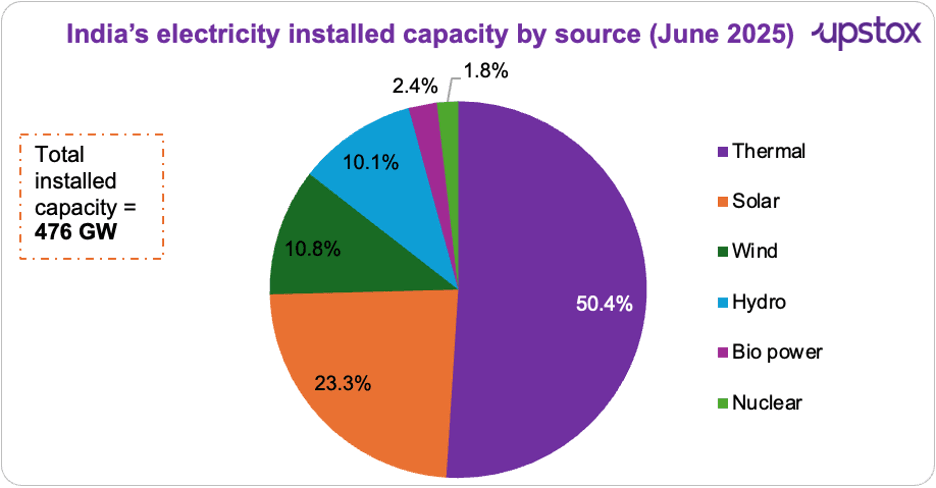
Source: PIB, as of June 2025
A look at India’s overall energy mix, and the dependence becomes clear.
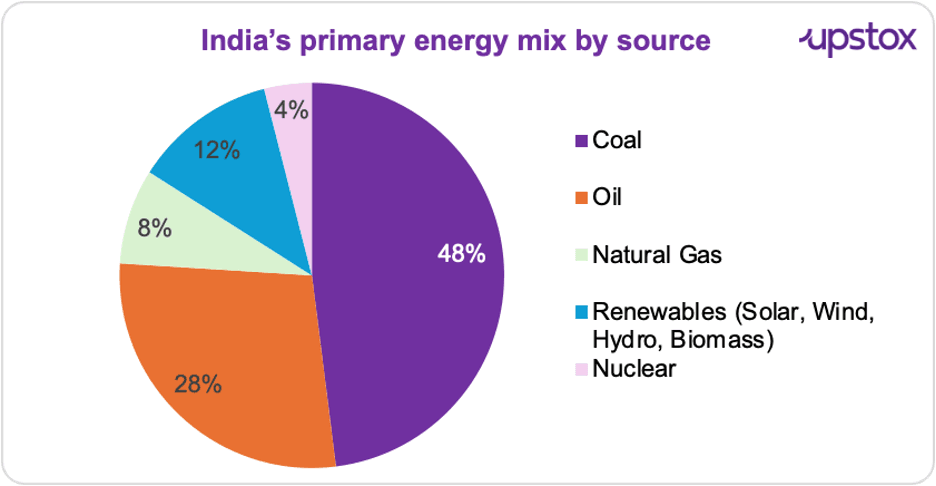
Source: IEA
So, what seems to be the challenge?
India runs heavily on oil
Yes, and not just a little bit.
And right now, India simply doesn’t produce enough of it.
In FY26 (April–September), India imported 88.4% of the crude oil it consumed. That’s slightly higher than 87.9% in the same period of FY25. Import dependence has climbed from 83.8% in FY19 to 87.8% in FY24, and it’s still rising. About 55% of India’s oil demand comes from the transport sector alone.
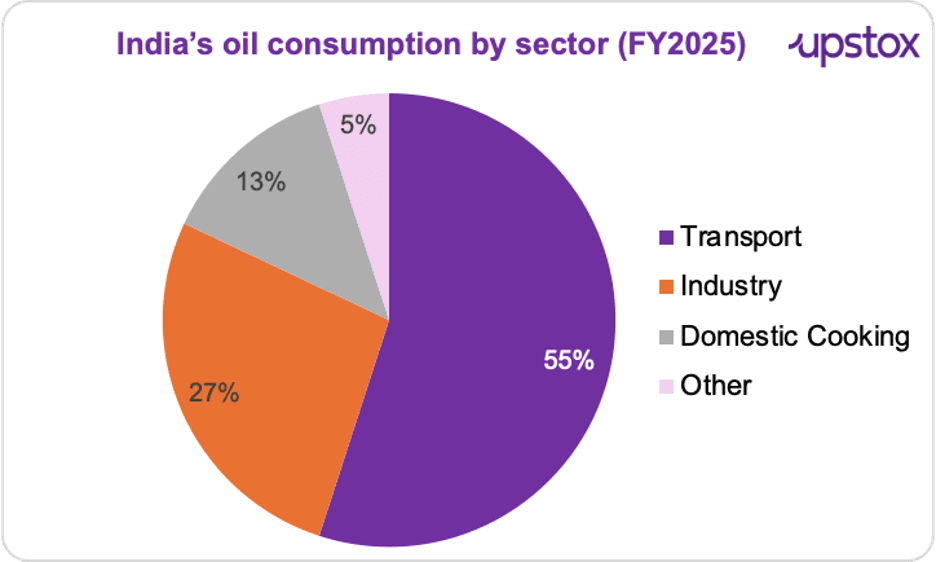
Source: CMIE Economic Outlook
To guard against global supply shocks, India tried building Strategic Petroleum Reserves (SPR), essentially emergency oil storage. But progress has been slow. A ₹8,743 crore SPR project in Chandikhol, Odisha, meant to boost these reserves, has been stuck for 7 years due to land acquisition and safety concerns.
India is trying alternatives to reduce dependency.
For instance, the government has pushed ethanol blending. Ethanol production capacity has reached around 40,000 kilolitres per day, or roughly 2,000 crore litres annually.
But the math still tells a different story. India consumes about 10,000 crore litres of diesel every year. So even with ethanol blending, oil demand barely moves.
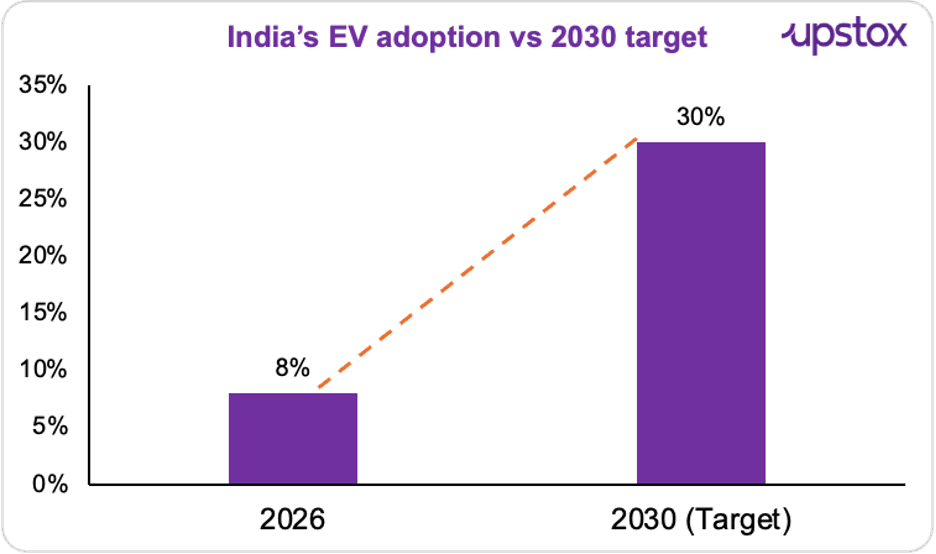
Electric vehicles are often seen as the big solution. But adoption is still slow.
Source: DD News
This means India is currently 8%, and the remaining 22% would need to happen in just 4 years. Even if we achieve the target, reducing complete reliance is still a long road haed.
Now take LPG, the cooking fuel used in millions of homes.
India’s LPG imports have tripled since 2011–12, reaching about 20 million tonnes by 2024–25. Imports now meet around 60% of domestic demand, up from 47% in 2015.
India consumes roughly 3 million tonnes of LPG every month, about 80,000 tonnes a day. More than 85% of it is used by households.
Today, the country has around 33 crore domestic LPG connections, including nearly 10 crore added since 2017 under the Pradhan Mantri Ujjwala Yojana (PMUY).
Put all of this together and one thing becomes clear. Oil isn’t just another energy source in India.
Utilities still trust coal
Consider the companies that actually buy electricity in India, the DISCOMs. DISCOMs (distribution companies) purchase power from generators and supply it to homes and businesses.
For decades, India’s power system has been built around thermal plants. Coal power is steady and predictable. Contracts are familiar. Payment systems are well understood. For financially stressed DISCOMs, it often feels like the safer option and therefore states are still signing long-term coal power purchase agreements (PPAs) at ₹5.38–₹7.27 per kWh.
| State | Project | Capacity | Tariff |
|---|---|---|---|
| Bihar | Pirpainti coal project | 2.4 GW | ₹6.075/kWh |
| Assam | State coal project | 3.2 GW | ₹6.30/kWh |
| Madhya Pradesh | Mahan coal project (Adani), Singrauli | 3.2 GW | ₹5.83/kWh |
Source: Mercom India
Now compare that with renewables. Firm and dispatchable renewable energy (FDRE) bids have ranged between ₹4.35 and ₹6.75 per kWh.
So renewables can already be cheaper. But reliability still drives decisions.
Hard-to-abate industries
Then there’s steel, one of the hardest sectors to decarbonise.
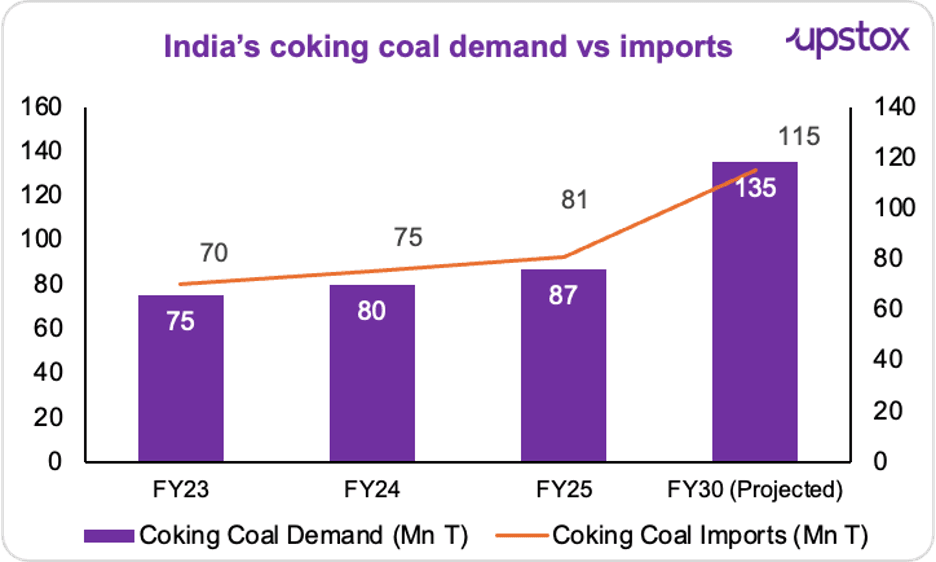
India is the world’s second-largest steel producer, making 152 million tonnes in 2025, about 8% of global output. Most of it comes from the blast furnace–basic oxygen furnace route, which relies on coking coal.
This route accounts for 65% of installed capacity and 58% of production, and the steel industry alone uses about 95% of India’s coking coal. The problem? India produces very little coking coal and imports most of it.
Source: Ministry of coal and EY analysis
Experiments in green hydrogen and green steel offer hope. But scaling them is still a long road.
Grid bottlenecks
Electricity travels through transmission lines, the highways that carry power across states. But India is adding renewable plants faster than it is building transmission lines.
Take Rajasthan, India’s solar capital. The state has about 23 GW of renewable capacity, but the grid can evacuate only 18.9 GW. That means over 4,000 MW of power can’t leave the state during peak generation hours.
Other renewable-heavy states like Gujarat, Maharashtra and Tamil Nadu also face 10–30% curtailment during peak solar hours. Curtailment simply means the grid asks power plants to shut down even when they can generate electricity.
The mineral problem
Then there’s another constraint, materials.
Clean energy technologies may reduce fossil fuels. But they depend on a different set of resources, critical minerals.
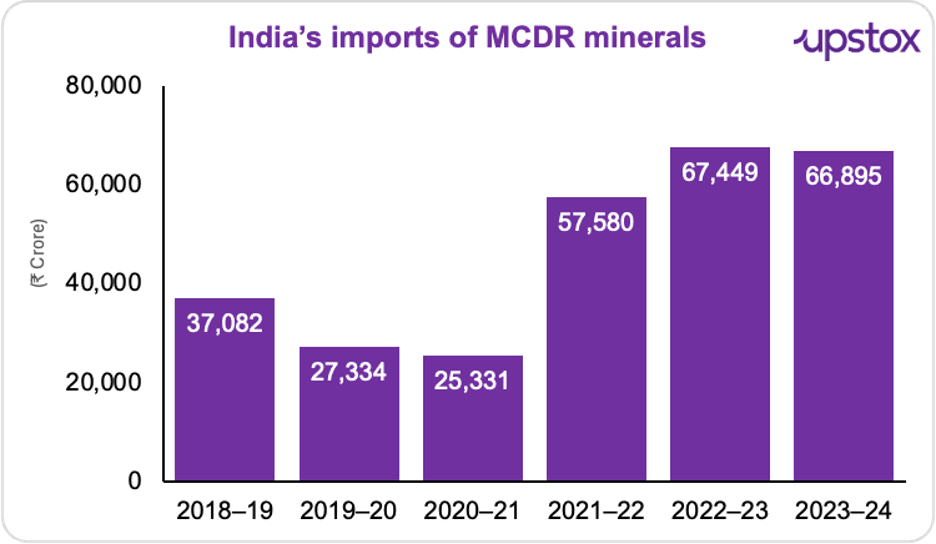
And India doesn’t produce most of them. In fact, the country imports nearly 100% of lithium, cobalt and nickel, and more than 90% of rare earth elements (REEs). That makes the supply chain highly vulnerable.
So the paradox is clear.
India’s clean energy transition depends on technologies that require minerals the country largely imports.
Which means the shift away from fossil fuels also introduces a new layer of resource dependence.
Source: Ministry of Mines
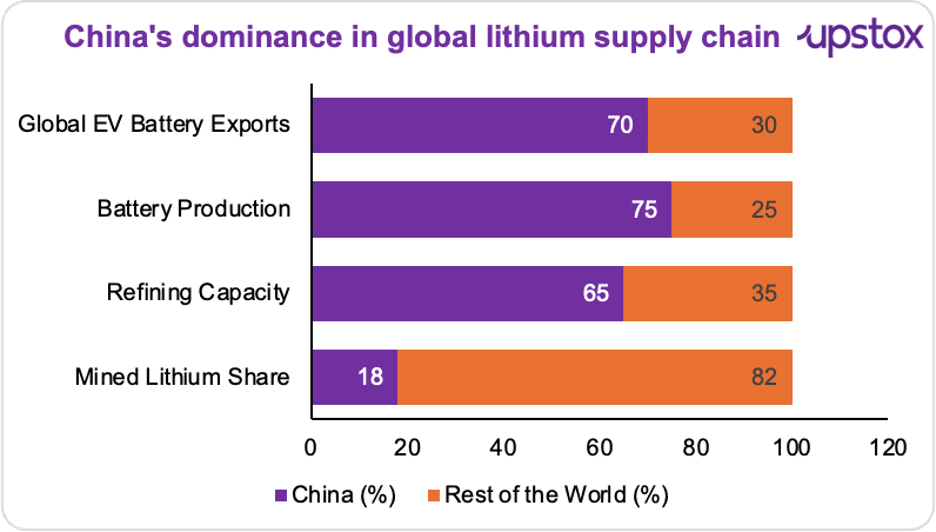
And the chart below shows who controls much of this supply chain: China.
Source: Statista
Has any country actually replaced fossil fuels with renewables?
Not entirely. And more importantly, no country has fully eliminated its dependence on oil.
A few countries run their electricity systems with little or no fossil fuels, but most are small nations with abundant natural resources.
Take Iceland. The country generates 100% of its electricity from renewables — 75.5% hydropower and 24.5% geothermal. It runs 15 hydro plants along rivers like Þjórsá and Blanda, while the Hellisheiði geothermal plant alone produces 303 MW of electricity and 400 MW of thermal energy.
Other countries like Albania (~98%), Bhutan (100%), Nepal (~98.6%), Paraguay (100%), and Ethiopia (96% hydro) also rely almost entirely on hydropower. Ethiopia’s Grand Ethiopian Renaissance Dam will add 6,450 MW when fully operational.
But there’s a pattern. Most countries that achieve near-100% renewable electricity depend heavily on hydropower, and many are smaller economies with lower energy demand. Replicating that model in a large, fast-growing economy like India is far more complex.
Before you go
So what’s the way out for countries like India? One possibility is nuclear power.
Unlike solar and wind, nuclear plants generate steady, round-the-clock electricity without emissions and can provide the baseload power large economies need.
Countries that have sharply reduced fossil-fuel dependence, like France, did so largely through nuclear energy, which still supplies about two-thirds of its electricity.
For a fast-growing economy with rising power demand, nuclear could become a key piece of the energy transition puzzle.
About The Author
Next Story



