
Personal Finance News
How to report ESOP income in ITR for AY 2026-27

4 min read | Updated on July 30, 2026, 17:07 IST


SUMMARY
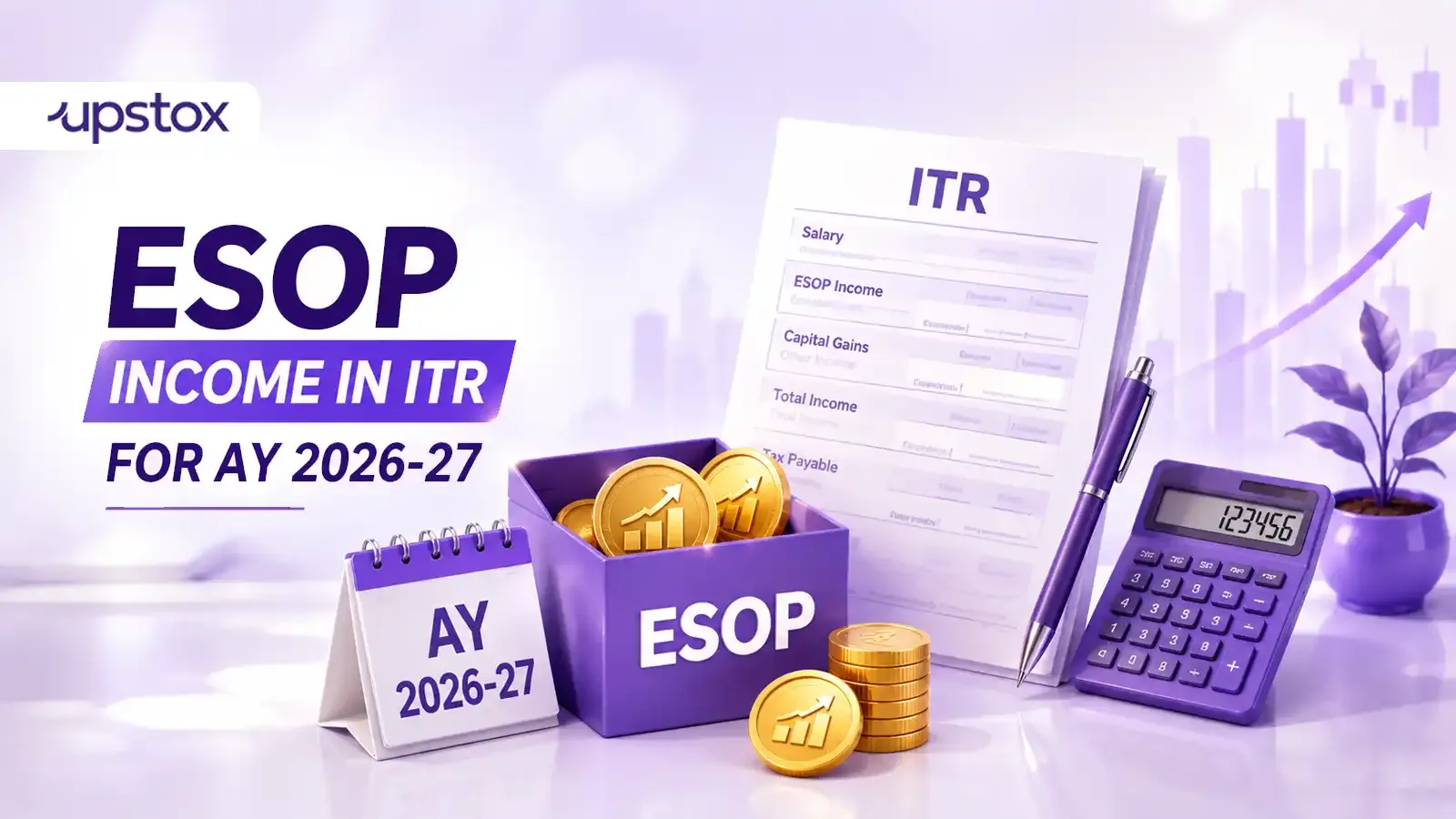
If you sold ESOP shares during FY 2025-26, it is important to understand how the income should be reported while filing your Income Tax Return (ITR) for Assessment Year (AY) 2026-27, as ESOPs attract tax at different stages.
According to CA Soni, employees are liable to pay tax when they exercise the ESOP, even if they continue to hold the shares.
Employee Stock Option Plans (ESOPs) have become a common component of salary package, particularly in startups and technology companies. They give employees the right to buy company shares at a predetermined price after a specified vesting period, allowing them to participate in the company's growth.
In India, ESOPs are regulated by the SEBI (Share Based Employee Benefits and Sweat Equity) Regulations, 2021 for listed companies and the Companies Act, 2013 for unlisted companies.
How should ESOP income be reported in ITR for AY 2026-27?
The way ESOP income is reported depends on whether you have exercised the options or sold the shares.
According to CA Abhishek Soni, the difference between the Fair Market Value (FMV) of the shares on the exercise date and the exercise price is treated as a salary perquisite. Since this amount is generally reflected in Form 16 after TDS by the employer, it should be reported under the Salary head while filing the ITR.
If you subsequently sell the shares, any gains should be disclosed under Schedule Capital Gains. The FMV that was taxed as salary at the time of exercise becomes the cost of acquisition for calculating capital gains.
Why are ESOPs taxed twice?
ESOPs trigger tax at two different stages under the Income-tax Act.
At the time of exercise: The difference between the FMV of the shares and the exercise price is treated as a salary perquisite and taxed according to the employee's applicable income tax slab.
At the time of sale: When the shares are sold, any appreciation over the FMV considered at the time of exercise is taxed as capital gains. The holding period begins from the date the shares are allotted.
What changes if the ESOPs are issued by an unlisted company?
The broad tax treatment remains the same for listed and unlisted companies, but determining the FMV is more critical for unlisted shares.
According to CA Soni, "employees are liable to pay tax when they exercise the ESOP, even if they continue to hold the shares. The FMV of unlisted shares is determined using the prescribed valuation rules, and the same FMV becomes the cost of acquisition when the shares are eventually sold."
What should employees of unlisted companies keep in mind?
According to Shourya Garg, Advocate at Garg & Garg Tax Associates, one of the most common mistakes is confusing the different stages at which ESOPs are taxed.
He says the first tax event occurs only when the ESOP is exercised, not when it is granted or vested. The difference between the FMV on the exercise date and the exercise price is taxed as salary, with the employer deducting TDS under Section 192.
"For unlisted companies, the FMV must be determined using a Category I merchant banker's valuation certificate, which should be valid within 180 days of the exercise date. When the shares are sold, capital gains are calculated using the FMV at the time of exercise as the cost of acquisition," said Garg.
Garg also points out that "unlisted shares qualify as long-term capital assets after a holding period of more than 24 months, compared with 12 months for listed shares. Employees of eligible DPIIT-recognised startups may also be eligible for deferred taxation of the ESOP perquisite, subject to the prescribed conditions."
What documents should taxpayers preserve?
According to Vipin Upadhyay, Partner, King Stubb & Kasiva, Advocates and Attorneys, taxpayers should maintain proper documentation to avoid disputes during assessment.
"For employees of unlisted companies, valuation reports are particularly important because the FMV is determined under prescribed valuation rules rather than market prices. He advises taxpayers to retain valuation reports, ESOP exercise records and share sale documents to support the income reported in their ITR," said Vipin Upadhyay.
Related News
About The Author
Next Story

