
Personal Finance News
He earned salary and capital gains but never filed an ITR or properly responded to tax notices. Yet ITAT gave him another chance; here's why

5 min read | Updated on October 25, 2026, 20:25 IST


SUMMARY
The ITAT ruling in this case may matter to taxpayers who miss the return deadline, fail to respond to tax notices, and find their case decided in their absence

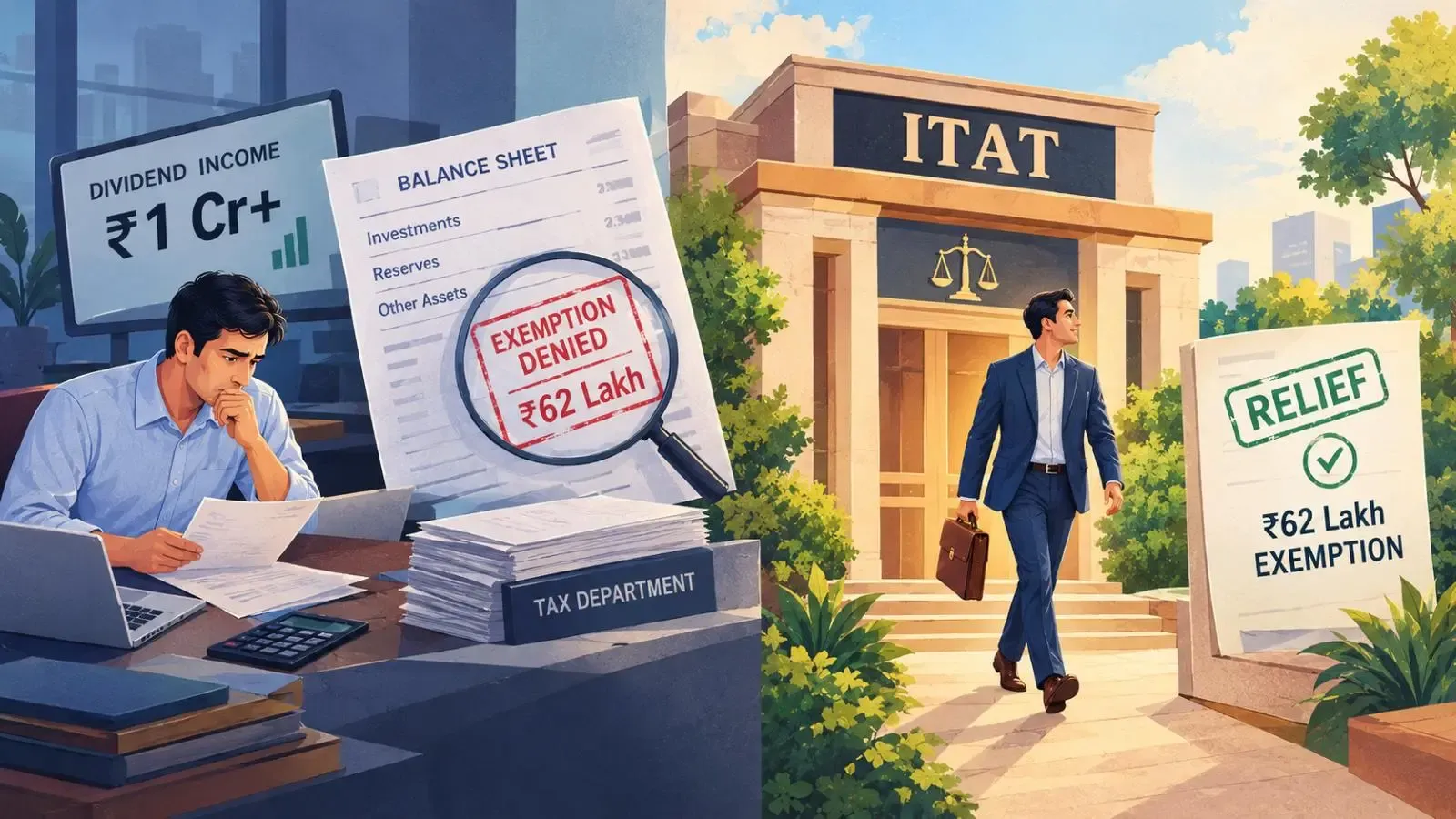
Ignoring the taxman is costly, but an appeal dismissed without a merits decision can still be revived. | Representational image/AI generated
A Thane resident earned income from salary and capital gains during assessment year (AY) 2020-21 but did not file his income tax return. The tax department picked up the information on its portal, issued a notice under section 148, and when the replies stopped coming, completed the assessment on the basis of whatever was on record, adding, among other things, ₹63,40,996 as unexplained investment in securities purchased without actual delivery.
Based on the tribunal's order dated October 8, 2026, this article explains the case history and takeaways for readers.
Case history
Mukesh Mishra had income from salary and capital gains, but did not furnish his return under section 139. Acting on information available on the portal under the Risk Management System, the assessing officer of the Income Tax Department issued a notice under section 148. In response, the assessee filed his return on July 12, 2024, declaring a total income of ₹23,38,410.
He then went largely silent and could not furnish a response to most of the notices under section 142(1), apart from a small response on January 7, 2025, giving a statement of total income and details of the income declared in the section 148 return. Also, he could not comply with the show cause notice.
Later, the assessing officer passed his order on the information available. The additions he made were substantial and varied:
-
Short-term capital gains of ₹11,71,078 on the sale of securities, computed by mechanically adopting the purchase value of securities of ₹3,67,369 as the cost of acquisition;
-
₹63,40,996 under section 69 towards the purchase of securities otherwise than by actual delivery
-
₹3,67,369 under section 69 towards the purchase of securities
-
₹17,84,600 under section 69 towards immovable property.
The officer also disallowed a deduction of ₹2,00,000 claimed for interest on a housing loan, and ₹2,25,000 claimed under Chapter VI-A, comprising section 80C of ₹1,50,000, section 80D of ₹25,000 and section 80CCD(1B) of ₹50,000. He also added ₹1,161 under the head salary for alleged short disclosure.
When Mishra appealed, he filed no explanation, evidence or written submission. The CIT(A) recorded that no adjournment letter and no written submission had been furnished. Though, notices had been issued to the email available with the tax department.
After affording sufficient opportunities, the first appellate authority disposed of the appeal ex parte, "without decision on merits of the case," as per the ITAT's order.
Before the tribunal, the assessee's counsel argued that the ex parte dismissal was contrary to section 250(6) and violated natural justice. He stated that the hearing notices "were sent exclusively to an email address which the Appellant does not regularly access, and no effective communication was made through alternate channels."
The Counsel also said his non-participation "was not willful and was beyond his control." He further asked that the matter be sent back to the CIT(A) for an opportunity to contest the appeal. However, the departmental representative opposed this firmly, submitting that the assessee was a habitual non-compliant.
The tribunal acknowledged the assessee's failures, like he had not filed his return under section 139, had not seriously participated even after filing the return during reassessment, and had not responded before the CIT(A) to substantiate his grounds. However, ITAT took note of one fact that decided the appeal, that the CIT(A) had "dismissed the appeal without rendering decision on the merits of the case".
"In the interest of substantive justice and in the factual matrix of the case," the ITAT said, it was appropriate to restore the matter to the file of the CIT(A) and provide another opportunity, through a notice issued to an email ID to be communicated by the assessee. The tribunal also added a pointed direction: the assessee should "consider the appeal proceeding more seriously and submit written submissions along with evidence to substantiate the grounds of appeal taken in the form no. 35".
Takeaways
The ITAT ruling in this case may matter to taxpayers who miss the return deadline, fail to respond to tax notices, and find their case decided in their absence. It also confirms that an appellate order which expressly records that "no decision is being rendered on merit" is vulnerable, and that substantive justice can require one more opportunity, but the taxpayer must then actually use it to avail any relief, if possible.
Taxpayers should note that by skipping the return and ignoring the notices, they give the department a free hand, which can result into severe additions like this case. But even after winning another chance of hearing, the taxpayer must turn up, keep his contact details updated, and prove his sources of income.
Related News
About The Author
Next Story

