return to news
  1. From chai to IPOs: How UPI has become a part of daily financial life

Personal Finance News

From chai to IPOs: How UPI has become a part of daily financial life

image Sangeeta Ojha

4 min read | Updated on September 22, 2026, 07:42 IST

SUMMARY

UPI has moved beyond everyday payments, with services covering bills, recurring payments, IPOs, credit and more.
UPI chai to IPOs

The scale of UPI's growth shows how closely it has become tied to everyday financial activity in India.

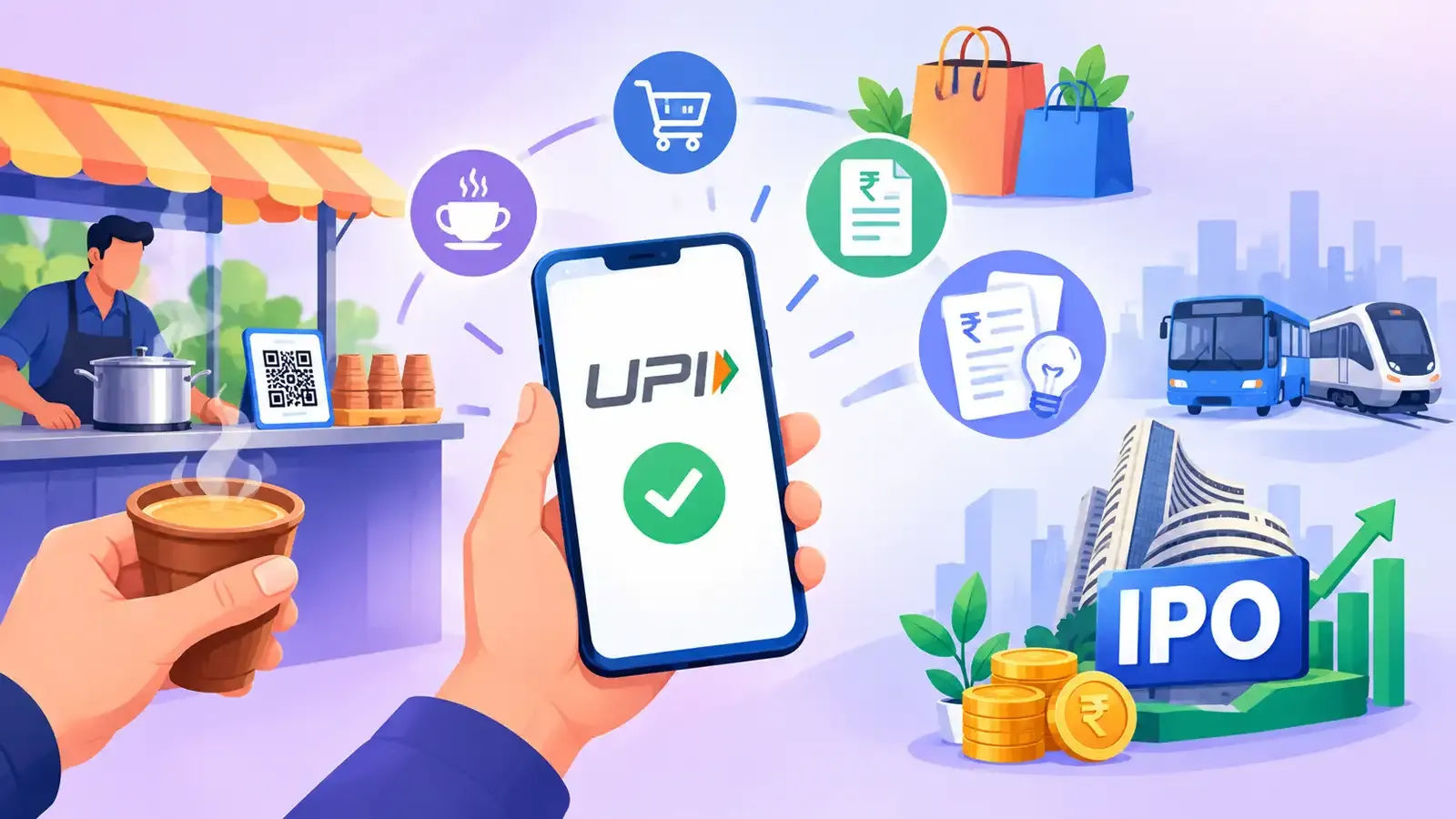
From paying for a cup of chai at a roadside dhaba, paying for vegetables and fruits to vendors, to splitting a restaurant bill, UPI has become part of everyday life in India. The same payment system is also being used to pay household bills, set up recurring payments and apply for initial public offerings (IPOs).
Open FREE Demat Account within minutes!
Join now
The Unified Payments Interface (UPI), developed by the National Payments Corporation of India (NPCI), allows people to transfer money directly between bank accounts. Payments can be made using a UPI ID, mobile number or QR code.

From small payments to everyday transactions

The biggest change is not just the rise of digital payments. It is how easily they have slipped into everyday transactions.

For many people, paying through UPI has become almost automatic. A QR code at a small shop, a payment request from a friend or a bill payment on a mobile phone can all be handled through the same system.

UPI's use has also moved beyond regular spending. It now plays a role in several areas of personal finance, including investments.

UPI and IPO applications

One of the more notable uses is applying for an IPO through UPI.

While applying through an intermediary, an investor can provide a UPI ID. A mandate request is then sent to the investor's UPI app. Once the investor approves the request using the UPI PIN, the required amount is blocked in the bank account.

The money is not immediately debited. If shares are allotted, the amount required for the allotment is debited. If the investor does not receive an allotment, the blocked amount is released.

For investors, this means the IPO application process can be completed using a payment system they already use for everyday transactions.

UPI is expanding beyond basic payments

UPI has continued to add services aimed at different kinds of users and payment needs.

UPI One World: Allows international visitors to make UPI payments in India without needing an Indian bank account.
Hello! UPI: Enables users to make payments through voice commands, making UPI more accessible and convenient.
UPI Tap & Pay: Lets users make payments by simply tapping their phone on a supported NFC-enabled device, without scanning a QR code.
UPI LiteX: Enables offline UPI payments, allowing users to make transactions even when there is limited or no internet connectivity.
UPI Lite: Designed for small-value payments with faster transactions and reduced need to enter a UPI PIN for every payment.
IPO on UPI: Allows investors to apply for IPOs using UPI, with the required funds blocked in their bank account until the allotment process.
Credit Line on UPI: Allows eligible users to access a pre-sanctioned credit line through UPI and use it for payments.
UPI AutoPay: Enables automatic recurring payments for subscriptions, bills, EMIs, insurance premiums, and other regular payments.
UPI Circle: Allows a trusted person to make UPI payments on behalf of another person, with controls and limits set by the primary user.
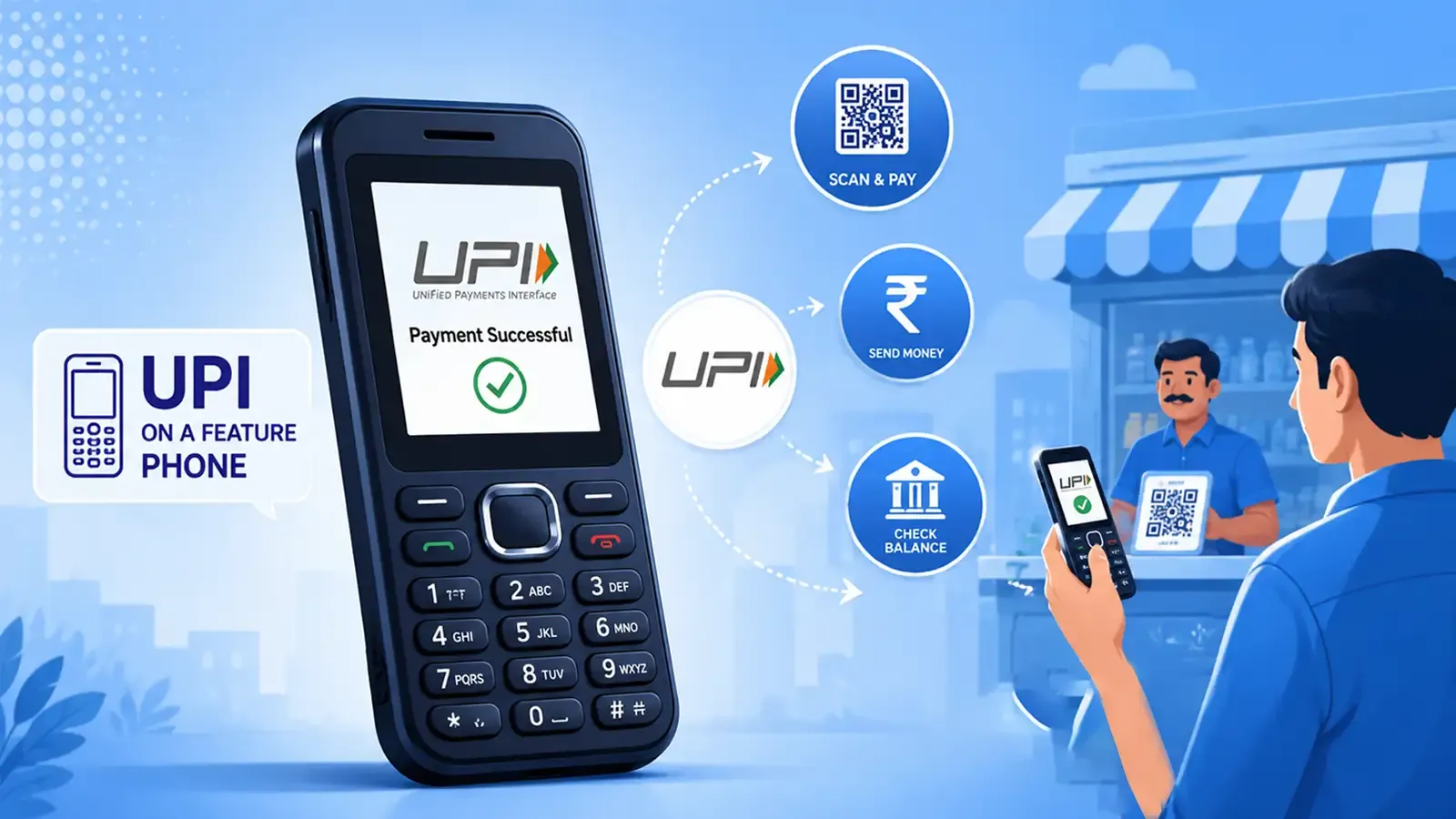
UPI 123PAY: Enables UPI payments through feature phones, making digital payments possible without requiring a smartphone.
Credit Card on UPI: Allows eligible RuPay credit cards to be linked to UPI and used for payments at supported merchant locations.

Together, these developments show how UPI has moved beyond being simply a way to transfer money. It is increasingly being used across different parts of a person's financial life.

A growing payment network

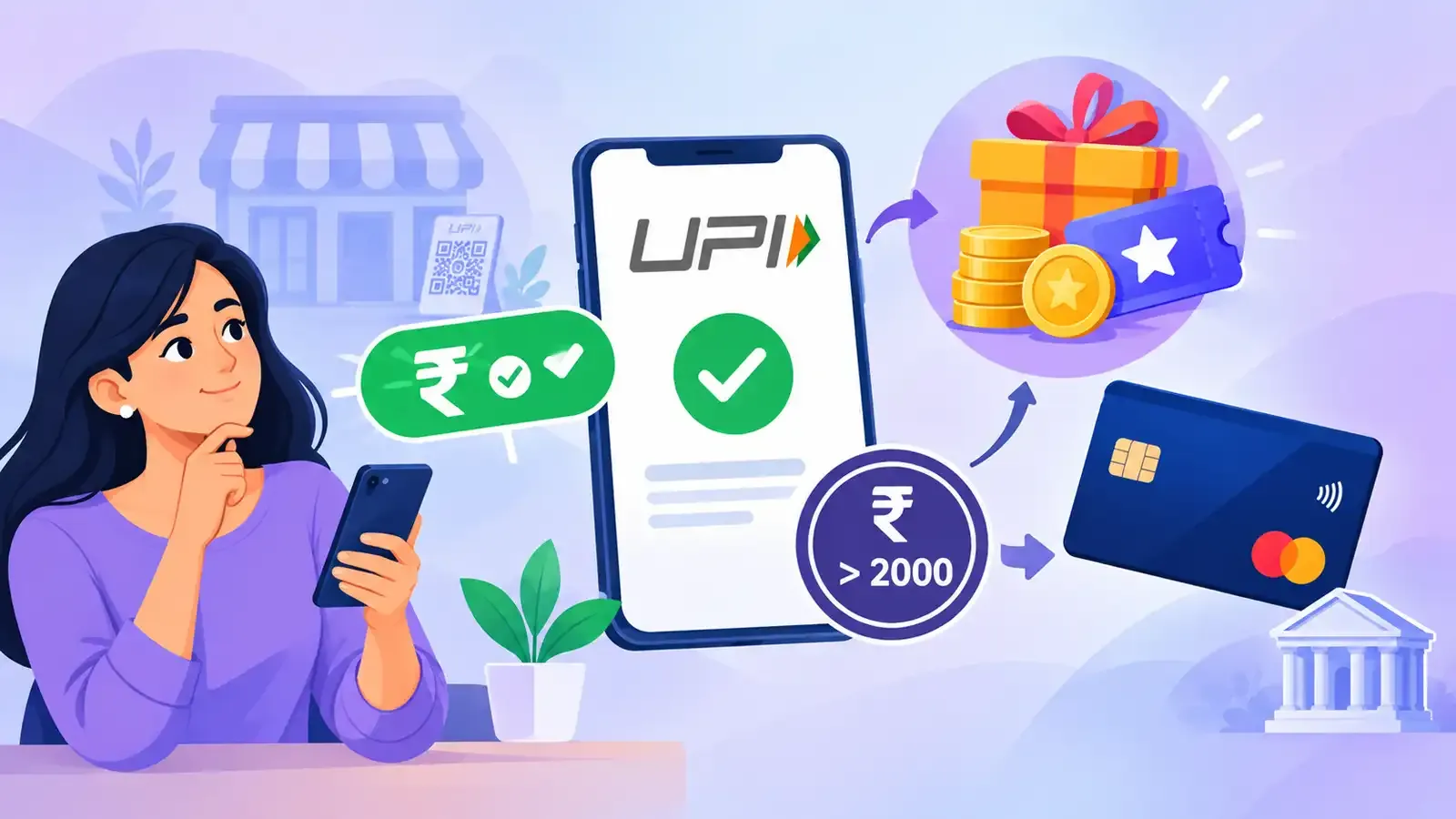
Meanwhile, the government has introduced a 0.4 per cent fee on UPI payments above ₹2,000 made to merchants from October 15. Under this, a merchant discount rate (MDR) of 0.4 per cent would apply to person-to-merchant transactions above ₹2,000, while transactions of up to ₹2,000 would not attract MDR.

NPCI's latest published statistics show that UPI recorded 24.51 billion transactions in August 2026, worth around ₹29.82 trillion. As many as 752 banks were live on the platform.

The scale of UPI's growth shows how closely it has become tied to everyday financial activity in India. What started as a way to move money between bank accounts is now being used for everything from a small purchase at a neighbourhood shop to managing recurring payments and applying for an IPO.

For all personal finance updates, visit here

About The Author

image Sangeeta Ojha
Sangeeta Ojha is a business and finance journalist with experience across leading media platforms like Mint and India Today. She has built a reputation for covering a wide range of personal finance topics, including income tax, mutual funds, insurance, savings and investing.

Next Story