
Personal Finance News
Five ways gold delivers greater portfolio value than silver, oil and other commodities

5 min read | Updated on September 03, 2026, 18:03 IST


SUMMARY
Gold's unique supply-and-demand dynamics, limited exposure to roll costs, diversification benefits and resilience across market environments set it apart from the broader commodity complex, said WGC.
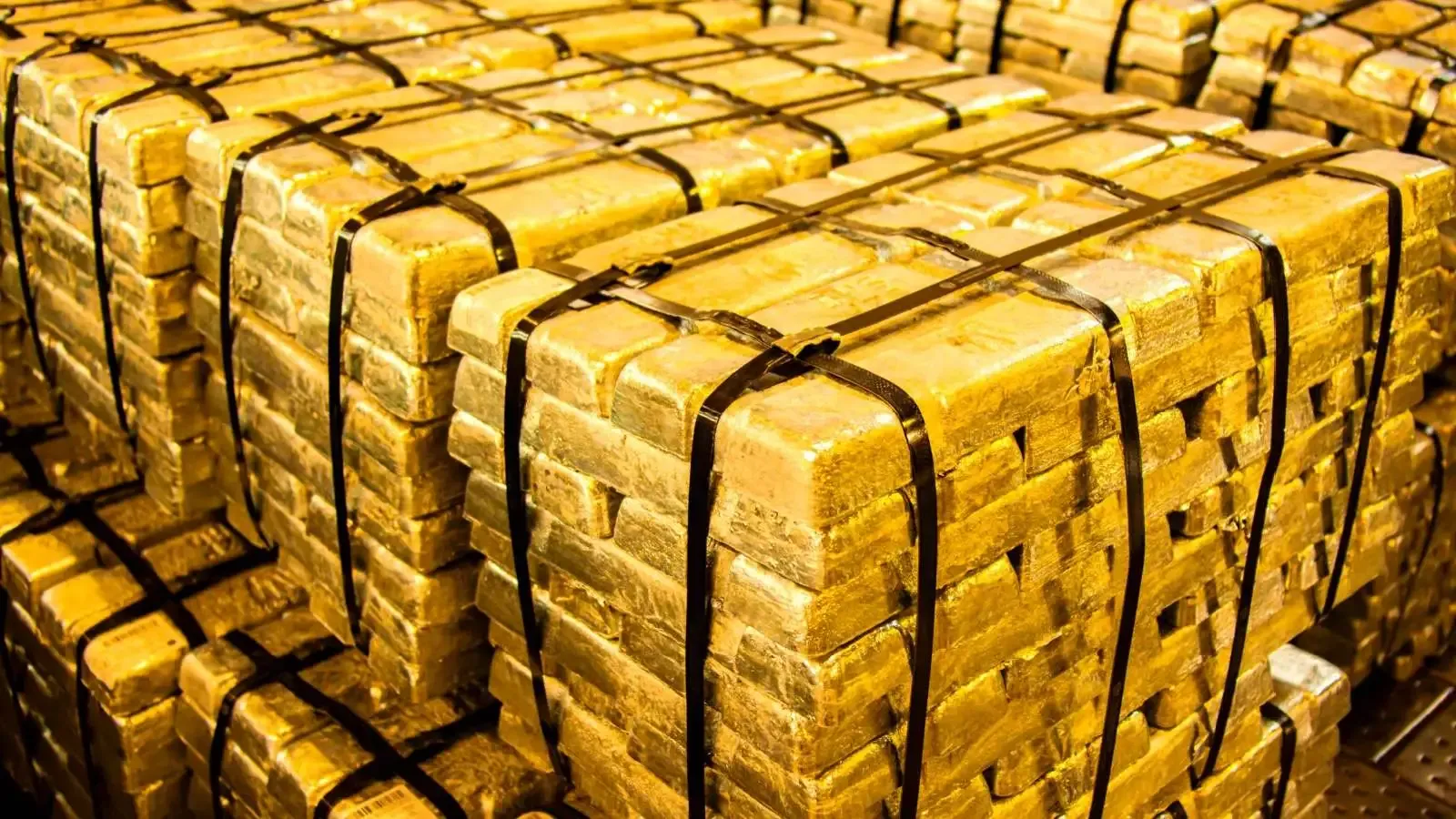
Gold has outperformed not only broad-based commodity indices but also most sub-indices, as per WGC. | Image: Shutterstock
WGC has argued that investors accessing commodities through broad indices are underexposed to an asset whose unique properties set it apart from the broader commodity complex.
"A number of sub-indices and broad commodities have fallen over the past 20 years," the WGC said in the report, while gold has generated positive annualised returns across 3-, 5-, 10- and 20-year horizons ending June 30, 2026.
The report identifies four key differentiators: returns, diversification, inflation protection, and liquidity, and backs each with comparative data against silver, oil, industrial metals, agriculture, and livestock. There's also a fifth dimension emerging from the report's portfolio analysis. Taken together, here are five reasons that make gold deliver better portfolio value than other commodities like silver, oil, aluminium, copper, zinc, etc.
Better long-term returns, similar spot and futures returns
As per the report, gold has outperformed not only broad-based commodity indices but also most sub-indices, including energy, industrial metals, agriculture, livestock and silver, over 3, 5, 10 and 20 years.
Gold's returns were also not eroded by the mechanics of the futures market. Between June 2006 and June 2026, gold returned 9.9% in spot terms and 8.9% through futures, a gap of just one percentage point. Oil, by contrast, generated a -0.2% spot return but a -7.2% futures return over the same period, owing to rolling and collateral costs.
"Gold's market structure is different. Its large aboveground stock, low storage costs and limited benefit from immediate physical possession mean that the convenience yield is generally limited and the front end of the futures curve has historically remained relatively flat. Consequently, futures returns for gold have closely matched spot returns," the WGC said.
Gold's sources of demand span across investment, central bank reserves, jewellery, and technology, making it less volatile than other commodities.
The WGC report places gold at the lower end of the commodity risk spectrum, with lower average daily volatility than silver, crude oil, industrial metals and agriculture over the 20-year period to June 2026.
A diversifier that works when it matters most
As per the report, gold has little to no correlation with many other assets, including other commodities, which "cannot be replicated through broad commodity exposure alone."
The nature of this correlation is dynamic. Like other commodities, gold moves in tandem with equities when markets are rising. But during risk-off periods, gold's correlation with stocks turns negative, something broad commodities do not offer, according to WGC.
The report cites two recent stress tests. During the Q4 2018 global equity selloff, the MSCI USA index fell 14% and commodities fell 9%, yet gold rose 8%. During the COVID-19 crash in Q1 2020, the MSCI USA fell 20% and commodities fell 23%, while gold returned 6%.
"Gold not only protected portfolio assets but also delivered positive returns, while broader commodities behaved more like a risk-on asset," the WGC said.
The report further said that gold is also a more effective diversifier than silver because silver depends to a greater extent on industrial demand.
Protection against inflation
While commodities are widely used for protection during periods of high inflation, the report found that gold has outperformed commodities in high-inflation environments, and, done so without collapsing when inflation is low.
In periods of low inflation (below 2%), "commodities delivered negative nominal returns while gold posted positive returns, reflecting increased demand when economic conditions are robust," the report said. In moderate and high inflation regimes, gold again came out ahead of the broader commodities.
Better liquidity than almost any commodity
The global gold market averaged US$373 billion in daily trading volume in 2025, a scale that, the report said, "can comfortably accommodate large, buy-and-hold institutional investors".
Around 48% of gold trading occurs over-the-counter (OTC) linked to physical delivery, while futures account for about 50%. On the COMEX alone, daily volumes averaged US$53 billion over the past 10 years, second only to oil among all commodity futures. The OTC market sees an estimated daily volumes of around US$180 billion, and gold-backed ETFs add another US$7.2 billion a day.
This multi-channel liquidity is unusual. For most other commodities, futures dominate trading and physical delivery is rare.
Contribution to portfolio diversification
The report's portfolio analysis found that a 5% allocation to gold contributes 28% of total diversification benefits in a hypothetical portfolio, ranking it first among all asset classes. Commodities, also at a 5% per cent allocation, contribute just 15%.
The WGC analysis also suggests that adding 2.5 to 10% of commodities to a portfolio "would not have improved risk-adjusted returns over the past 20 years." Gold, however, "increased absolute returns and reduced portfolio volatility when compared either to a portfolio with no gold exposure, or one with only a broad-based commodity exposure".
Over a 20-year horizon, a hypothetical portfolio without gold returned 7.8% annually with 11.8% volatility and a maximum drawdown of -41.0 per cent. Adding 5% gold nudged returns to 7.9%t while cutting volatility to 11.3% and reducing the maximum drawdown to -38.6%.
"Gold may be a commodity, but it is not a typical one," the WGC concluded, adding, "Its unique supply-and-demand dynamics, limited exposure to roll costs, diversification benefits and resilience across market environments set it apart from the broader commodity complex".
Related News
About The Author
Next Story

