
Market News
Week Ahead: U.S inflation, Iran strikes, Crude oil prices, Fed rate hike expectations to drive markets
.png)
5 min read | Updated on September 06, 2026, 12:46 IST


SUMMARY
In the week ahead, U.S. inflation data will test expectations of a September rate hike after strong jobs data lifted the odds to around 58%. The RBI’s liquidity measures, progress on the NSE IPO and elevated crude-oil prices will also remain in focus. NIFTY50 enters the week with a bearish structure after breaking below 24,025.

Foreign institutional investors remained marginal net buyers in the cash market during the first week of September, with cumulative purchases of around ₹2,373 crore. | Image: Shutterstock
The NIFTY50 declined 1.2% to 23,897, while the Sensex fell 1% to 76,515. Both benchmarks recorded a fourth consecutive weekly decline, their longest losing streak in five months. The market fell for four sessions before recovering modestly on Friday.
Rising crude-oil prices and global bond yields outweighed India’s strong domestic data. April to June GDP grew 7.8%, above the consensus estimate of 7.1%. August gross GST collections also increased 14.8% to ₹1,99,853 crore. However, the numbers were not enough to offset concerns over crude oil, inflation and tighter global financial conditions.
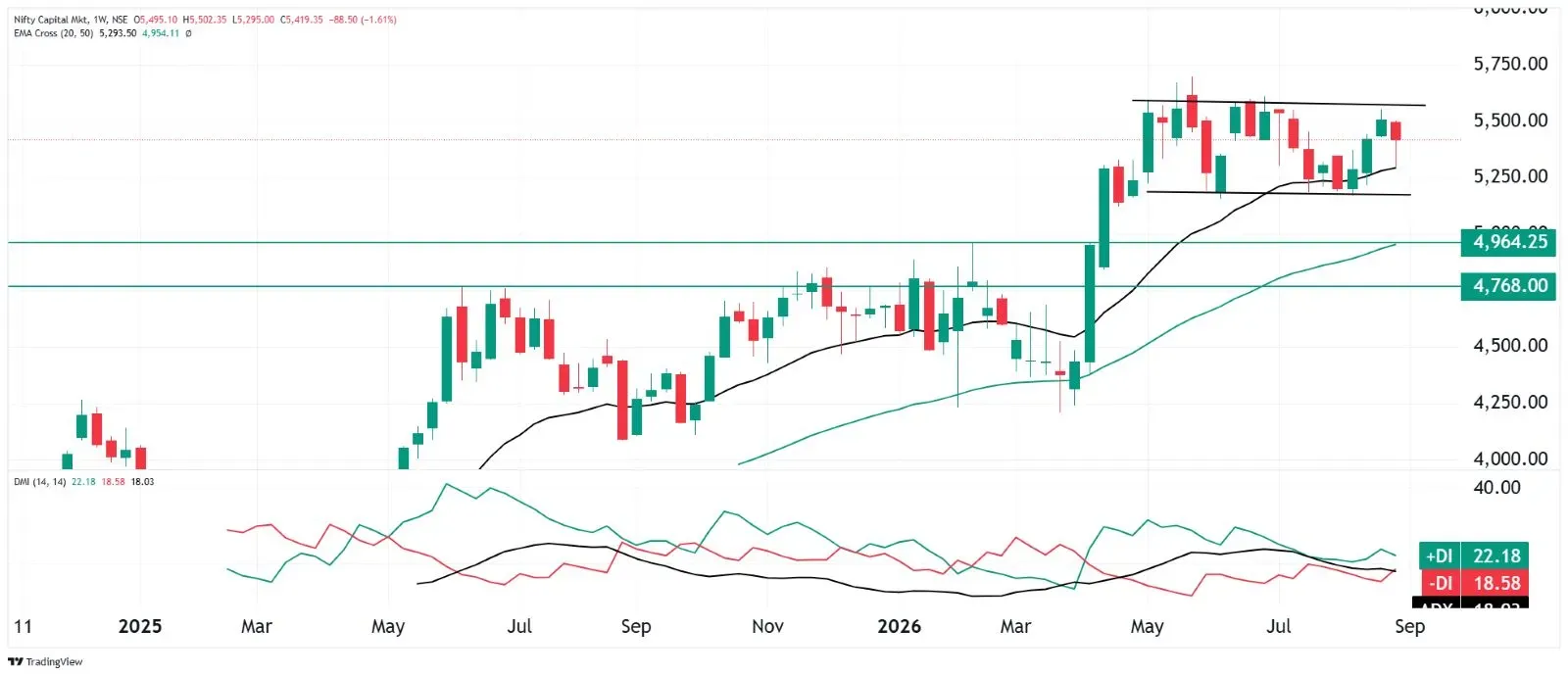
The broader market was mixed. The Nifty Midcap 150 declined 1.4% and underperformed the benchmarks, while the Nifty Smallcap 250 index closed flat at 18,481. The resilience in small-cap stocks showed that selling was not uniform. However, the decline in mid-caps and 12 of the 16 major sector indices indicated weaker overall participation.
In terms of sectors, the automobile sector was the biggest drag. The Nifty Auto index fell by 4%, due to concerns that sales growth could slow down from such a high starting point, and that moderate rainfall could reduce rural demand. Meanwhile, Oil & Gas, Private Banks and Energy advanced in the range of 0.1% to 1%. Capital-market shares also advanced after SEBI said it would review the derivatives settlement-price methodology following volatility linked to the closing auction session.
Additionally, progress towards the long-awaited NSE IPO provided another major trigger. SEBI’s approval could attract investor interest towards the entire capital-market ecosystem, including exchanges, brokers, asset managers and other financial intermediaries. Among constituents, Angel One, Aditya Birla Sun Life AMC and GROWW advanced in the range of 1.3% to 2%.
Meanwhile, in U.S. producer inflation on Thursday, September 10 will provide the first major indication of whether higher energy and input costs are feeding into business prices. A stronger reading could reinforce expectations of another increase in interest rates. On September 11, consumer inflation (CPI) is expected to rise 0.4 % month-on-month, while core inflation is forecast to increase 0.2 %. The inflation print has gained importance after the U.S. economy added 1,62,000 jobs in August, nearly three times the expected 56,000. Following the jobs report, markets raised the probability of a 25-basis-point rate hike in September to around 58%.
Market breadth
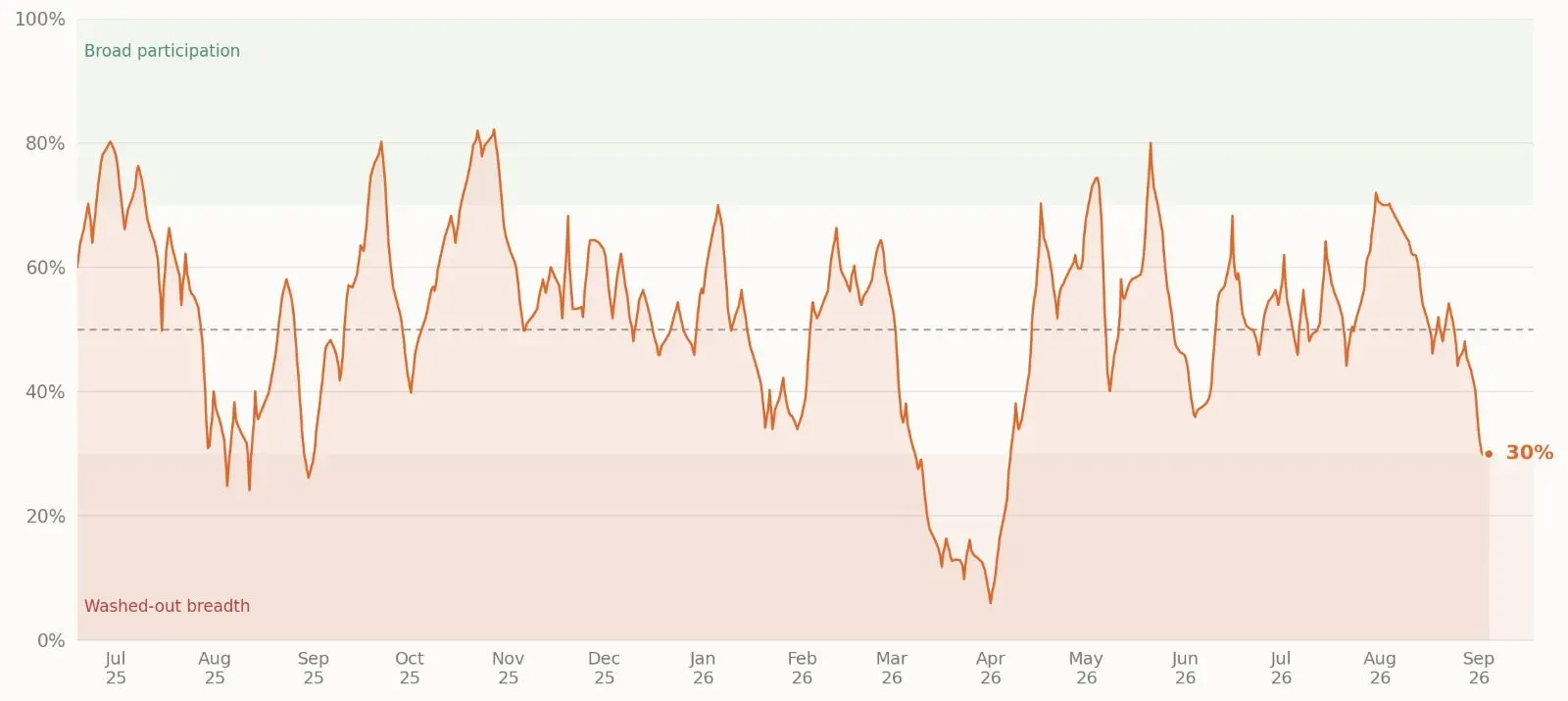
Market breadth weakened sharply during the week, with only 30% of NIFTY50 stocks trading above their 50-day moving average, down from 46% in the previous week. This is the weakest reading since early April and shows that selling pressure has spread across the index. The breadth indicator has now entered the washed-out zone, which could support a short-term rebound. However, a recovery above 50% is required to signal a meaningful improvement in market participation.
Foreign investors positioning
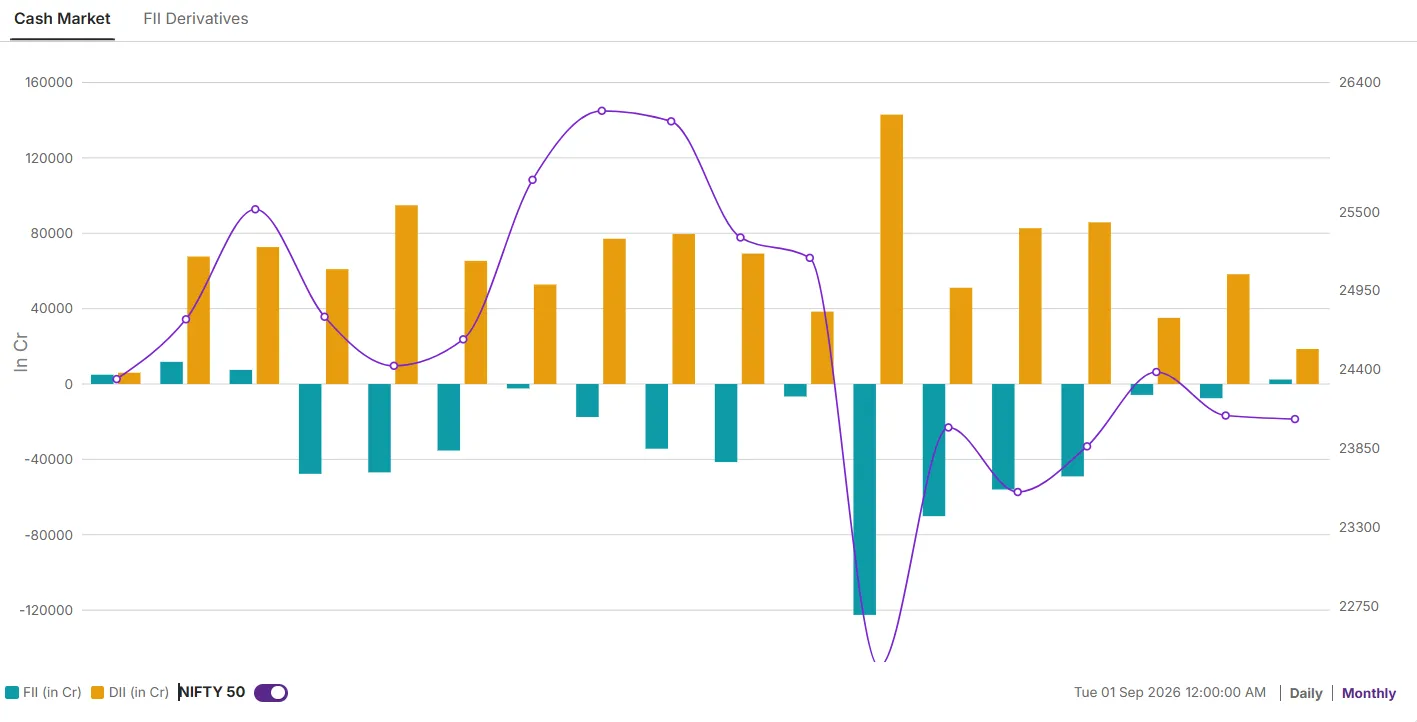
Foreign institutional investors remained marginal net buyers in the cash market during the first week of September, with cumulative purchases of around ₹2,373 crore. However, selling towards the end of the week showed that foreign investors remained cautious amid rising crude-oil prices, higher global bond yields and growing expectations of a U.S. interest-rate hike.
Domestic institutional investors continued to provide strong support, investing around ₹18,000 crore during the week. Their buying helped absorb foreign selling and limited the decline in the benchmark indices.
NIFTY50 outlook
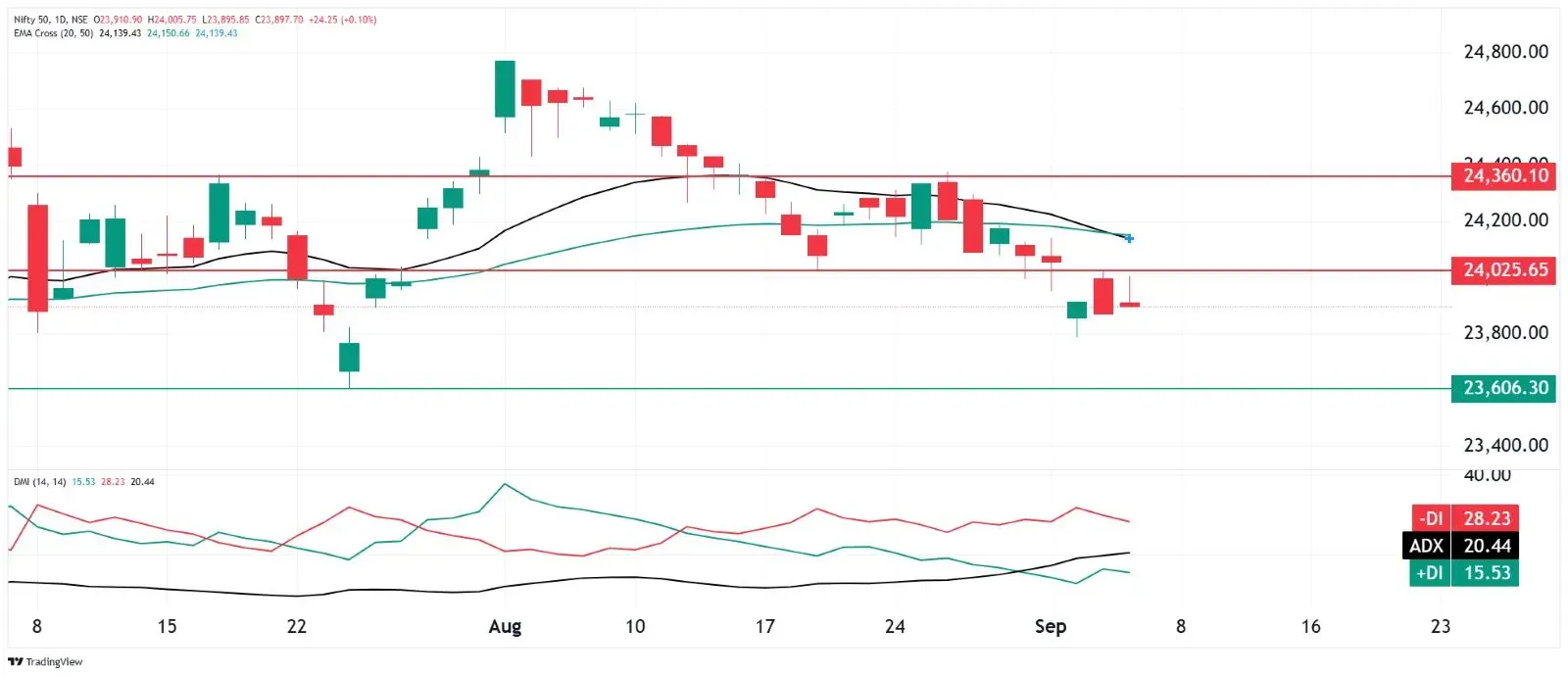
The NIFTY50 index remains below its 20-day EMA at 24,139 and 50-day EMA at 24,156, while the 20-day EMA has also crossed below the 50-day EMA. This keeps the short-term structure bearish. Meanwhile, the ADX has risen to 20.43, indicating that the downward trend is gaining strength.
If NIFTY50 remains below 24,025, weakness could extend towards 23,800, followed by the stronger support near 23,600. An immediate recovery above 24,025 would be the first sign of relief, but the index must reclaim the 24,140–24,160 moving-average zone to improve momentum.
About The Author
Next Story

