Market News
YES Bank declines 3% as lender estimates 250 bps impact on CET1 ratio; check latest update, what analysts predict

4 min read | Updated on October 16, 2026, 11:54 IST


SUMMARY
YES Bank shares declined more than 3% on Friday, October 16, as investors focus on a 250 bps impact on the lender's CET1 ratio. Here's what analysts predict.
Stock list
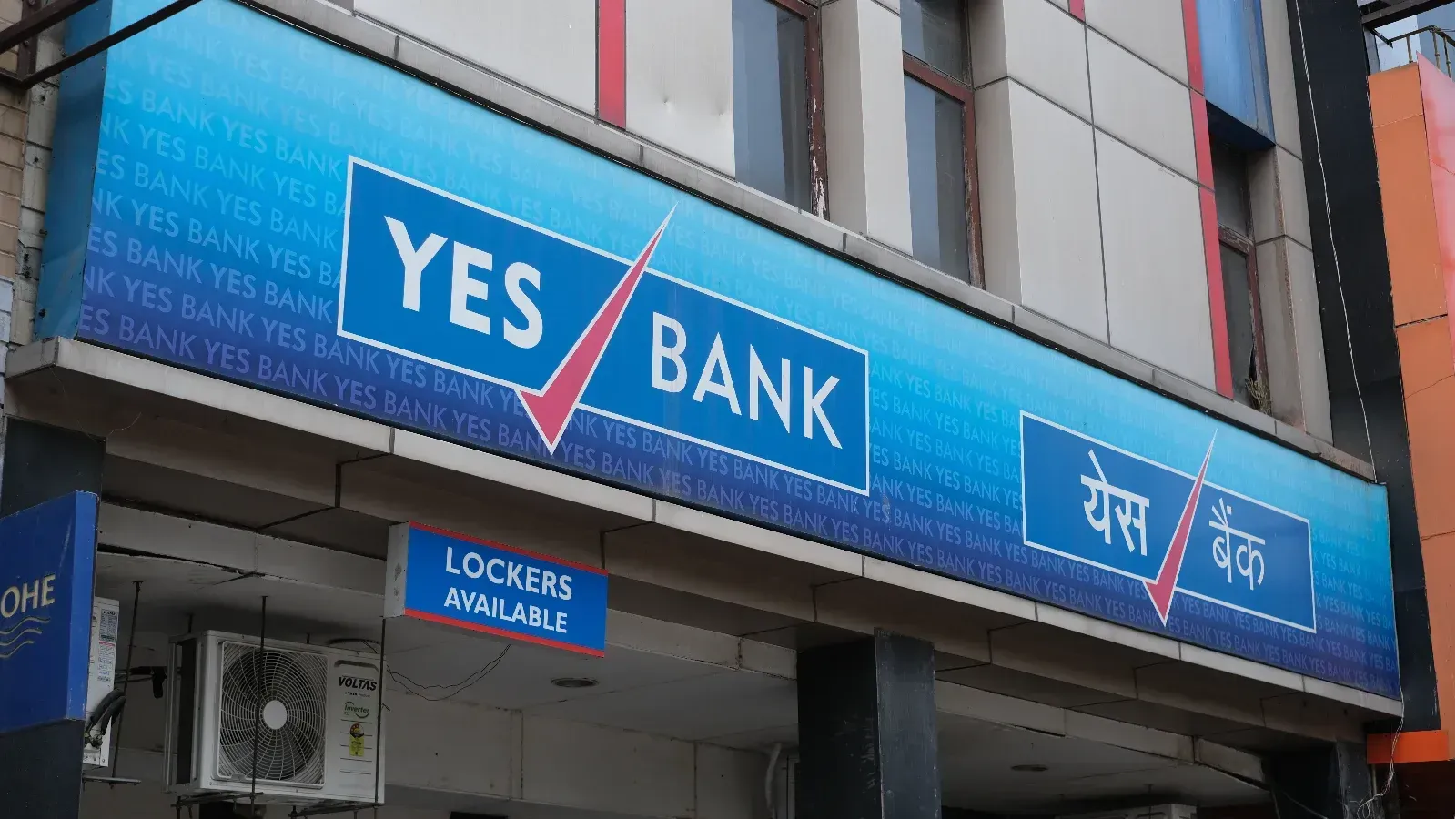
YES Bank shares dropped 3.2% to touch an early market low of ₹17.54 on Friday, October 16. | Image: Shutterstock
NSE data showed that YES Bank shares dropped 3.2% to touch an early market low of ₹17.54 apiece on Friday’s market, in comparison to ₹18.12 apiece at the previous equity market close.
Equity investors continued to maintain selling pressure on the banking stock as the Supreme Court of India quashed the institutional lender’s appeal to write off Additional Tier-1 (AT1) bonds worth ₹8,415 crore.
In an exchange filing on October 16, YES Bank disclosed that the lender is currently reviewing the Supreme Court order and the implications of the same as it plans to make suitable disclosures in due course of time.
The company expects that the re-instatement of AT1 bonds will have an estimated impact on the bank’s Common Equity Tier 1 (CET1) Ratio due to the principal amount due to the bondholders.
YES Bank estimates a 250 basis point (bps) impact on the CET1 Ratio; however, the Tier1 Ratio is expected to remain unimpacted at 14%.
What is CET1 Ratio?
CET1, or Common Equity Tier 1 Ratio, is an indicator of the quality of capital reserves, comprising both cash and stock that a particular bank holds, which the lender can use as a failsafe in times of unexpected needs or financial obligations.
The CET1 Ratio is a measure used by investors and analysts to weigh the bank’s capital against its assets to determine the ability of the institutional lender to handle financial stress or any crisis scenario.
What do analysts expect?
Supreme Court of India’s latest order rejecting YES Bank’s appeal to write off Additional Tier-1 (AT1) bonds worth ₹8,415 crore largely presents as a major negative impact for the institutional lender, as this creates a significant negative liability for the bank.
Analysts from Morgan Stanley said that the order on the AT1 bonds is a “negative”, and the post-tax liability amount of ₹6,300 crore implies 12% of the net worth of YES Bank.
“The post-tax amount of Rs 6300 cr implies 12% of net worth and shaves off 190 bps of Yes Bank's current CET I of 14%,” said Morgan Stanley analysts. “We will watch out for any review petition and clarification by the bank.”
The experts also said that the AT1 bonds plea has been an overhang for the company’s stock, which has seen a sharp reaction post the news of the Supreme Court order.
What are AT1 bonds?
Additional Tier 1 (AT1) bonds are a particular type of debt instrument which the banks use to strengthen their capital base, offering fixed-income investors higher coupon rates for the added risk involved than regular bonds.
Unlike regular bonds, AT1 bonds are perpetual without a fixed maturity date and in case of any potential financial distress, the company can convert their bonds into equity or write them off entirely. The high risk to reward ratio results in institutional investors purchasing these instruments.
Latest updates
Latest NSE filing from YES Bank on October 16 showed that the lender has acknowledged the Supreme Court order dismissing the appeal to write off its AT1 Bonds, as the apex judicial body directed that the annual coupon rate will remain unaffected by the outcome of these appeals.
On October 15, the Supreme Court upheld the earlier Bombay High Court order, citing that the court found no reason to interfere with the earlier High Court order ruling in favour of the bondholders like Axis Trustee Services.
YES Bank had written off these bonds back in 2020 as part of its asset reconstruction scheme after the bank’s financial crisis in 2018.
Later, the bondholders challenged the write-off move, which the Bombay High Court ruled in their favour in January 2023, as a result of which Yes Bank, RBI, and the government appealed to the Supreme Court.
Related News


About The Author
Next Story