Market News
SpiceJet shares soar 7% as airline aims to double feet by the end of 2025; all you need to know

3 min read | Updated on November 17, 2025, 11:57 IST


SUMMARY
The airline noted that liability restructuring is underway, with a substantial portion expected to be completed in Q3 and Q4, which will help strengthen its balance sheet
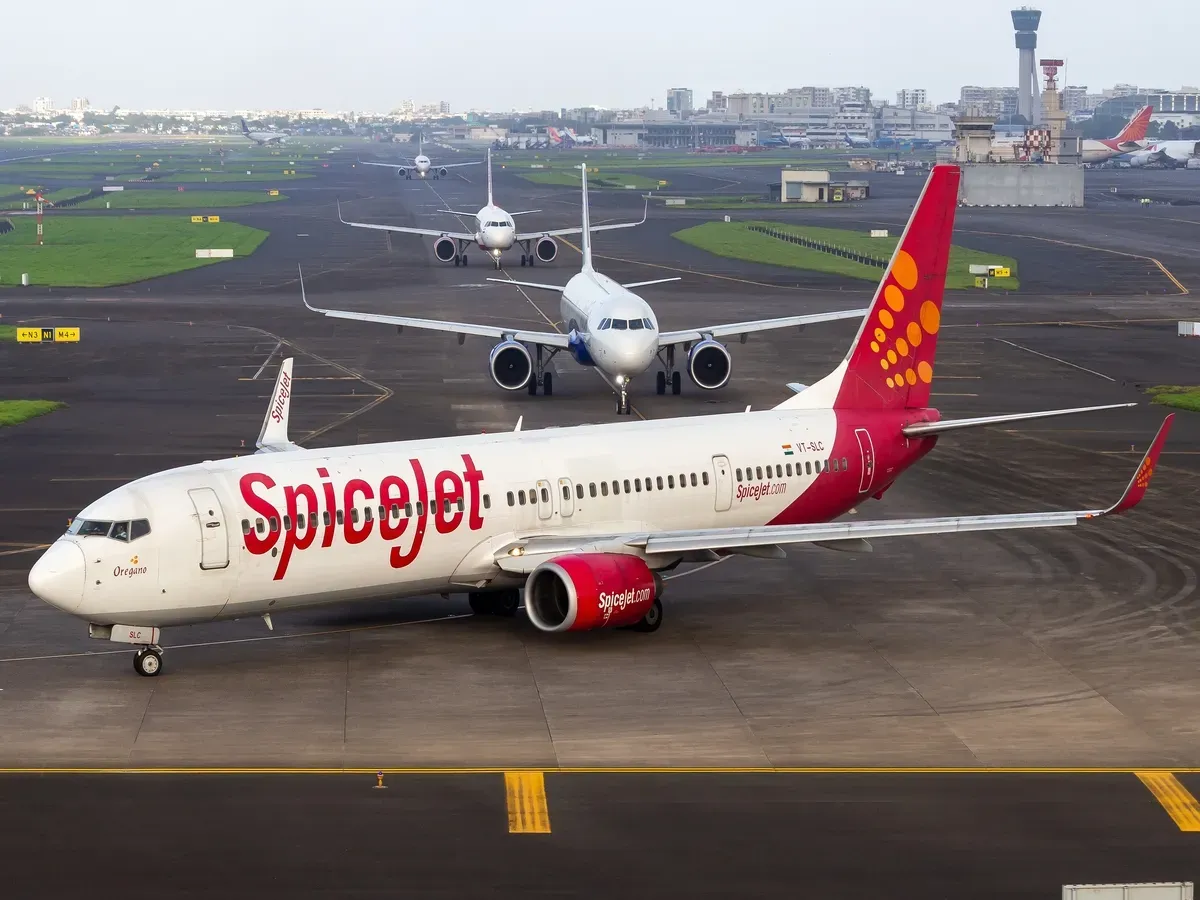
At 11:50 AM, SpiceJet shares were trading at ₹37.65 apiece on BSE, surging 6.12%. | Image: Shutterstock
In its investor presentation, SpiceJet said it plans to return up to eight grounded Boeing aircraft to service by April 2026. This includes bringing four back during the early winter period to meet peak travel demand. Two aircraft have already rejoined the fleet, up to two more are expected by December 2025, and the remaining four are scheduled to return by early summer 2026.
The airline has also firmed up damp-lease agreements for 19 aircraft scheduled to join the fleet between October and November 2025. “Fourteen are already in operation, and the recent return of a reactivated Boeing 737 MAX takes the total additions so far to 15. This marks a clear step forward in SpiceJet’s capacity build-up for the coming year,” said SpiceJet.
The budget airline will operate 225 daily flights during the Winter Schedule 2025—a sharp increase from 125 daily flights in the preceding Summer Schedule and 150 daily flights during the last winter season.
Further, SpiceJet expects higher capacity and improved aircraft utilisation to significantly reduce its Cost per Available Seat Kilometre (CASK) and boost overall profitability. The airline also noted that liability restructuring is underway, with a substantial portion expected to be completed in Q3 and Q4, which will help strengthen its balance sheet.
Following this, shares of SpiceJet gained momentum. At 11:50 AM, the stock was seen at ₹37.65 apiece on BSE, surging 6.12%.
Over a month’s time, SpiceJet shares have rallied 14%, while since the beginning of the year, they have tumbled 33%. The company has a market capitalisation of ₹4,815.15 crore.
SpiceJet’s Q2 earnings
For the September quarter of FY26, SpiceJet reported a consolidated net loss of ₹621.29 crore, which widened from a loss of ₹457.87 crore it logged in the year-ago period.
The net loss widened as multiple factors, including foreign exchange loss, additional expenses related to grounded as well as reinducted aircraft, and airspace curbs, hit the budget carrier's bottom line.
SpiceJet incurred costs of ₹120 crore related to the grounded fleet and expenses of ₹30 crore with respect to aircraft that returned to service.
Its net loss, excluding the forex loss, stood at ₹447.70 crore, an increase from ₹424.26 crore on an annual basis.
The budget airline’s total revenue from operations declined 13.38% year-on-year (YoY) to ₹792.42 crore during the quarter under review, compared to ₹914.85 crore in the September quarter of the 2024-25 fiscal year (Q2FY25).
The company’s EBITDAR loss (excluding forex impact), which stands for earnings before interest, taxes, depreciation, amortisation, and restructuring or rent costs, came in at ₹203.8 crore in Q2FY26. It widened from the ₹58.87 crore EBITDAR loss it reported in the same period of the previous year.
Related News


About The Author
Next Story