Market News
Sector watch: Skies turn hazy for aviation; InterGlobe Aviation Q4 outlook and challenges

8 min read | Updated on April 01, 2026, 22:01 IST


SUMMARY
The Indian aviation sector witnessed a sudden volatility starting from December 2025, when the updated flight duty norms resulted in an operational nightmare for IndiGo. Analysts expect the Q4 results for the sector to remain subdued amid the rising jet fuel prices and the effect of the disruption issues in the January-March quarter.
Stock list
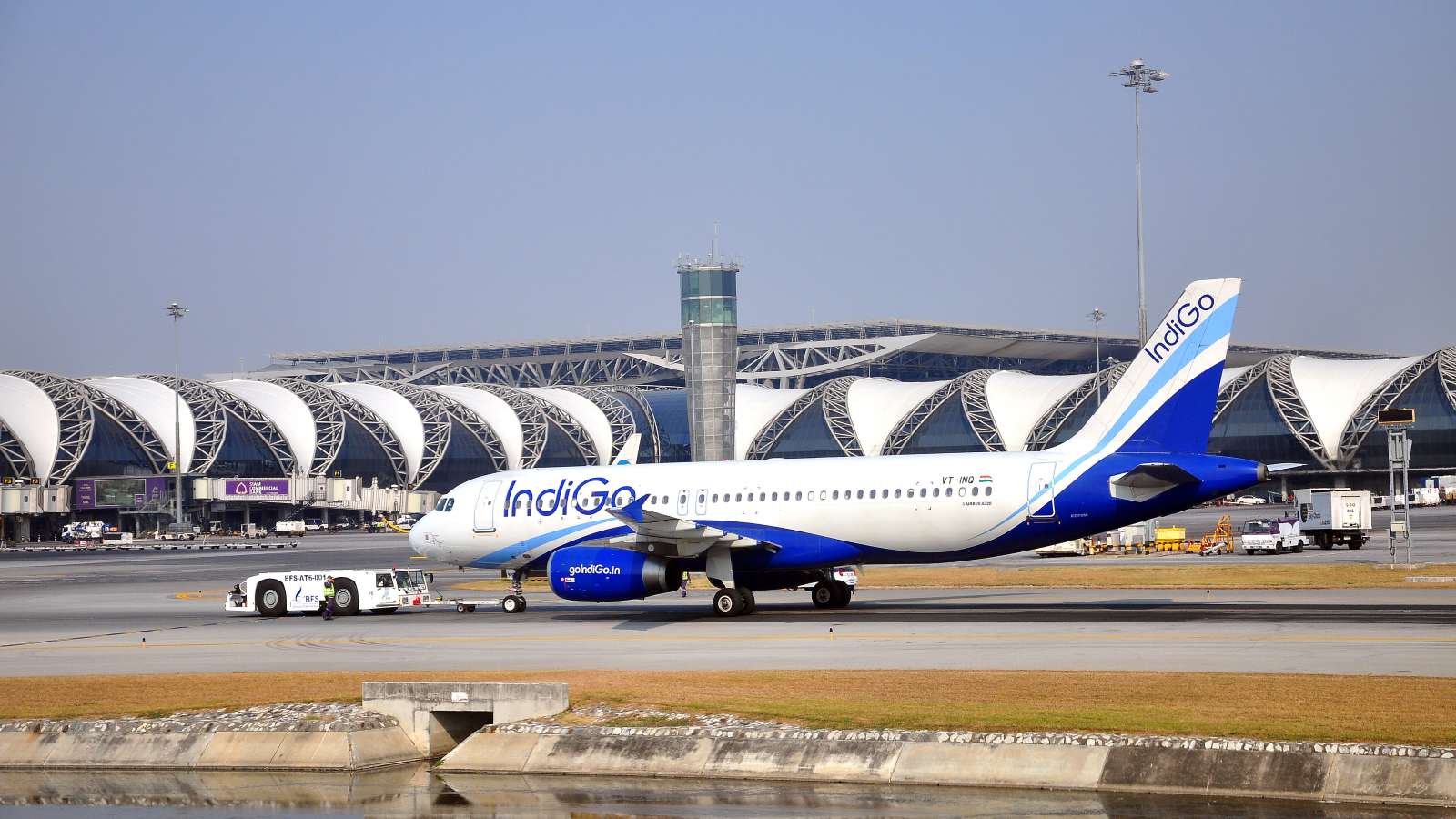
Rising jet fuel prices in the global market along with the effect of the disruption issues at IndiGo, the analysts expect the aviation sector to remain subdued in the fourth quarter.
India’s aviation sector witnessed one of the most volatile periods in the January-to-March quarter of the fiscal year 2025-26 (Q4 FY26) due to the impact of the operation disruption in InterGlobe Aviation (IndiGo), India’s largest and fastest-growing passenger airline, along with the rising crude oil prices in the global market due to the US-Iran conflict.
The sector witnessed this sudden volatility starting from December, when the updated flight duty norms resulted in an operational nightmare for IndiGo. This disruption also resulted in the aviation regulator grounding 10% of the airline’s fleet due to a shortage of staff and pilots.
Despite the sector witnessing an overall upward trend in the first half due to the dynamic expansion of domestic airports in Navi Mumbai and Noida, several route additions, and high travel demand, the momentum failed to sustain as the disruptions and rising costs outweighed the positive triggers.
The headwinds
With the rising jet fuel prices in the global market and the effect of the disruption issues, analysts expect the sector to remain subdued.
The International Air Transport Association’s (IATA) Jet Fuel Price Monitor data suggested that the cost of aviation turbine fuel (ATF) increased by 58.4% in the first week of March, 11.2% in the second week, and by 12.6% more by the end of the third week amid the ongoing conflict.
The jet fuel prices moderated to around $195.19 per barrel (bbl) weekly average as of the fourth week ending March 27, 2026, according to the latest data.
The higher crude oil prices in the global market have been the reason for higher ATF costs for India, a country that imports the majority of its oil from foreign nations.
Brent crude oil was trading at around the $100 per barrel level on April 1, as investors now eye a potential end to the ongoing conflict over the next three weeks, as per US President Trump’s recent claims.
ICRA estimates
Ratings agency ICRA has revised its outlook on the Indian aviation industry to negative from stable, citing disruptions in international airspace following the escalation of geopolitical tensions in West Asia.
The revision in outlook is also on account of a sharp depreciation of the rupee against the US dollar and an expected increase in jet fuel (ATF) prices, ICRA said.
These factors are likely to significantly increase cost pressures for airlines, even as demand growth faces downside risks, it said.
Flight cancellations due to airspace closures, coupled with higher airfares following the levy of fuel surcharges (estimated at 5-6% of average ticket prices), are expected to weigh on passenger traffic growth, ICRA said.
Additionally, rerouting of flights is likely to increase fuel burn and operating costs, the ratings agency said.
Moreover, the removal of airfare caps by the DGCA, which were introduced in December last year following operational disruptions at IndiGo, poses further downside risks.
A sharp rise in ticket prices could dampen travel demand going forward, ICRA said.
ICRA had earlier projected net losses for the aviation industry to narrow to ₹11,000-₹12,000 crore in FY27, supported by traffic growth.
However, the recent geopolitical developments, along with adverse currency movements and rising fuel costs, have introduced a downward bias to these estimates, it said, adding that for FY26, the industry is expected to report net losses of ₹17,000-₹18,000 crore.
Outlook for Q4 results
Ambareesh Baliga, a Mumbai-based independent research analyst, said that the Q4 results are set to be subdued due to the recovery phase of the operations disruption and the impact from the West Asia crisis weighing down on company margins and expenses.
“Quarter four earnings will be poor because, first of all, when we talk of aviation, we're talking of IndiGo. So, as far as IndiGo goes, they were just about recovering from the December quarter issues, and immediately post that, we have seen because of the war, the oil price has gone up, but we have not seen a corresponding increase in airfares,” said Ambareesh Balinga, a Mumbai-based independent research analyst.
Baliga explained how the ATF cost is the “biggest chunk” of expense for an aviation company, and even if the airline companies add a fuel surcharge, it will not be enough to cover the rising cost of oil.
“Amid the talks of an increase in fuel surcharge, it would not be enough to cover the rise in oil prices. And because of the war, there has been a disruption in flights on the international routes due to the reduction in overseas flyers,” he said.
Along with the existing challenges, the limitations on the availability of pilots for all airlines and the DGCA's move to make 60% of seats free of charge will increase the costs for the sector in the upcoming three to four months.
“If the war had happened for a week or two, we would have bounced back faster. The longer it continues, the longer it will take to bounce back,” said Baliga.
Other key points
Civil Aviation Minister K Ram Mohan Naidu recently said India's aviation sector is facing a bottleneck in procurement of new aircraft, citing that while 1,700 new planes are on order, supply chain disruptions mean deliveries may take up to 15 years.
Naidu stated that the government is emphasising domestic manufacturing of aircraft through joint ventures with global giants like Embraer, and a partnership with Hindustan Aeronautics Limited (HAL) is already underway to produce the Sukhoi Superjet 100.
Naidu said Indian airline operators have placed large orders to meet rising demand, and around 30,000 pilots will be needed in the coming years to operate these aircraft.
"When these aircraft start arriving, it will become easier for the airlines to fulfil the new aspirations and demands for connectivity," he said.
To deal with the shortage, the government is working on speeding up aircraft imports and boosting domestic manufacturing under the 'Aatmanirbhar Bharat' and 'Make in India' initiatives, he said.
The minister said the government has been encouraging global companies to manufacture planes in India through joint ventures.
Aviation sector stocks in focus
Although IndiGo shares have gained 158% in five years and 118% in the last three years, the airline stock is down 16.89% over a one-year period. Over the last five market sessions, IndiGo stock has lost 2.69% in the Indian stock market.
Shares of the low-cost airline have tanked more than 86% over the last five years and have lost more than 77% in one year. SpiceJet shares have lost 7.9% over the last five market sessions.
GMR Airport stock has delivered more than 257% returns over the last five years and over 120% gains in the last three years. Shares of the company have risen 15.67% in one year but are trading 0.64% lower in the last five trading sessions.
Shares of the company have lost 84% in the last three years and 70% in the last one -yearperiod. Dreamfolks Services shares are trading 1.17% lower over the last five days on the Indian stock market.
The airline company’s stock is down 20.65% in one month and is trading 3.57% lower over the last five sessions on the Indian stock market.
The helicopter operating company’s stock has risen nearly 275% over the last five years and 182% in the last three -year period. Global Vectra Helicorp shares were down 40% in one year and are trading 1.57% lower in the last five market sessions.
Related News


About The Author
Next Story