Market News
Sector Watch: MRF, JK Tyre, CEAT — What lies ahead amid West Asia crisis, rising rubber & crude prices?

7 min read | Updated on April 07, 2026, 16:14 IST


SUMMARY
India's tyre sector is expected to witness healthy volumes from the domestic market, while exports continue to remain under pressure due to the West Asia conflict. Here's what investors should know about the industry and the impact of the geopolitical conflict.
Stock list
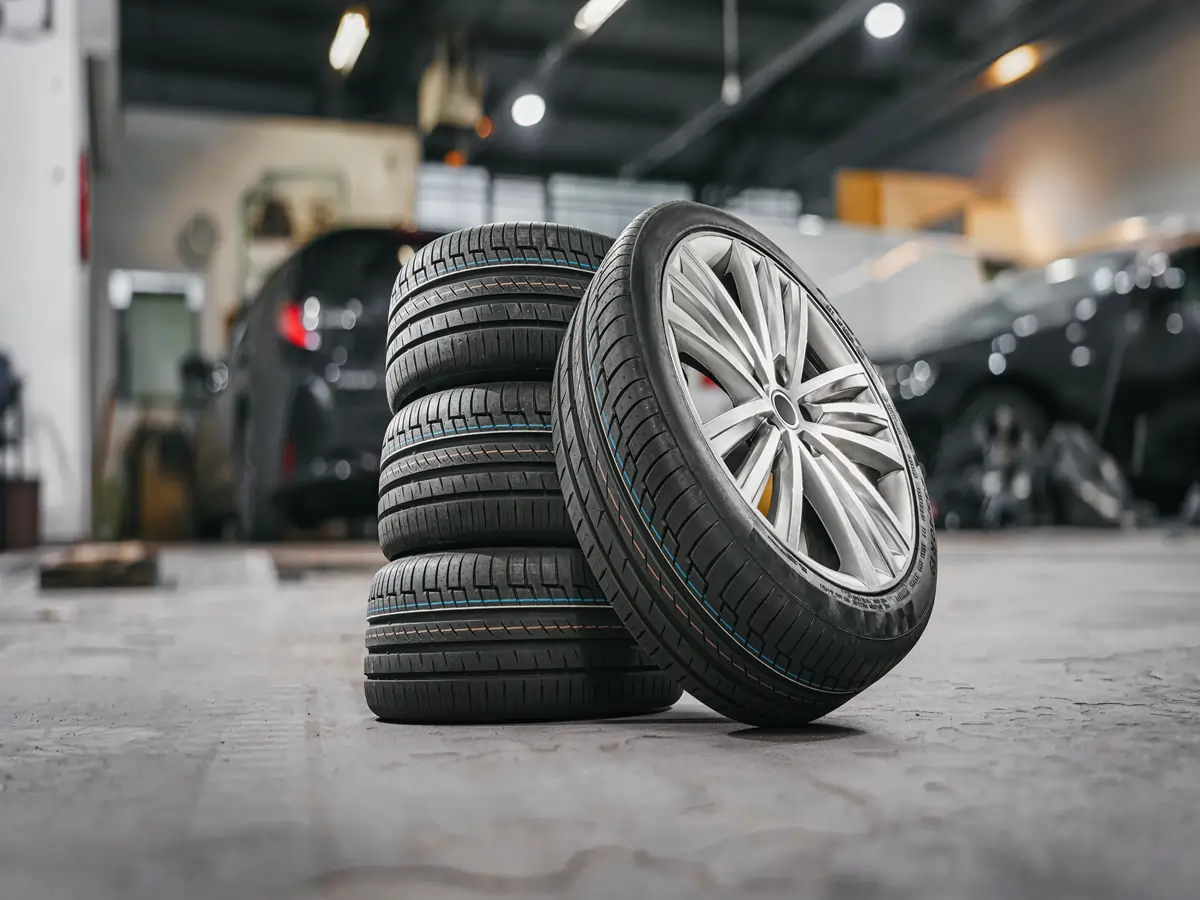
Over 25 litres of crude oil are used to make one tyre and over a billion tyres are manufactured around the world every year.
The conflict has created a supply concern in the market for key commodities like crude oil, which is used extensively in the rubber industry to make tyres for commercial and passenger vehicles in India.
Iran’s blockage of the Strait of Hormuz and the escalation of the conflict are factors that create a sense of uncertainty for global market investors. Considering these factors, along with the market demand, will result in an increase in freight costs for the companies exporting out of India.
“Tyre exports are under pressure as escalating West Asia conflict impacts shipping routes and results in an increase in freight costs,” according to an ICRA report.
Rising rubber prices
Data collected from Ace Equity suggests that the RSS-4 grade rubber prices have risen more than 6% in the global market (Bangkok) since the beginning of the US-Iran conflict to ₹273 per 100 kilograms (kg) as of the first week ended in April 2026, compared to their around ₹257 per 100 kg level before America attacked Iran on February 28.
In the Indian market, the RSS-4 grade rubber (Kottayam) prices have risen more than 3% to ₹22,800 per 100 kg as of April 4, compared to ₹22,100 per 100 kg at the beginning of the US-Iran conflict.
Global prices for commodities like rubber are increasing in line with the rising price of crude oil in the market amid the supply uncertainties. The RSS-4 grade rubber is mostly used for making commercial tyres across the world, and these final goods are made by using petrochemical products, which are derived from crude oil.
Hence, the rising price of crude oil is making investors cautious, who are dynamically trading these commodities with the developing events of the geopolitical conflict between the United States and Iran.
On Tuesday, crude oil prices remained elevated near the $110 per barrel region as of 2:00 pm (IST), amid Donald Trump’s recent military strike threats and a nearing deadline for Iran to open up the Strait of Hormuz for global oil trade.
How much oil does it take to make a tyre?
According to the University of Queensland’s research data, more than 25 litres of crude oil are used to make one tyre, and over a billion tyres are manufactured around the world annually.
Along with the use of natural rubber, elements like Isoprene are also used to make synthetic rubber, which is entirely made from petrochemical products.
“This compound (Isoprene) is naturally produced by some plants when under heat stress, but like natural rubber, it is not economically viable to harvest it from plants,” according to the research.
Outlook for tyre sector
Gurugram-based ratings agency ICRA’s recent report, released in March 2026, suggests that the Indian tyre sector is expected to witness 5-7% growth in the domestic demand in the financial year ending 2026-27 amid the rising revenue forecast due to healthy domestic demand.
The ratings agency expects the revenues of the top Indian tyre makers to grow by 6-8% in the fiscal year 2027 due to the healthy volumes in the domestic market. However, the export market for Indian tyres is likely to remain under pressure due to the West Asia conflict impact.
“Tyre exports are likely to remain under pressure, given the logistical challenges and increased freight costs owing to the West Asia conflict. Moreover, exports to West Asia account for 8-10% of India’s tyre exports. While the ongoing geopolitical tensions remain an overhang, a likely diversification to other countries is expected to minimise the impact,” said ICRA in its research report.
With the increasing cost of inputs over the surging crude oil prices, the operating margins for FY2027 are expected to contract on the backdrop of a limited area for price hikes in a highly competitive market.
Top tyre stocks in focus
Shares of MRF have given investors more than 52% returns on their investment in the last five years and over 51% gains in the last three years. The company’s stock has gained 15.34% in one year but is trading 8.26% lower in the last one-month period, as per the exchange data.
Shares of the company have delivered over 25% returns in five years and more than 7% returns in the last three years, according to NSE data. However, Balkrishna Industries stock has lost 6.62% in one year and is trading 5.64% lower in the last one-month period.
The tyre stock has delivered more than 82% returns to investors in five years and over 28% gains in the last three years. Apollo Tyres' stock is up 3.46% in the past year but is trading 6.49% lower in the last one-month period.
Ceat stock has delivered more than 116% returns on investment in five years and over 135% gains in the last three-year period. The tyre stock has gained 26% in one year but is trading 2.39% lower over the last one-month period on the Indian stock market.
Shares of JK Tyre have delivered more than 234% returns in the last five years and have given stock market investors over 136% gains in the last three-year period. The company’s stock has risen 49.29% in one year but is trading 13.16% lower over the last one-month period.
TVS Srichakra shares have given investors more than 92% returns on their investment in the last five years and over 30% gains in the last three-year period. The company's stock is up 43% in one year but has lost 4.92% in the last one-month period on the Indian stock market.
Over the last five years, the company’s stock has lost around 22% and is down 12% in the last one-year period. On a year-to-date (YTD) basis, Goodyear India shares were down 16% and trading 7% lower over the last five trading sessions.
The company’s shares have lost 14.58% in one year, and 26.36% on a year-to-date (YTD) basis, according to the exchange data. Tolins Tyres' stock is trading 5.67% lower over the last one-month period but is up 16.64% in the last five market sessions.
Related News


About The Author
Next Story