Market News
DLF, Prestige Estates: Top 5 developers sell ₹63,000 crore worth of properties in 1HFY26; what is the outlook?
.png)
7 min read | Updated on November 24, 2025, 10:17 IST


SUMMARY
Realty stocks: In terms of sales bookings, Prestige Estates Projects Ltd emerged as the leading listed player in the April-September period of the 2025-26 fiscal year with pre-sales of ₹18,143.7 crore.
Stock list
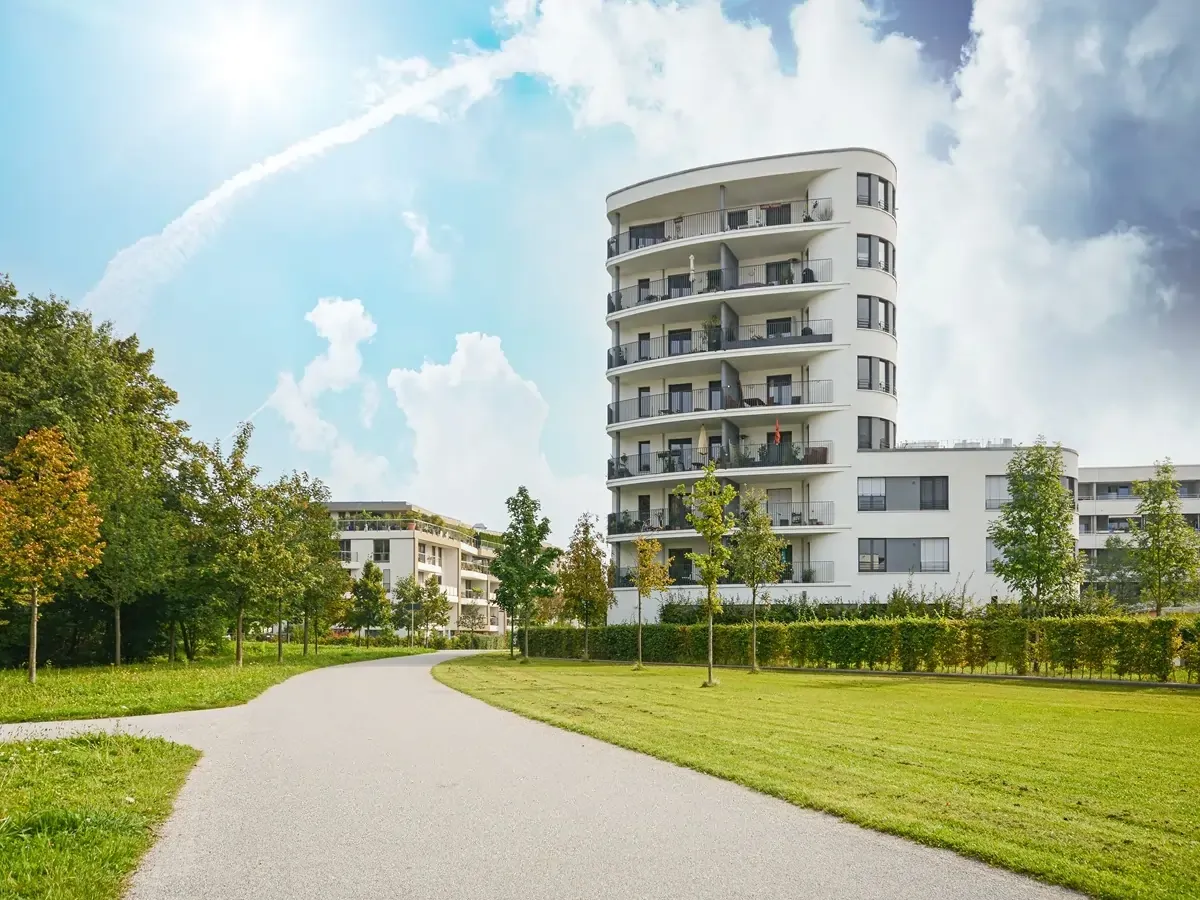
Mumbai-based Godrej Properties clocked sales bookings of ₹15,587 crore. | Image: Shutterstock
A PTI report, citing data compiled from regulatory filings, stated that the total combined sales bookings of 28 major listed realtors stood at ₹92,437 crore in the first six months of the current financial year.
In terms of sales bookings, Prestige Estates Projects Ltd emerged as the leading listed player in the April-September period of the 2025-26 fiscal year with pre-sales of ₹18,143.7 crore.
DLF Ltd, the country's largest realty firm in terms of market capitalisation, stood in second position, with pre-sales of ₹15,757 crore.
Mumbai-based Godrej Properties clocked sales bookings of ₹15,587 crore, while Lodha Developers sold properties worth ₹9,020 crore during the April-September period of FY26.
Delhi-NCR-based Signature Global achieved sales bookings of ₹4,650 crore in the first half of this fiscal year, the report added.
Notably, these top five developers sold more than ₹63,000 crore during April-September, nearly 70% of the total pre-sales clocked by these 28 players.
The performance of listed real estate developers has been good post-COVID-19 pandemic because of strong demand for residential properties, the report added.
"Moreover, consumers have also become risk-averse, preferring big-branded realtors with better track records while avoiding fly-by-night operators," PTI reported.
Other realty firms' performance
Among other listed players, Bengaluru-based Sobha Ltd and Brigade Enterprises sold properties worth ₹3,981.4 crore and ₹3,152 crore, respectively.
Mumbai-based Oberoi Realty Ltd and Kalpataru Ltd posted sales bookings of ₹2,937.74 crore and ₹2,577 crore, respectively.
Bengaluru-based Puravankara Ltd achieved pre-sales of ₹2,455 crore.
Sales bookings of Mumbai-based Keystone Realtors, which markets under the Rustomjee brand, stood at ₹1,839 crore.
Mumbai-based Sunteck Realty and Aditya Birla Real Estate achieved sales bookings of ₹1,359 crore and ₹1,312 crore, respectively.
Pune-based Kolte-Patil Developers Ltd sold properties worth $1,286 crore, while Mumbai-based Mahindra Lifespace Developers Ltd pre-sales stood at ₹1,200 crore.
Bengaluru-based Shriram Properties Ltd clocked pre-sales of ₹1,126 crore.
Small-sized property sales
In the below-₹1,000 crore pre-sales category, there were many players.
Sales bookings of Mumbai-based Ajmera Realty & Infrastructure Ltd and Raymond Realty Ltd stood at ₹828 crore and ₹760 crore, respectively.
Delhi-NCR-based Ashiana Housing Ltd pre-sales stood at ₹734.4 crore.
Both Bengaluru-based Embassy Developments Ltd and Ahmedabad-based Arvind Smartspaces Ltd had sales bookings that stood at ₹607 crore each.
Delhi-NCR-based TARC Ltd sold properties worth $565 crore.
Sales bookings of Mumbai-based Arihant Superstructures Ltd and Delhi-NCR-based Max Estates Ltd stood at ₹386.4 crore and ₹373 crore.
Arkade Developers Ltd and Sri Lotus Developers sold properties worth ₹331 crore and ₹319 crore, respectively.
Lucknow-based Eldeco Housing & Industries Ltd achieved pre-sales of ₹309.2 crore. Lastly, Mumbai-based Suraj Estate Developers Ltd sales bookings stood at ₹234 crore during the first six months of the current 2025-26 financial year.
Time lag in revenue recognition
The PTI report added that many listed players have not reported their sales bookings numbers, which, of late, have become an important metric to evaluate their operational performances.
There is a significant time lag in revenue recognition of sales bookings achieved by these developers, as it is linked to the completion of real estate projects.
Real estate developers, which are not listed on stock exchanges, generally do not report their quarterly and annual sales bookings.
During the 2024-25 financial year, the country's 26 major listed real estate firms sold properties valued at ₹1.62 lakh crore.
Godrej Properties Ltd was the largest player last fiscal year in terms of sales bookings, as it sold properties worth nearly ₹30,000 crore.
How real estate stocks fared during April-September period
Data show that the NIFTY Realty index gained 5% during the period under review, thus reflecting the positive momentum in the companies’ business.
However, the sector has been under pressure of late. In the past five sessions, the realty index has declined by over 4%, and in the past 30 days, the index has lost 3.75%.
If considering the six-month period now, the index is down 4%, while on a year-to-date (YTD) basis, the index has slipped nearly 13%.
Why are stocks under pressure?
Analysts note that Indian real estate stocks are currently down due to investors booking profits after a good rally, weakened foreign capital inflows, and underlying structural concerns such as rising property prices impacting affordability and a slowdown in construction.
Even though there is visible demand in real estate — especially in premium/luxury housing — stock market investors are focusing more on risks than just sales numbers. High costs, margin compression, valuation worries, and financing challenges are outweighing the positive demand narrative in the short to medium term, they highlight.
Analysts note that construction costs remain high — materials like cement, steel, labour, and logistics are expensive. According to a report by Business Standard published in September 2025, sticky input costs and demanding valuations are the major reasons behind investors turning cautious on the sector, despite RBI slashing the repo rate by 100 bps.
News reports add that capital flows into the real estate sector from foreign investors fell significantly (36% year-on-year in the first nine months of 2025), reflecting a cautious global outlook and weighing on sector sentiment.
Another reason why real estate stocks have been under pressure is the slow pace of construction. The pace of construction has fallen to an eight-year low, creating a widening gap between new project launches and physical delivery.
Kapoor noted that sales have already seen a marginal decline for four consecutive quarters, slipping 1–3% quarter-on-quarter. Overall, sales are down about 7–8% from their peak across 75 cities monitored by Liases Foras.
Kapoor stated that while developers are launching more projects than ever, construction is not keeping pace. The share of projects under construction has fallen from 65–75% earlier to nearly 50% in some cities, signalling labour shortages, approval delays, and funding issues.
This gap between launches and construction raises the risk of project delays, weaker cash flows, and margin pressure for developers.
These issues are visible across both tier-1 and tier-2 cities, making it a pan-India trend, not a regional problem.
External macro factors—such as geopolitical tensions, commodity price fluctuations, and global capital flow uncertainties—continued to impact investor sentiment and posed risks to transaction volumes, particularly in cross-border investments, notes a report by Grant Thornton Bharat.
Outlook
A report by Grant Thornton Bharat said that while affordability challenges, regulatory bottlenecks, and global macro risks will persist, India’s real estate sector is well positioned to build on its adaptability, deepen technological innovation, and drive a more resilient, inclusive, and sustainable growth cycle through FY 2025–26 and beyond.
The report said, "While the sector is growing, it continues to face challenges like regulatory hurdles, rising construction costs, and liquidity issues, especially for smaller developers. While reforms like RERA and GST boost transparency, ongoing policy support and financing access are vital for long-term stability."
In summary, backed by investor confidence and adaptive consumer behaviour, the realty sector remains a key economic pillar and is set for continued momentum in FY2025-26 and beyond, driven by urbanisation, infrastructure growth, and technology integration, analysts opine.
Related News


About The Author
Next Story