Market News
Olectra Greentech, JBM Auto shares rally up to 7.6%; what investors need to know
.png)
4 min read | Updated on January 02, 2026, 11:40 IST


SUMMARY
Olectra Greentech share price: The stock of Olectra Greentech gained in trade after the company on Monday said it had declared December 31, 2025, as the Commercial Operation Date (COD) for its Greenfield Electric Vehicle (EV) Manufacturing Facility situated at Seetharampur, Hyderabad, Telangana ("Facility") with an annual per shift production capacity of 2,500 buses.
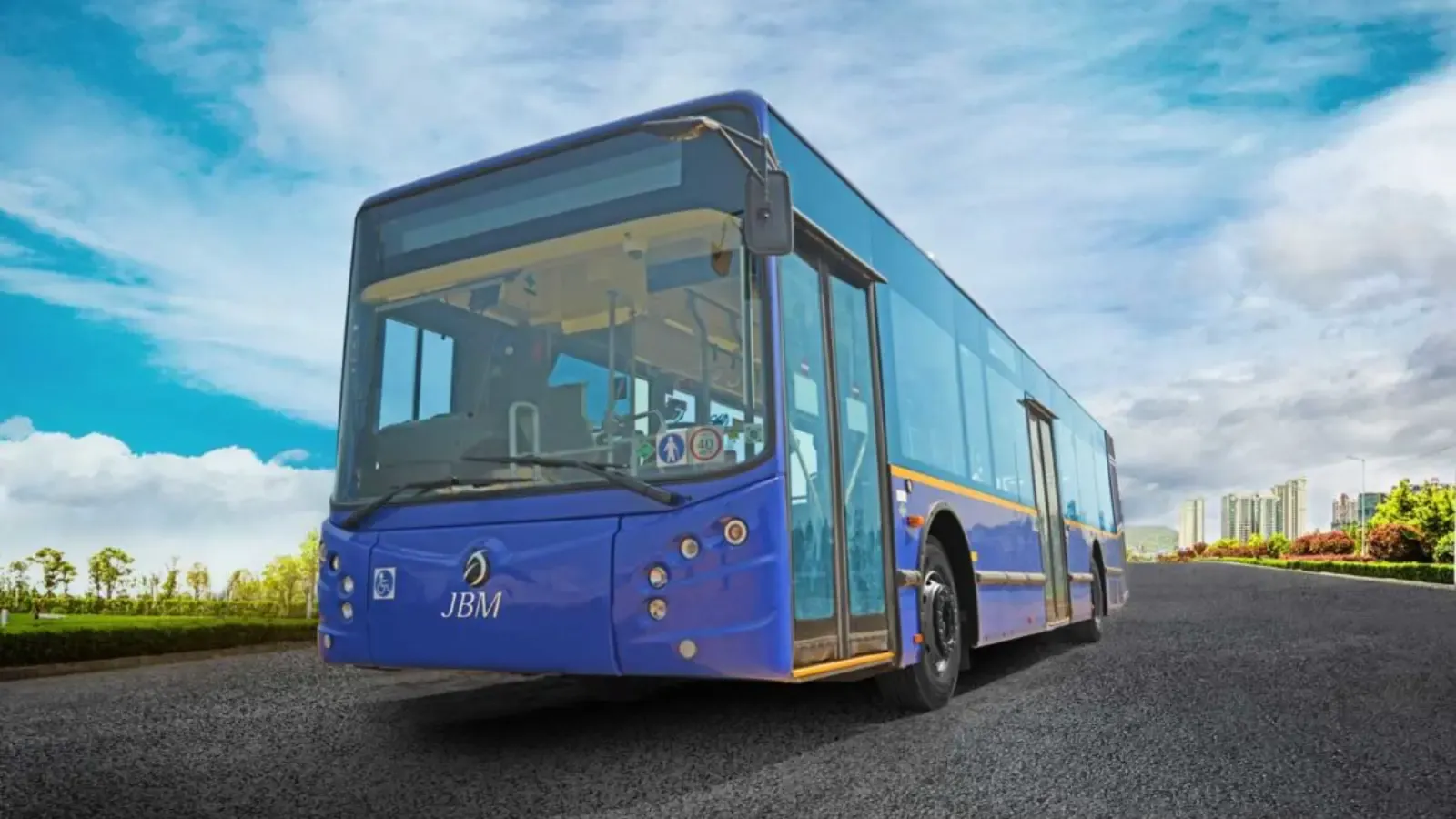
In November 2025, JBM Group said it had inked a joint venture pact with Portugal-based Sodecia Automotive. | Image: Shutterstock
On the NSE, shares of JBM Auto rallied as much as 7.63% to hit a high of ₹673.40 apiece, while those of Olectra Greentech advanced as much as 6.18% to hit a high of ₹1,274.80 apiece.
The stock of Olectra Greentech gained in trade after the company on Monday said it had declared December 31, 2025, as the Commercial Operation Date (COD) for its Greenfield Electric Vehicle (EV) Manufacturing Facility situated at Seetharampur, Hyderabad, Telangana ("Facility") with an annual per shift production capacity of 2,500 buses.
This declaration has been communicated to the State Bank of India (the lender). This Phase I capacity achievement of 2,500 buses per annum represents 50% of the planned per-shift annual capacity of 5,000 buses per annum.
Olectra Greentech Limited (OGL) is India's leading manufacturer of pure electric buses, with production facilities located in Hyderabad. It is a subsidiary of the MEIL Group. Olectra has produced and deployed all types of electric buses across the country. The company was incorporated in 1992.
Business operations
Olectra Greentech Limited is primarily engaged in manufacturing composite polymer insulators and electric buses. Building on its success in the commercial electric bus sector, the company later broadened its product range to include 3-wheeler electric autos and electric trucks within the e-mobility segment.
Olectra Greentech runs its business across various locations. It operates three plants and has one office in India. The company serves the electric vehicle market in nine states within India, while its insulator products are distributed pan-India. Internationally, it has a presence in one country for e-vehicles and seven countries for insulators.
JBM Auto
Shares of JBM Auto were in the spotlight earlier this week amid news reports that the company will acquire an electric-vehicle charging network of a Finnish power company.
However, the company issued a clarification regarding the same and said that "based on the information available with us, neither JBM Auto Limited (the Listed Company) nor any of its subsidiary companies has executed any agreement related to the information mentioned."
In November 2025, JBM Group said it had inked a joint venture pact with Portugal-based Sodecia Automotive to design, develop, and supply hot-stamped automotive systems and assemblies to Indian original equipment manufacturers.
The partners plan to invest around ₹150 crore to set up a manufacturing facility in Chakan, Pune, which is scheduled to become operational by Q2FY27.
The new facility will manufacture safety-critical, lightweight, high-strength auto systems for both ICE (internal combustion engine) and electric vehicles, the company said in a statement.
Over the years, JBM Group has been working towards strengthening its hot stamping ecosystem across its various facilities. In this direction, the company has already set up its dedicated hot stamping die manufacturing facility at Greater Noida, it added.
In September 2025, the company said it had partnered with Dubai-based automobile distributor Al Habtoor Motors to launch its e-buses in the UAE market.
Under this partnership, Al Habtoor Motors will serve as the exclusive importer and distributor of JBM's electric buses, supporting nationwide deployment and service infrastructure in the UAE, the company said.
"The UAE is a strategic market for JBM Electric Vehicles... We are eager to contribute to the UAE government's vision of sustainable transport," said Nishant Arya, Vice Chairman and Managing Director, JBM Auto.
EV Buses in India
India’s bus sector is a critical pillar of mass mobility, serving millions of passengers every day. However, as per available reports, it remains heavily reliant on diesel, which accounts for more than 90% of annual bus sales.
In this context, the shift toward electric buses is gaining importance as a key enabler of sustainable transportation. E-buses can significantly reduce dependence on imported fossil fuels while helping to curb urban air pollution.
Related News

About The Author
Next Story