Market News
Indian Oil, HPCL, BPCL: Oil marketing firms' shares in focus as govt cuts excise duty; check details

5 min read | Updated on March 27, 2026, 10:01 IST


SUMMARY
Indian Oil share price: According to reports, petrol duty has been slashed to ₹3/litre from ₹13 earlier and diesel to nil from ₹10, offering relief at the pump.
Stock list
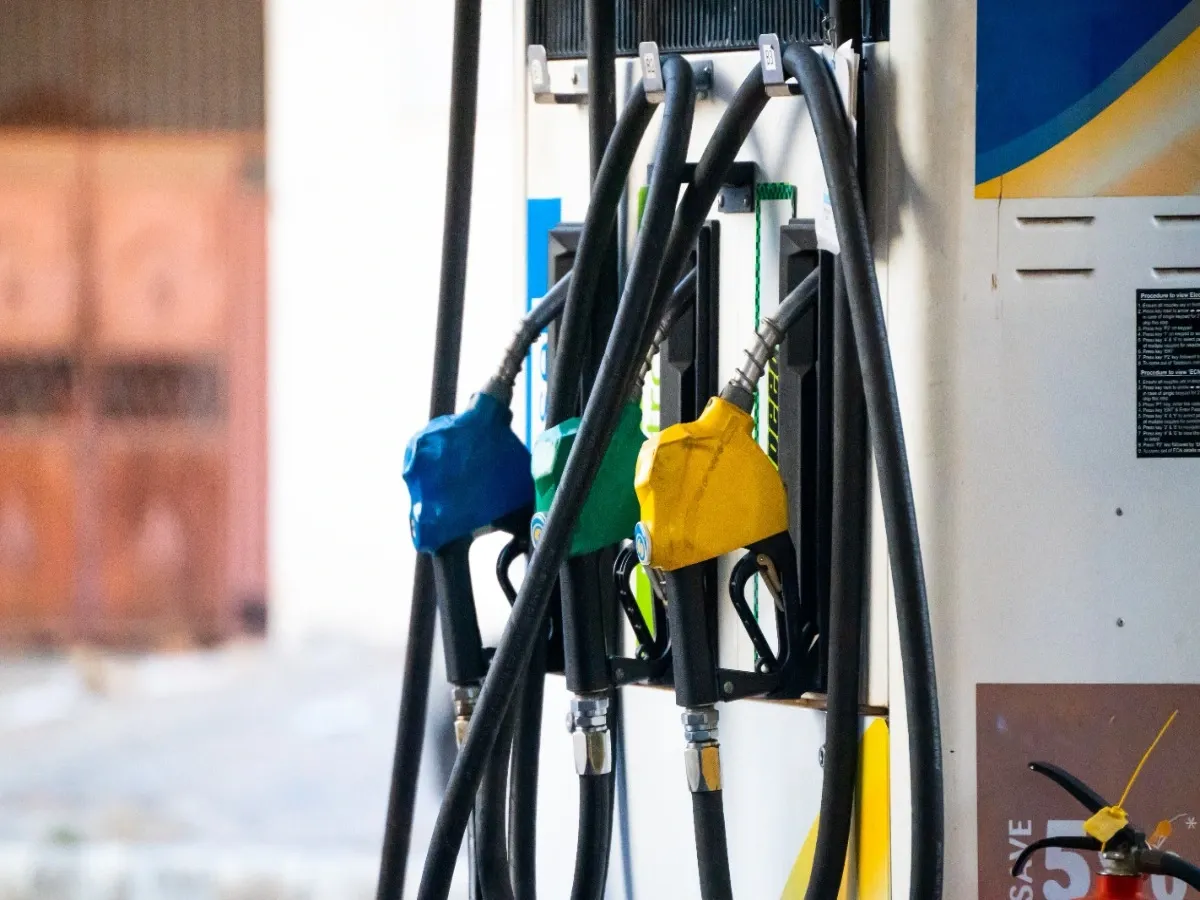
Excise duty on petrol and diesel is a tax levied by the central government on fuel produced or sold in India. | Image: Shutterstock
Excise duty on petrol and diesel is a tax levied by the central government on fuel produced or sold in India.
The excise duty cuts are expected to absorb 30%–40% of OMC losses on auto fuels, providing relief when crude prices are high, as per reports.
The duty cuts have been announced, given the rising global crude prices amid the war in the Middle East.
At the same time, the government has levied export tax as international prices of petrol and diesel have skyrocketed and any refinery exporting to foreign nations will have to pay export tax.
What the Finance Ministry said
The Finance Ministry, in a notification dated March 26, cut excise duty on petrol to ₹3 a litre from ₹13 a litre earlier, while the levy on diesel has been slashed to nil from ₹10 earlier.
The duty cuts are effective immediately, the ministry said.
OMCs under strain due to a sharp spike in crude oil prices
Fuel marketing companies in India have been under strain as retail petrol and diesel prices remained frozen despite a nearly 50% surge in international oil prices since February 28, when the United States and Israel launched military strikes against Iran, triggering sweeping retaliation from Tehran.
In a note on Thursday, rating agency ICRA said that if the average crude oil price goes up to $100-105/bbl, the fuel retailers would incur a loss of ₹11 per litre and ₹14 per litre on petrol and diesel, respectively.
International oil prices touched $119 per barrel earlier this month, before pulling back to around $100 per barrel.
What Hardeep Singh Puri said
Hardeep Singh Puri, the minister of petroleum and natural gas, in a post on X, said, 'International crude prices have gone through the roof in the last 1 month, from around 70 dollars/barrel to around 122 dollars/barrel.'
Consequently, petrol and diesel prices for consumers have gone up all over the world. Prices have increased by around 30%-50% in South East Asian countries, 30% in North American countries, 20% in Europe and 50% in African countries.
The Modi government had two choices – either increase prices drastically for citizens of Bharat as all other nations have done or bear the brunt on its finances so that Indian citizens are insulated from international volatility.
Hon’ble Prime Minister @narendramodi Ji, in keeping with his government's commitment of the last 4 years since the conflict in Russia-Ukraine started, decided to take a hit on its own finances again to safeguard the Indian citizen.
The government has taken a huge hit on its taxation revenues to ensure very high losses of oil companies (approximately 24 Rs/litre for petrol and 30 Rs/litre for diesel) at this time of sky-high international prices are reduced.
At the same time, export tax has been levied as international prices of petrol and diesel have skyrocketed and any refinery exporting to foreign nations will have to pay export tax. My gratitude to the Hon'ble PM Narendra Modi Ji and the Hon'ble FM @nsitharaman Ji for this very timely, bold and visionary decision!
Recent updates
On March 25, 2026, state-owned oil companies said there was no shortage of petrol, diesel, or LPG in the country, urging citizens not to believe rumours circulating on social media or resort to panic buying.
Indian Oil Corporation (IOC), the nation’s largest oil firm, said “there is no shortage of petrol or diesel”, adding that its outlets are “well-stocked and fully operational”.
It cautioned that rumours “can create unnecessary concern and disrupt normal supply patterns” and urged citizens to “avoid panic buying and rely only on verified information”.
Bharat Petroleum Corporation Ltd (BPCL) termed reports of fuel shortages in certain areas “completely unfounded”, asserting that “there is no shortage of fuel across the nation”.
The company said India is a net exporter of petrol and diesel and has “adequate stocks of crude oil, petrol, diesel and ATF”, with supply chains operating “smoothly without any disruption”.
It added that it remains “fully operational and committed to ensuring uninterrupted fuel supply”.
Hindustan Petroleum Corporation Ltd (HPCL) also said there is “no shortage of petrol, diesel or LPG across the country”, with supplies remaining stable and stocks adequate.
It advised customers not to be misled by rumours or engage in panic buying and to “continue with normal consumption patterns”, adding that it is committed to ensuring “an uninterrupted and seamless fuel supply” across its network.
Gas supply dusruptions
While the war in West Asia has disrupted crude oil, LNG, and LPG supply chains, India, with its diversified sourcing, has been able to secure enough supplies of crude oil (the raw material used to make fuels like petrol and diesel) from West Africa, Latin America, and the US.
The disruption in liquefied natural gas (LNG) due to India’s largest supplier’s facilities in Qatar being hit in the war has led to prioritisation of the fuel for domestic users and CNG, while some curtailment has been done for industrial users like fertiliser plants.
LPG is the most impacted by the war, as the country relies on imports to meet 60 per cent of its demand. A majority of it came from the Gulf countries, from where supplies have been hit. This has led to the government prioritising supplies to domestic household kitchens and curtailing usage by commercial establishments such as hotels and restaurants by at least half.
Related News
About The Author
Next Story