Market News
IndiGo shares surge 4% as Q2 loss narrows, passenger revenue expected to grow over 25% in FY27; what analysts said

4 min read | Updated on October 30, 2026, 11:44 IST

SUMMARY
IndiGo Q2 results: Its cost per available seat kilometer (CASK) surged 68.9% YoY to ₹2.44, while CASK excluding fuel and foreign exchange rose 14.6% YoY to ₹3.45 in Q2 FY27.
Stock list
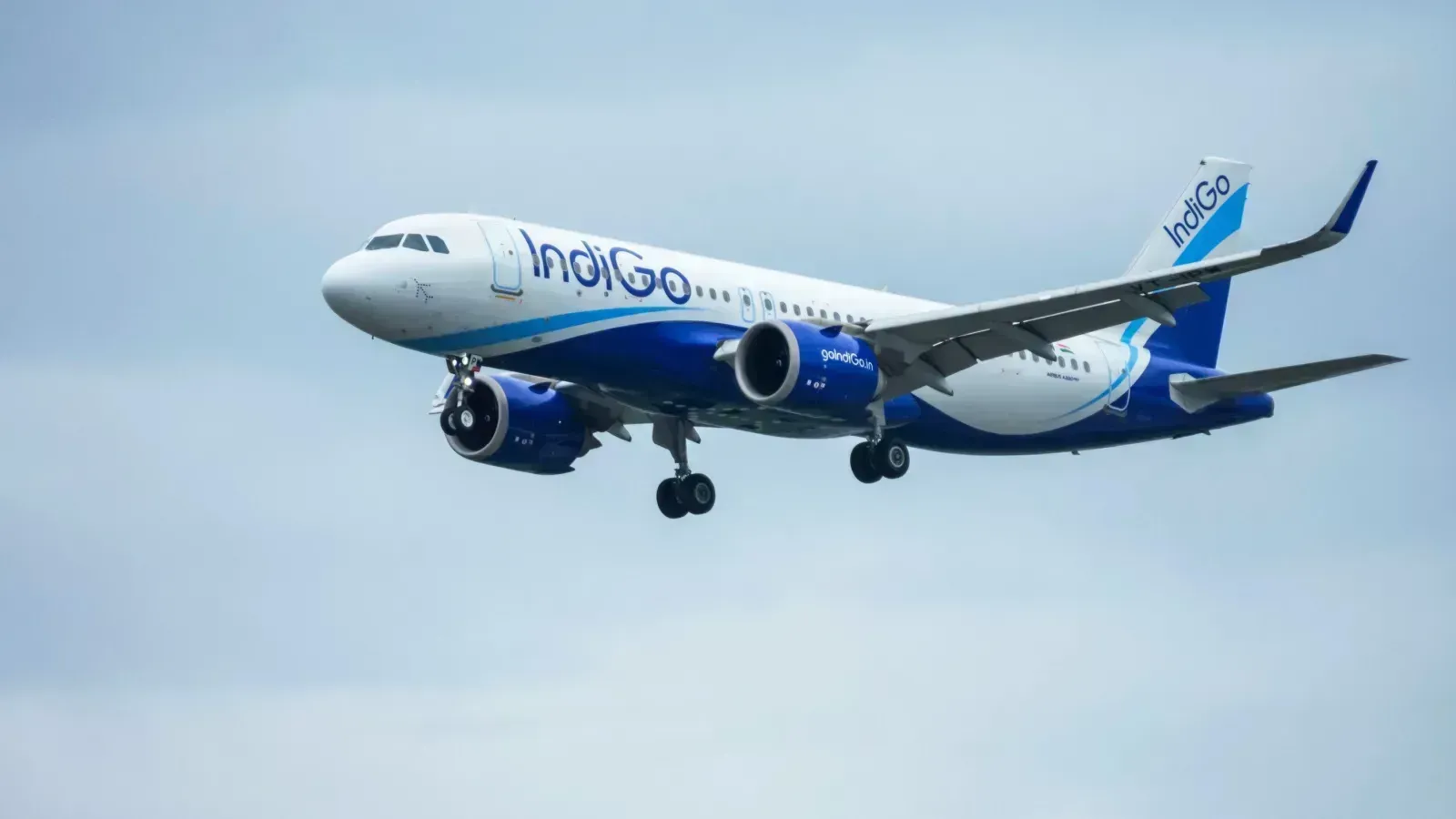
InterGlobe Aviation has a total market capitalisation of ₹1.86 lakh crore as of October 30, 2026, according to data on the NSE. | Image: Shutterstock
Analysts made note of the company’s better-than-expected EBITDA (earnings before interest, tax, depreciation, and amortisation), along with its focus on pricing over capacity as jet fuel prices increased. IndiGo guided its PRASK (passenger revenue per available seat kilometer) to grow over 25% in Q3 and FY27.
According to a regulatory filing, the budget air carrier reported a consolidated net loss of ₹1,878.6 crore in the second quarter of the 2026-27 financial year (Q2 FY27), compared with a loss of ₹2,581.7 crore in the same period last year.
Its consolidated revenue from operations jumped 25.9% year-on-year (YoY) to ₹23,363.8 crore during the quarter under review, as against ₹18,555.3 crore in the July-September quarter of the 2025-26 fiscal year (Q2 FY26).
At the operational level, the company’s performance further improved as the EBITDA jumped two-fold YoY to ₹1,907 crore in Q2 FY27, from ₹543 crore in the year-ago period.
Similarly, the EBITDA margin expanded over 500 basis points (bps) to 8.1%.
The ATF (Air turbine fuel) expenses for the quarter jumped 67% YoY to ₹9,967 crore for the quarter ended September 2026, from ₹5,961 crore for the quarter ended September 30, 2025.
The firm said that its capacity reduced marginally to 40.8 billion available seat kilometres (ASKs), and its passengers dropped by 4.7% to 2.75 crore for the reporting quarter.
Similarly, its revenue passenger kilometers (RPK) declined 3.7% to 32.8 billion vs 34 billion in the same quarter last year.
Its cost per available seat kilometer (CASK) surged by 68.9% YoY to ₹2.44, with its CASK, excluding fuel and foreign exchange, rising 14.6% YoY to ₹3.45.
What the analysts said
The company estimated its PRASK to grow over 25% in Q2, with FY28 capacity growth remaining in the mid-teens. Furthermore, IndiGo’s management eased concerns over near-term yields and ex-fuel and forex costs, despite earnings remaining sensitive to jet fuel prices.
The analysts expect its Q3 FY27 margins to be stronger quarter-on-quarter (QoQ) despite sequentially higher fuel prices. The company’s pricing captures 80-90% of the cost increase, they added.
At around 11:27 AM, the stock was trading 2.93% higher at ₹4,812.20 per equity share on the NSE.
InterGlobe Aviation has a total market capitalisation of ₹1.86 lakh crore as of October 30, 2026, according to data on the NSE.
Related News

About The Author
Next Story