Market News
HDFC Bank hits 52-week low as stock slumps over 27% in 2026, ₹4 lakh crore market cap wiped out

3 min read | Updated on August 12, 2026, 15:35 IST


SUMMARY
HDFC Bank shares hit a 52-week low of ₹722 on August 12, 2026, extending losses after closing lower in seven of eight trading sessions this month. The stock has declined over 27% year-to-date, erasing more than ₹4 lakh crore in market capitalisation.
Stock list
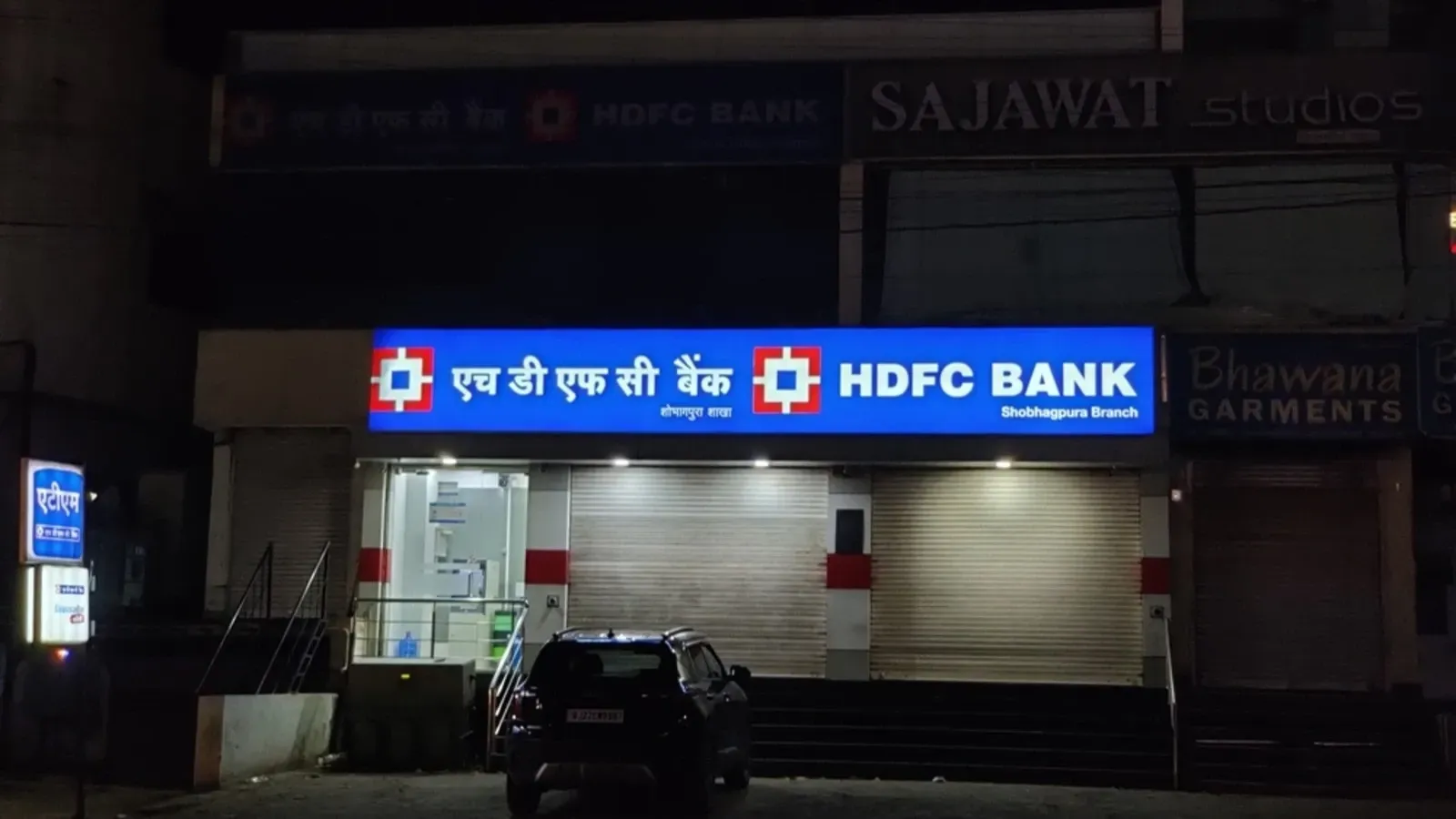
HDFC Bank underperformance in 2026 has a widespread impact on overall market sentiment
HDFC Bank shares hit a 52-week low of ₹722 apiece on Wednesday, August 12. The private bank stock has remained under pressure in recent trading sessions as its shares closed lower in 7 out of 8 trading sessions in August 2026. So far this month, HDFC Bank shares are down over 3.5%, while the stock has declined more than 27% year-to-date, falling from ₹991 at the start of 2026 to around ₹722 on August 12, 2026.
As of 3.00 pm, HDFC Bank shares traded 0.5% lower at ₹725.3 apiece on NSE, with a market cap of ₹11.18 lakh crore. So far this year, HDFC Bank investors have witnessed a market cap erosion of over ₹4 lakh crore compared to ₹15.26 lakh crore market capitalisation on January 1, 2026.
HDFC Bank's underperformance in 2026 has a widespread impact on overall market sentiment, as the bank carries the highest weightage among all NIFTY50 stocks at 10.27% as of July 31, 2026. This indicates that every sharp move in HDFC Bank significantly influences the performance of the benchmark index.
Poor Q1FY27 earnings
HDFC Bank shares declined 9.3% between 20 and 24 July 2026 after the bank announced its Q1FY27 earnings, which were below market expectations. HDFC Bank Q1 standalone net profit rose 5% YoY to ₹19,060 crore, but most of that profit came from lower provisions, which fell from ₹14,442 crore to ₹3,060 crore, a 79% drop.
The core lending business, which is represented through net interest income (NII), grew by 6.7% to ₹33,534 crore, while net interest margin (NIM) faced pressure, slipping to 3.26% from 3.38% in the previous quarter, its lowest level on record. HDFC Bank's historical average NIM has been above 4%. HDFC Bank’s NIM has remained lower consistently even since the merger with HDFC Ltd., which brought in a large low-yielding home loan portfolio alongside high-cost borrowings.
Following the earnings announcement, HDFC Bank shares slipped over 5.1% on July 20 and over 6% in July.
Consistent sell-off by FIIs
Another key factor behind HDFC Bank underperformce is consistent sell-off by Foreign Institutional Investors (FIIs). As per HDFC Bank's shareholding pattern, FIIs' holding in the bank reduced to 41.82% at the end of the June 2026 quarter from 44.05% at the end of the March 2026 quarter.
In the June quarter of FY26, FII holdings in HDFC Bank stood at 48.84%. This indicates that FIIs and institutional investors and consistently reducing their exposure to HDFC Bank. Meanwhile, Domestic institutional investors (DIIs) have increased their stake from 35.95% in Q1FY26 to 41.92% in Q1FY27.
FIIs have been net sellers in HDFC Bank and overall Indian markets for several months amid multiple factors like high stock valuations compared to other emerging markets, safer yields in the US market, and Indian rupee depreciation compared to the US dollar.
Disclaimer:
Investments in the securities market are subject to market risk. Read all the related documents carefully before investing. The stock discussed in this article is only for educational purposes and not a buy or sell recommendation. Investors are advised to conduct their own analysis and risk due diligence before trading and investing in the stock market.
About The Author
Next Story