Market News
Dixon Technologies, Kaynes Technology, Syrma SGS: How semiconductor stocks performed in 2025

6 min read | Updated on December 23, 2025, 08:18 IST


SUMMARY
The domestic semiconductor industry has witnessed strong investment in recent years, aided by government policies like the Semicon India Programme, which aims to invest ₹76,000 crore to build a semiconductor manufacturing ecosystem. MosChip Technologies, Bharat Electronics, Kaynes Technology, CG Power, and Dixon Technologies are some of the key stocks in the spotlight from this sector.
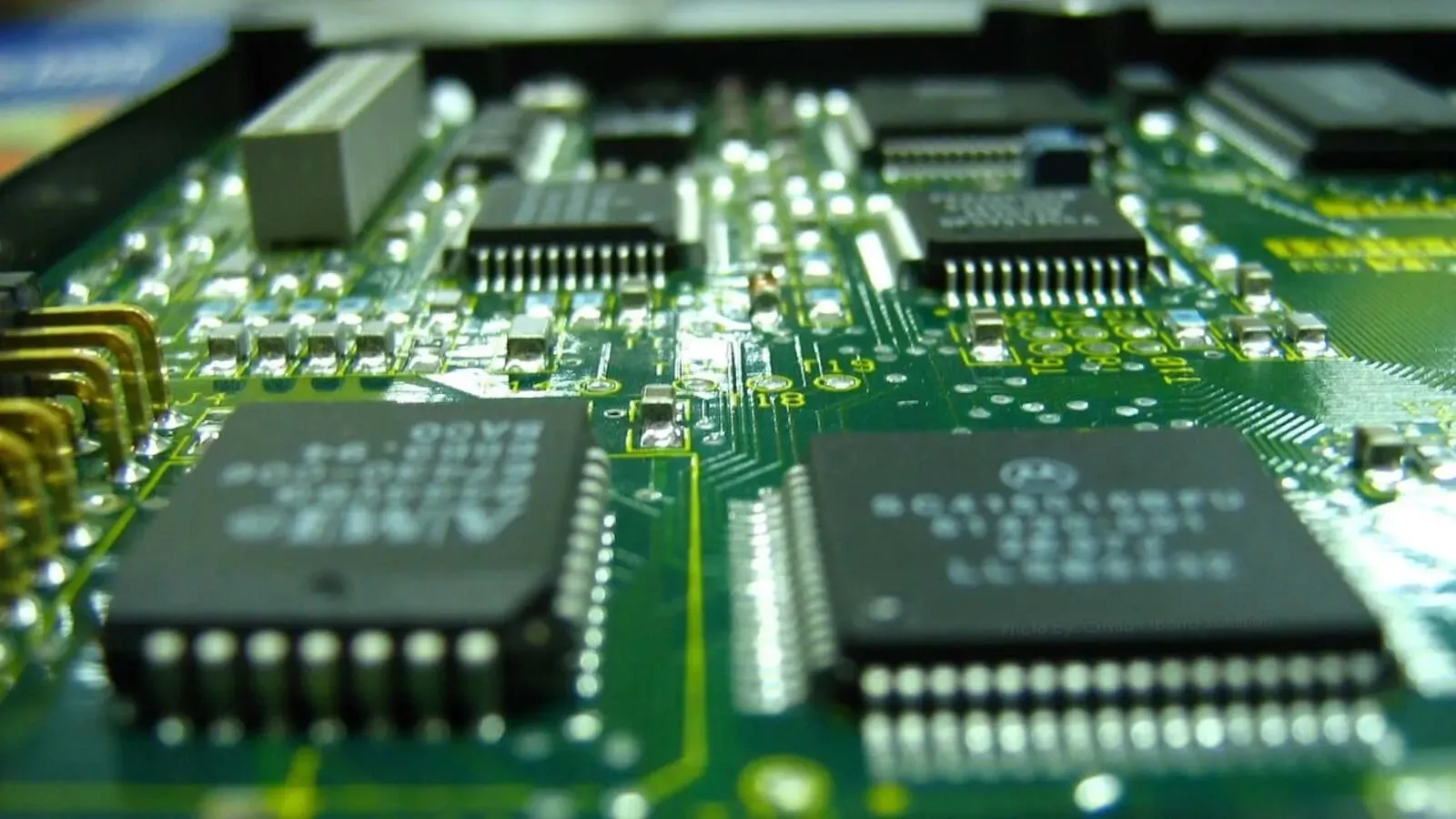
Major companies like Tata Electronics, Vedanta Ltd, and HCL Technologies are also investing heavily in the semiconductor sector. | Image: Shutterstock
Indian semiconductor sector is undergoing a major shift from being an import-dependent market to a rising global manufacturing and design hub. This shift is being driven by supportive policies and increasing adoption of digitisation in sectors such as telecommunication, healthcare, automobiles, and industrial automation.
According to IMARC Group, the Indian semiconductor market is valued at $53.2 billion in 2024, and it is expected to reach $161 billion in 2033, growing at a CAGR of 12.45% from 2025 to 2033.
The domestic industry is attracting huge investment backed by the Indian government policies, like the Semicon India Programme, which aims to invest ₹76,000 crore to build a semiconductor manufacturing ecosystem via financial incentives and the Production Linked Incentive (PLI) scheme to set up plants and manufacturing hubs.
Some companies, like CG Power and Industrial Solutions and Kaynes Technology, have already established OSAT (Outsourced Semiconductor Assembly & Test) plants in Gujarat this year and have also started pilot production.
Other major companies like Tata Electronics, Vedanta Ltd, and HCL Technologies are also investing heavily in the sector, making the Indian semiconductor sector a sunrise industry of the future and one of the key industries on investors' radar.
| Company | YTD return* | 3Y returns | Market cap | H1FY26 revenue | H1FY26 net profit |
|---|---|---|---|---|---|
| CG Power and Industrial | ▼7.7% | +161% | ₹1.05 lakh crore | ₹5,801 crore | ₹551 crore |
| Kaynes Technology | ▼43.5% | +495% | ₹28,033 crore | ₹1,579 crore | ₹196 crore |
| Bharat Electronics | ▲34.2% | +300% | ₹2.87 lakh crore | ₹10,232 crore | ₹2,256 crore |
| Dixon Technologies | ▼26.3% | +241% | ₹80,353 crore | ₹27,691 crore | ₹1,026 crore |
| Syrma SGS | ▲23.6% | +174% | ₹14,192 crore | ₹2,090 crore | ₹116 crore |
| SPEL Semiconductor | ▼15.9% | +165% | ₹684 crore | ₹21.08 crore | Loss of ₹0.85 crore |
| MosChip Technologies | ▼1.3% | +151% | ₹3,876 crore | ₹283 crore | ₹23 crore |
*YTD return as on December 19 closing
As evident from the above table, semiconductor stocks have shown mixed performance in 2025, while delivering high 3-year absolute returns, indicating some correction after a strong multi-year upcycle. Kaynes Technology and Bharat Electronics highlight the sector’s contrasting dynamics. Kaynes has delivered the highest 3-year absolute return (+495%), but its sharp YTD decline (▼43.5%) amid profit booking and near-term correction. In contrast, Bharat Electronics stands out as the sector leader, combining a positive YTD return (▲34%) and high 3-year returns(+300%).
CG Power and Industrial Solutions
CG Power and Industrial Solutions is one of India’s top electrical engineering companies, making transformers, motors, and railway systems. As of Q2 FY26, the total order book of the company stood at ₹14,953 crore, supported by strong order intake in power systems.
The company has entered semiconductors through a ₹7,600 crore Sanand OSAT plant with Renesas and Stars Microelectronics. This facility has already started the pilot production in August 2025, helping India become more self-reliant in chip manufacturing. CG Power now connects India’s power, rail, and chip industries in a big way.
Bharat Electronics
Bharat Electronics Limited (BEL) is India’s leading defence electronics company, making radars, communication and warfare systems for air, land, sea, and space. It has a strong ₹74,453 crore order book, about three times its yearly revenue.
The company has positioned itself as a semiconductor-intensive defence proxy through electronics leadership and JVs like L&T for AMCA avionics/sensors. The company expects record orders in FY26, driven by big defence projects
The company has signed an MoU with Tata Electronics to jointly develop indigenous electronics and semiconductor solutions. The collaboration will span semiconductor fabrication, OSAT, and design services to support BEL’s current and future requirements for advanced components such as MCUs, SoCs, MMICs, and processors.
Dixon Technologies
Dixon Technologies is one of India’s largest electronics manufacturing services (EMS) companies, making mobiles, appliances, lighting, and IT hardware. In Q2FY26, its revenue grew 33% to ₹15,351 crore, led by strong mobile and telecom growth. As for mobile production, Dixon is on track to reach 40-42 million units in FY26 and could see a significant increase to 55-60 million units in FY27, through its new JVs with Vivo and HKC.
The company is pushing into new areas of the market with displays, telecom, and IT hardware, and has formed partnerships and is using backward integration. The company plans to invest around $3 billion in a new display fabrication facility in Noida, which will be fuelled by incentives from the India Semiconductor Mission. They’re also building a ₹1,000 crore facility near Chennai, and signed a MoU with the Tamil Nadu government.
Key growth drivers of the industry:
-
Government policy and incentives: The Government of India has taken strong steps to make the country an alternative global hub for semiconductors, with the India Semiconductor Mission and Semicon India Programme offering up to 50% financial support to set up facilities for fabs, display, and compound semiconductors.
-
OSAT/packaging buildup: OSAT is a key bottleneck in the semiconductor value chain, and India is making visible progress in this segment. Many players, such as Kaynes Technology and SPEL Semiconductor, are establishing packaging and testing units for minimising reliance on international OSAT centers and increasing the overall Indian value addition and margin capture possibilities.
-
High future demand: Increasing digitisation across telecommunication, healthcare, the automotive and industrial sectors is driving semiconductor consumption. The shift towards EV and software-defined vehicles (SDVs) is steadily raising demand for power electronics, sensors, connectivity chips, and ADAS solutions.
-
Global supply chain diversification: The semiconductor chain is traditionally concentrated in certain countries that pose certain risks, which has led global companies to pursue “China+1” strategies in order to diversify. India is emerging as a key hub for back-end assembly, testing, and packaging, backed by strong policy support and a large electronics market.
Overall, the domestic semiconductor industry is poised for significant future growth, aided by a combination of targeted government incentives, robust demand and strategic partnerships. Major conglomerates such as Tata Electronics is laying down semiconductor factories in Gujarat and Assam. As per media reports, the company has entered into a strategic alliance with US chip giant Intel to explore manufacturing and advanced packaging of Intel products in India.
Another joint venture between HCL Technologies and Foxconn is also planning to set up a chip assembly and packaging unit in Uttar Pradesh with an investment of ₹3,706 crore. As a result, the semiconductor segment is likely to be a watchout sector in 2026.
About The Author
Next Story