
Market News
Defence stocks in focus: India signs ₹1,976 crore deal with Israel to upgrade Navy’s Barak missile system

3 min read | Updated on November 19, 2026, 07:56 IST

SUMMARY
The Ministry of Defence signed the contract on Wednesday under the Other Capital Procurement Procedure. The agreement covers comprehensive hardware and software upgrades, along with obsolescence management, of the missile defence systems deployed on Indian Navy warships.

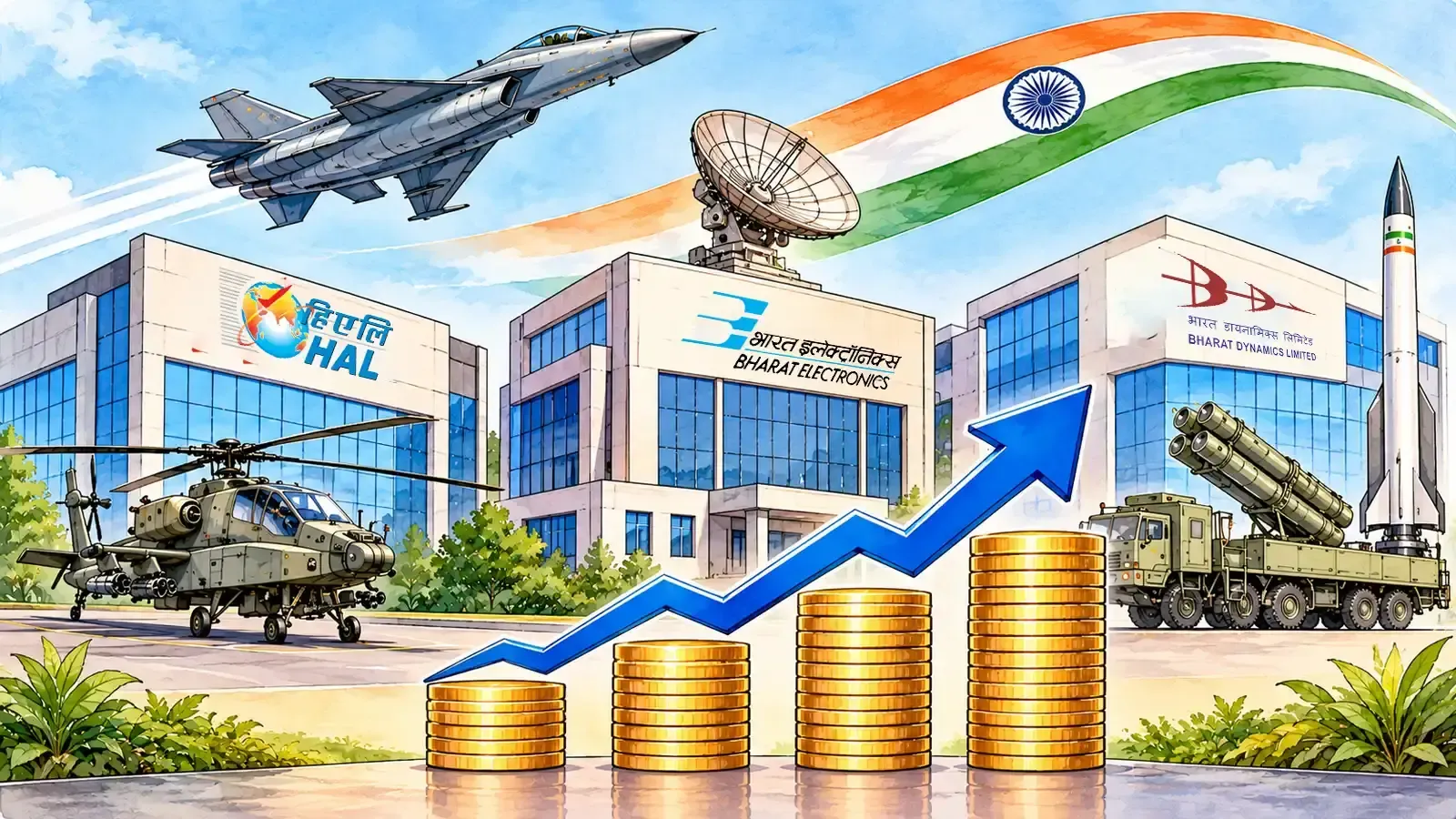
Bharat Dynamics Ltd (BDL) could remain on investors’ radar given its presence in the missile manufacturing segment. Image: Shutterstock
Shares of defence companies, including Bharat Dynamics Ltd (BDL) and Bharat Electronics Ltd (BEL), will likely be in focus on Thursday, November 19, after India signed a ₹1,976.40 crore agreement with Israel Aerospace Industries (IAI) to upgrade the Indian Navy’s Barak point defence missile system.
The Ministry of Defence signed the contract on Wednesday under the Other Capital Procurement Procedure. The agreement covers comprehensive hardware and software upgrades, along with obsolescence management, of the missile defence systems deployed on Indian Navy warships.
Government looks to expand domestic missile manufacturing ecosystem
Separately, Defence Secretary Rajesh Kumar Singh highlighted the government’s efforts to diversify India’s missile manufacturing ecosystem by bringing more private sector companies into the segment.
He said the government does not want to rely predominantly on state-owned Bharat Dynamics Ltd (BDL), which has traditionally been the country’s primary missile manufacturer, and is looking to expand the ecosystem by inducting more private sector players.
The development comes amid the government’s broader push to strengthen domestic defence manufacturing capabilities and reduce dependence on imports.
Stocks to watch
Bharat Dynamics Ltd (BDL) could remain on investors’ radar given its presence in the missile manufacturing segment. The government’s stated intention to broaden the domestic missile manufacturing base beyond BDL also makes the evolving competitive landscape important to track.
Bharat Electronics Ltd (BEL), which operates in the defence electronics and systems segment, could also remain in focus amid developments in India’s naval defence and missile systems ecosystem.
However, the ₹1,976.40 crore contract has been awarded to Israel Aerospace Industries, and the Defence Ministry’s announcement does not identify any listed Indian company as a direct beneficiary of the order.
India’s defence industry
The Indian defence industry consists of a strategic relationship between the government and the defence manufacturing industry, which includes DPSUs, Ordnance Factories, and the growing private sector. By March 2026, there were 834 licenses regulating the defense industry where about 500 defense firms and around 17,000 MSMEs had licenses for defense production.
India has witnessed considerable growth in defence goods exports from ₹686 crore (US$ 113.39 million) in FY14 to an all-time high of ₹38,424 crore (US$ 4.35 billion) in FY26. In FY26, while private sector entities accounted for ₹17,353 crore (US$ 1.96 billion) (45.16% of the country’s defence exports), DPSUs accounted for ₹21,071 crore (US$ 2.38 billion) (54.84%), according to a report by India Brand Equity Foundation (IBEF).
The amount of money invested in research and development for defence went up from ₹13,716 crore (US$ 2.24 billion) in FY15 to ₹29,100 crore (US$ 3.08 billion) in FY27, indicating a persistent effort from the government to foster innovations in domestic defence.
“India’s defence industry is a significant player in the international business scene, with a pipeline of more than US$ 223 billion in aerospace and defence capex for ten years and an investment expected to reach US$ 130 billion in the medium term. The maximum limit of FDI under the automatic route in the defence manufacturing sector has increased from 49% to 74%,” the IBEF article adds.
Related News
About The Author
Next Story

