
Market News
BSE replaces Wipro in NIFTY50: How index reshuffles impact stock prices

4 min read | Updated on September 30, 2026, 13:33 IST


SUMMARY
BSE’s average free-float market capitalization for six months is more than Wipro’s six-month average free-float market capitalization, which remains a key technical reason for BSE’s inclusion in the benchmark NIFTY50 index.
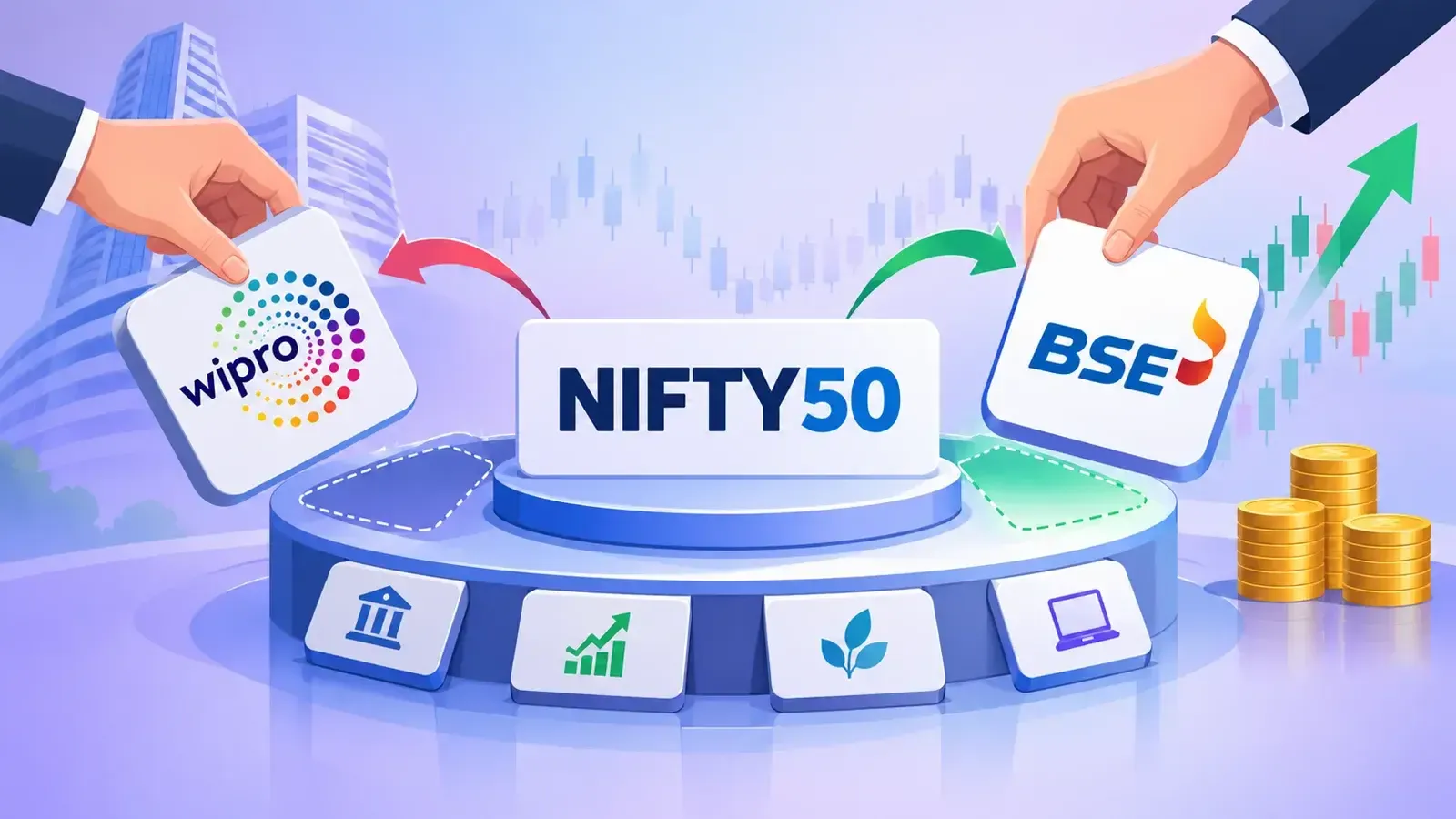
BSE will replace Wipro from the NIFTY50 after September 30, 2026. Image: Shutterstock.
The Indian equity markets are showing a lackluster performance at the benchmark index level as NIFTY50 continues to trade in red in 2026 on a YTD basis, down nearly 11%. At the stock-specific level, 37 out of the 50 index constituents trade in red in 2026, while 13 others in positive, further signifying the broader weakness in the index.
As we approach the end of Q2FY27, the index rejig will take place on September 30. This half-yearly rejig balances the index weightage by including new performing sectors and excluding underperforming ones out of the index.
In the current rejig, BSE is included in the benchmark NIFTY50 index, replacing Wipro after its nearly three-decade-long run. Let us dig deeper into, what this rejig means for NIFTY50 and investors at large
Structural shift
The benchmark indices comprise the top 50 constituents of the economy and the top stocks by market capitalization. Moreover, they also represent the top-performing sectors of the economy. In the past few years, the IT sector has been highly underperforming the benchmark index owing to sectoral headwinds in the aftermath of Artificial Intelligence. Many of the key IT stocks like TCS, Infosys, Tech Mahindra, and HCL Technologies are trading over 30% down from their record highs. Amongst all, Wipro has been grossly underperforming, declining over 33% in the trailing twelve months and 38% in 2026 on a YTD basis.
Meanwhile, shares of India’s oldest stock exchange have seen a strong rally in the same period. Additionally, the capital market intermediaries are now driving major financial rejig in the economy, by adding more and more investors in the last five years.
Technical reason
Beyond the fundamental reason, the BSE’s average free-float market capitalization for six months is more than Wipro’s six-month average free-float market capitalization, which remains a key technical reason for BSE’s inclusion in the benchmark NIFTY50 index,
The rejig often triggers major fund flow activity from the stock as the index funds, or exchange-traded funds which mirror the index, rebalance their holdings accordingly. The change in stock composition leads to million-dollar inflows in the stock included and outflows from the stock excluded. The magnitude of fund flow activity could impact short-term performance of the stock.
Key observations
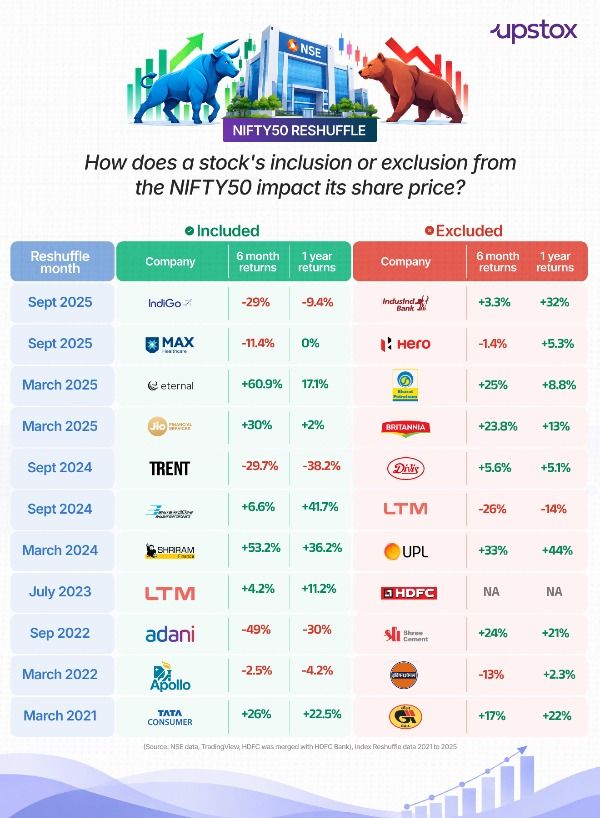
Sentimentally, an exclusion from the benchmark index is negative, as the stock is no longer considered amongst the top 50 and witnesses heavy outflows from institutional investors who mirror the index performance in their investment strategies. However, a data analysis of stocks excluded and included from the NIFTY50 index in the last five years shows contrary insights.
On a one year basis, only 6 stocks delivered positive returns, while four delivered negative returns, with Bharat Electronics rising the most with 41% returns and Trent losing 38% the most.
Bottomline
Contrary to general investor beliefs, the stocks that were excluded from the index have more winners in six months and one year after inclusion, while the stocks included tend to slow down more after the inclusion. The reasons for outperformance of stocks in exclusion could be related to completion of bottoming out phase, trading at affordable prices and rerating after the fall. While those included has already shown their mettle by rising from midcap to largecap to entering into the top 50, which warrants a profit booking from investors who rode the rally from lower levels.
About The Author
Next Story

