Market News
Amagi Media Labs IPO opens on January 13: Check business model, financials, strengths and risks
.png)
6 min read | Updated on January 09, 2026, 14:22 IST


SUMMARY
Amagi Media Labs IPO aims to raise ₹1,789 crore through its public issue. Incorporated in 2008, the company offers solutions to media companies for the distribution and monetisation of their video content over the internet.
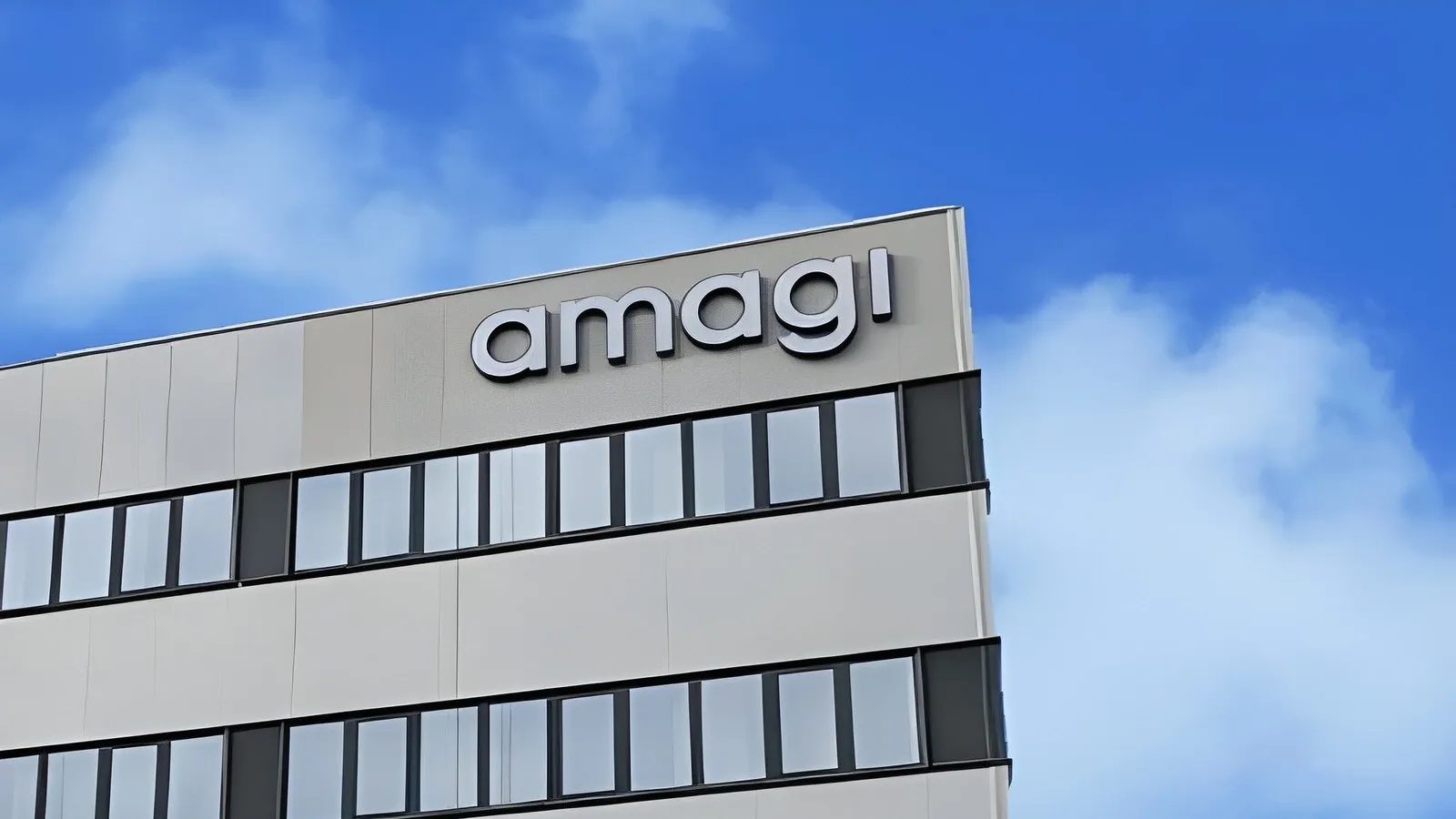
Amagi Media Labs offers its services to over 400 content providers, 350 distributors and more than 75 advertisers across 40+ countries.
Amagi Media Labs IPO is set to launch its much-awaited public issue on January 13. Incorporated in 2008, the company is engaged in cloud-based broadcast and connected TV technology. It offers solutions to media companies for the distribution and monetisation of their video content over the internet.
Amagi Media Labs platform allows broadcasters, content owners, and digital publishers to engage with their audiences via smart TVs, mobile devices, and streaming apps, thereby minimising their reliance on traditional cable and set-top box infrastructures.
Amagi Media Labs IPO details
Amagi Media Labs IPO aims to raise ₹1,789 crore through its public issue, which is a 100% book-built and includes a fresh issue and offer-for-sale of over 4.9 crore shares
The company has fixed the price band of the issue at ₹343 to ₹361 per share. The lot size, or the minimum bid quantity to apply for the issue, is 41 shares. This equates to a minimum investment amount of ₹14,801 per lot at the upper end of the price band for retail investors.
Amagi Media Labs has appointed Kotak Mahindra Capital as the book-running lead manager of the IPO, while MUFG Intime India Pvt.Ltd is the registrar for the issue.
Amagi Media Labs IPO timeline
Amagi Media Labs IPO will remain open for bidding from January 13 to January 16, 2026. After the bidding is closed, the allotment of shares is expected to be finalised on January 19.
Successful bidders can expect the shares to be credited to their demat accounts by January 20, with others receiving refunds on the same day. Amagi Media Labs shares are scheduled to list on the BSE and NSE on January 21, 2025.
Financial snapshot
| (₹ crore) | FY23 | FY24 | FY25 |
|---|---|---|---|
| Revenue | 680.56 | 879.16 | 1,162.64 |
| Total Assets | 1,405.96 | 1,308.08 | 1,424.99 |
| Net Loss | (321.27) | (245.00) | (68.71) |
| EBITDA | (140.34) | (155.53) | 23.49 |
Amagi Media Labs IPO objective
- Capital expenditure: The company will use ₹667.2 crore towards technology and cloud infrastructure expenses.
- Inorganic growth and general corporate purposes: The company will use part of the net proceeds for an unidentified acquisition and general corporate purposes.
About the company
Amagi Media Labs runs its business through three main solution areas: the cloud modernisation area is all about assisting TV networks to get rid of costly, hardware-heavy broadcasting systems and move towards cloud-based workflows. The streaming unification division represents the biggest chunk of the company’s revenue and deals with the increasing distribution complexity of OTT. As content owners distribute more and more across SVOD, AVOD, and FAST models, the company has developed a single platform system that makes content distribution, analytics, and performance optimisation a much more straightforward and attractive solution.
The company's products like Amagi NOW, PLANNER, and ON DEMAND give customers the opportunity to run multiple streaming models from a single point of control, thus making operations faster and easier.
The monetisation & marketplace area is all about helping customers extract the maximum possible revenue from their content through the use of sophisticated advertising technology and worldwide content licensing. Streaming unification business contributed 52.86% of revenue, followed by monetisation & marketplace business at 25.28% while cloud modernisation contributed 21.86% in H1FY26.
Amagi Media Labs catered to a diversified and worldwide customer base of more than 400 content providers, over 350 distributors, and more than 75 advertisers across 40+ countries as of September 2025. The company has established strong bonds with major global media and entertainment players and has worked with more than 45% of the top 50 listed media companies by revenue. Some of the key customers are Vevo, Lionsgate Studios, DAZN, E. W. Scripps, Sinclair Inc., VIZIO, Roku, The Trade Desk, and JioAds.
Amagi generates a major portion of its revenue from international markets. In H1FY26, the Americas region accounted for 73.23% of total revenue, while Europe (including the UK) brought in 17.27%. The Asia Pacific region contributed 6.94%, and the Middle East and India were responsible for 1.65% and 0.91%, respectively.
Strengths and opportunities
-
Diversified marketplace leveraging network effects: The company collaborates with content publishers, distributors, and advertisers to offer a marketplace that is sustainable through itself. As of its H1FY26, it enabled monetisation for 1,823 crore advertising impressions on its marketplace, increasing from 1,077 crore advertising impressions in H1FY25. This expansion is expected to create increasing demand for advertising, distribution, and monetisation from both publishers and advertisers.
-
AI-led technology stack: AI is integrated throughout the platform in the Amagi INTELLIGENCE suite. This includes content scheduling, ad yield optimisation, and analytics. As of September 30, 2025, the company had 547 R&D engineers, making up 55.48% of its workforce. It held 10 patents in areas such as playout automation, ad insertion, and cloud broadcast infrastructure.
-
Growing global customer base: As of September 30, 2025, the company served 481 customers, an increase from 463 in FY25, 396 in FY24, and 283 in FY23. The number of customers contributing more than US$1 increased from 22 in FY24 to 28 in FY25. Net revenue retention stood at 126.90% in FY25, which is an indication of strong growth. The company partnered with more than 45% of the top 50 media and entertainment companies in terms of revenue as of September 30, 2025.
Risks and threats
-
Significant revenue concentration in the US: Geographical concentration is a significant risk, with the America region contributing 73.23% of revenue as of September 2025 and 72.86% of revenue in FY25. Any economic slowdown, regulatory changes, or cuts in technology and media spending in these areas could severely affect revenue and growth.
-
Dependence on a limited set of large customers: Revenue concentration among major customers remains high. The largest customer represented 14.06% of revenue as of September 2025. The top five and top ten customers accounted for 30.94% and 40.19%, respectively. Losing, not renewing, or reducing contracts with one or more major clients could significantly harm revenue and cash flow visibility.
-
Reliance on third-party cloud infrastructure: The company relies heavily on third-party cloud providers, particularly Amazon Web Services, for its operations. Technology and cloud infrastructure costs reached 26.48% of revenue as of September 2025 and 28.59% of revenue in FY25. Any service disruptions, price increases, or failure to negotiate favourable contract terms could raise costs, hinder service delivery, and damage customer relationships.
About The Author
Next Story