Market News
SBI Q1 results: Net profit likely to fall up to 5% YoY, NII could see double-digit growth

4 min read | Updated on August 07, 2026, 09:53 IST


SUMMARY
State Bank of India (SBI) is expected to report mixed Q1FY27 earnings as standalone net profit may decline 3 to 5% YoY to ₹18,120 to ₹18,520 crore, while net interest income (NII) is likely to see double-digit growth.
Stock list
The options data for SBI's August 25 expiry shows a potential price movement of ±5.2%.
India’s largest public sector bank, State Bank of India (SBI), will announce its Q1FY27 results on August 7, 2026. SBI is likely to report mixed quarterly earnings with growth in net interest income (NII) but net profit could fall on a yearly basis.
According to experts, SBI’s standalone net profit could fall by 3% to 5% YoY to a range of ₹18,120 and ₹18,520 crore mainly due to pressure on margins. SBI reported net profit of ₹19,160 crore in Q1FY26 and ₹19,684 in the previous quarter.
Net interest income (NII) is expected to rise 12% to 13.5% YoY to a range of ₹46,270 to ₹46,730 crore on the back of healthy growth in loan book. SBI reported an NII of ₹41,071 in the same quarter last year.
Meanwhile, net interest margin (NIM) is likely to improve 6 to 8 basis points to 2.85% amid term deposit reprising. Meanwhile, gross non-performing assets (GNPA) and net NPA are expected to remain unchanged on a sequential basis.
During the quarterly result announcement, investors will track key performance metrics, including loan growth across retail and corporate segments, deposit growth, net interest margin, gross and net non-performing assets (NPAs).
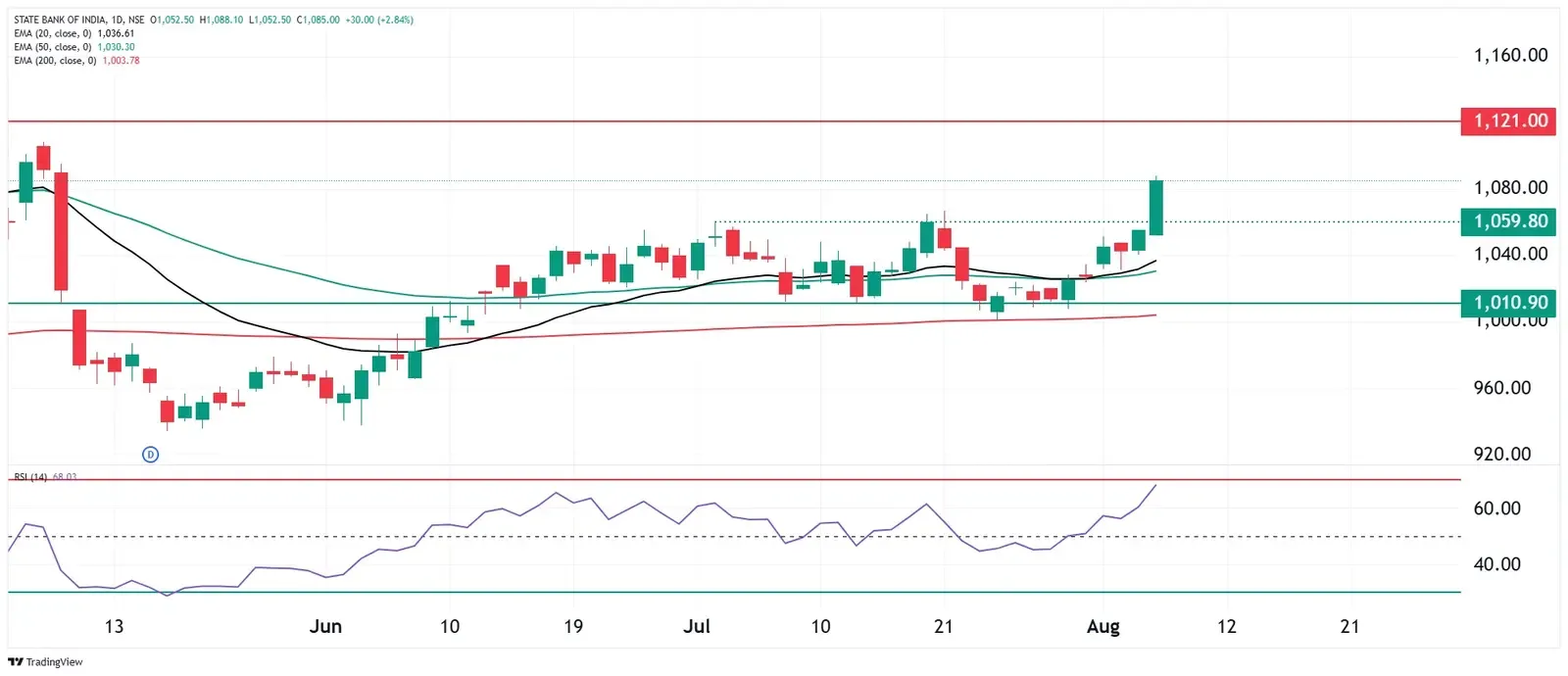
Ahead of the Q1 result announcement, SBI shares closed nearly 3% higher at ₹1,085 apiece on NSE. So far this year, SBI shares have delivered 10.5% return to its shareholders.
Technical outlook
SBI has delivered a strong breakout above the ₹1,060 resistance zone, closing near ₹1,085 with a sharp bullish candle. The stock is trading comfortably above its 20-day, 50-day and 200-day EMAs, confirming a positive short- and medium-term trend. RSI near 68 also reflects strong momentum, though it is approaching the overbought zone.
Sustaining above ₹1,060 could extend the rally towards ₹1,100 and the next major resistance near ₹1,121. On the downside, ₹1,060 should now act as immediate support, while a close below this level may trigger a pullback towards ₹1,035–₹1,010.
Options outlook
SBI's at-the-money (ATM) options for August 25 expiry is at 1090, with both call and put options priced at ₹56.8. This implies a potential price swing of approximately ±5.2% based on the 6 August closing price.
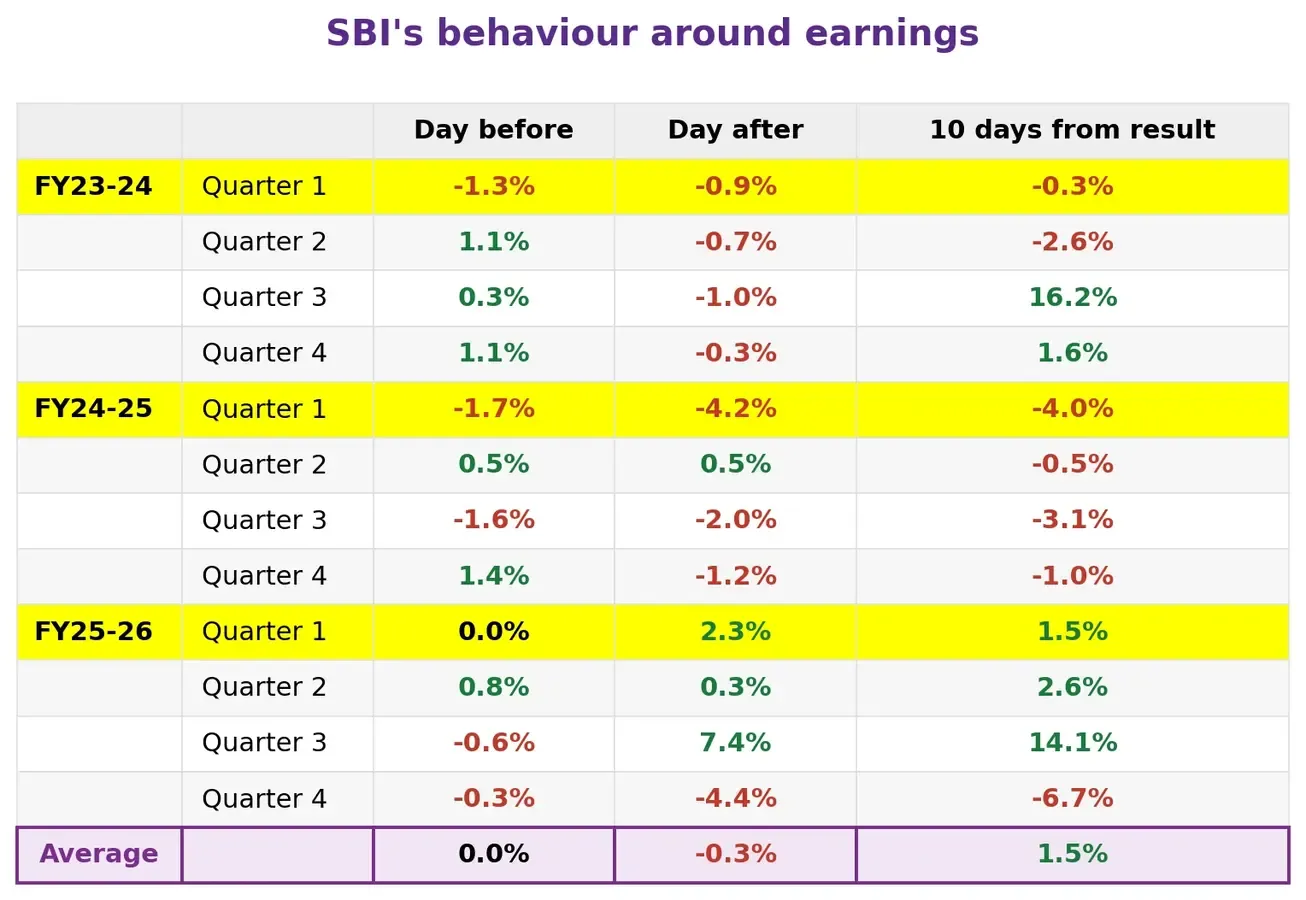
For further understanding, let’s take a look at the historical price behaviour of SBI around its earnings announcement.
Options strategy for State Bank of India
The options data for SBI's August 25 expiry shows a potential price movement of ±5.2%, providing strategic opportunities for traders based on their volatility expectations.
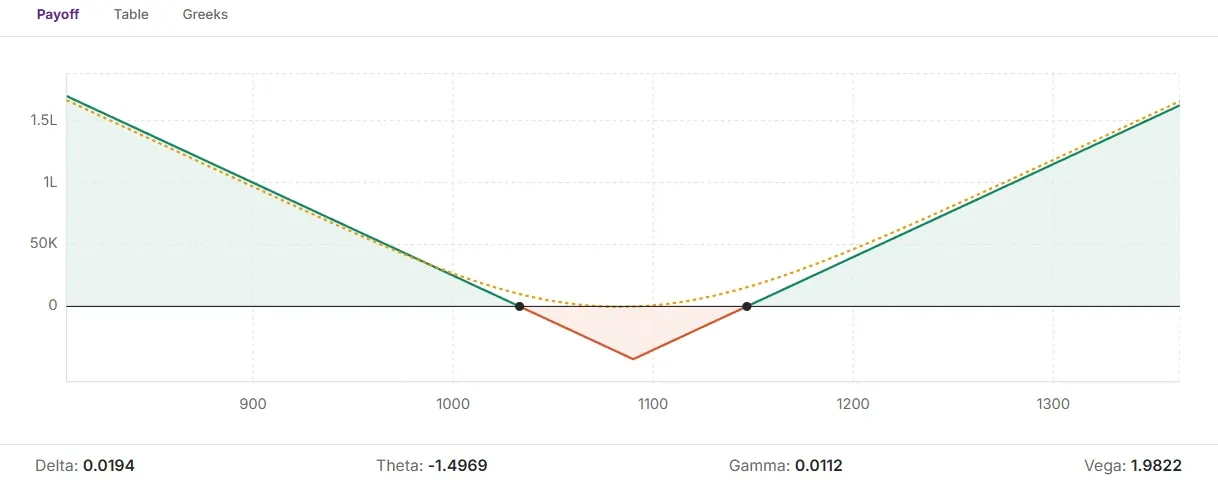
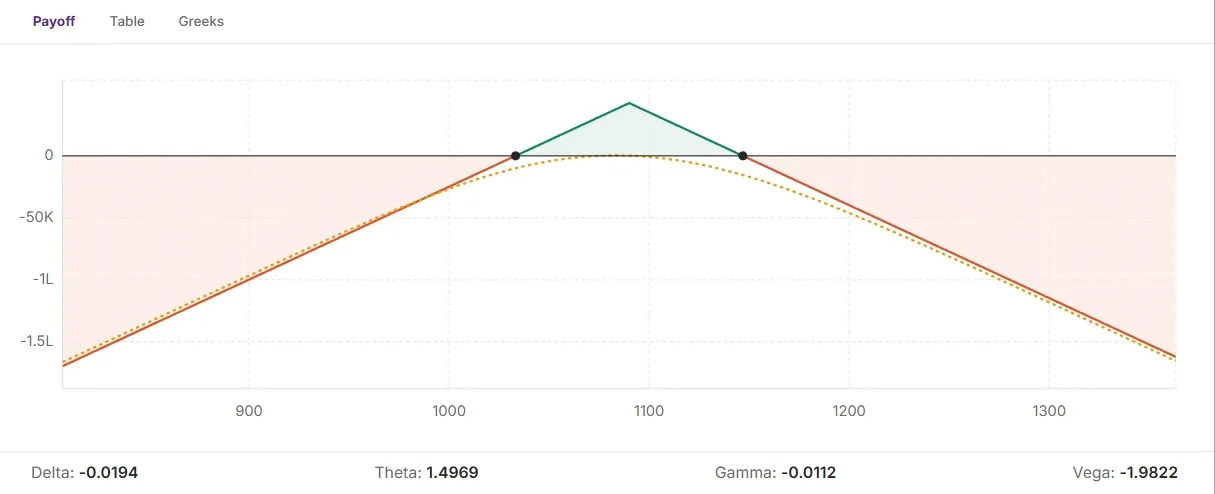
Traders expecting further bullish momentum can consider either a bull call spread or a bull put spread. This approach lowers the initial cost but also limits potential profits.
Disclaimer:
Derivatives trading must be done only by traders who fully understand the risks associated with them and strictly apply risk mechanisms like stop-losses. We do not recommend any particular stock, securities, or trading strategies. The securities quoted are exemplary and not recommendatory. The stock names mentioned in this article are purely to show how to do an analysis.
About The Author
Next Story