
Business News
Supreme Court refuses to stay UPI MDR above ₹2,000, issues notice to Centre, RBI
.png)
3 min read | Updated on September 28, 2026, 13:41 IST


SUMMARY
The revised framework, effective October 15, provides for a 0.4% MDR capped at ₹300 on eligible transactions, while select sectors such as railways, telecom, insurance and fuel will have a flat ₹5 charge.
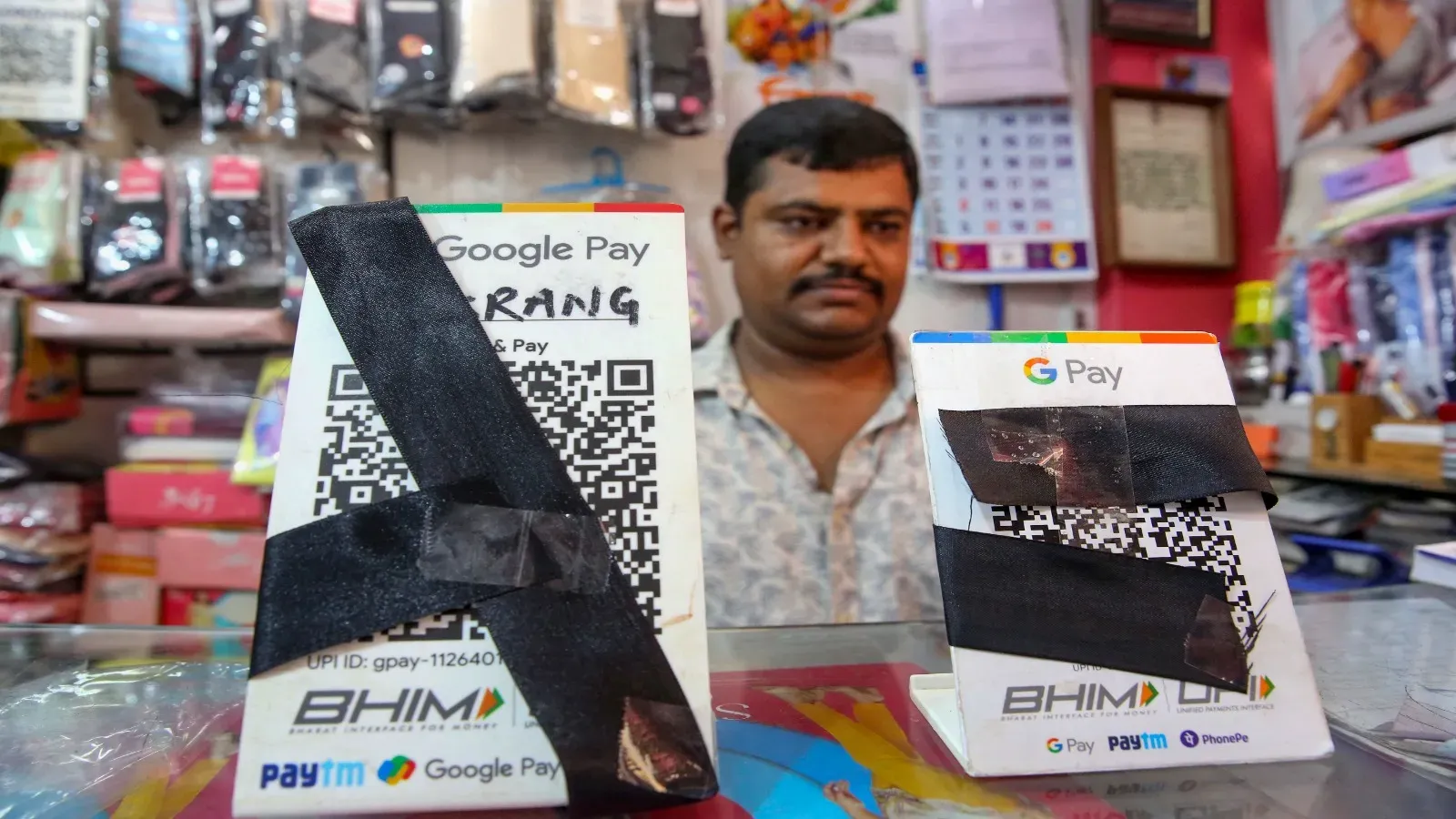
A shopkeeper covers QR codes with black ribbons in the wake of the implementation of Merchant Discount Rate (MDR) for UPI transactions, in Bhopal, Wednesday, Sept. 23, 2026. (PTI Photo)
The Supreme Court on Monday refused to stay the Centre's decision to impose merchant discount rate (MDR) on specified UPI person-to-merchant transactions above ₹2,000, but sought an affidavit from the government explaining the basis and legal character of the charge.
A bench headed by Chief Justice Surya Kant and comprising Justices Joymalya Bagchi and V Mohana was hearing a plea challenging the Centre's decision to introduce MDR on specified UPI transactions.
The bench directed the Centre, the Reserve Bank of India and the National Payments Corporation of India (NPCI) to respond to the plea and sought a counter-affidavit within four weeks.
During the hearing, the petitioner's counsel argued that the introduction of UPI had helped reduce black money transactions and urged the court to stay the decision, saying it could lead to corruption.
After the top court issued notice and directed the respondents to file their counter affidavits within four weeks, the counsel appearing for the petitioner requested the bench, "Please stay it till then."
The court, however, declined to grant interim relief. The public interest litigation (PIL) was filed by advocate Anjan Datta.
Additional Solicitor General Nl Venkatraman, appearing for the Centre, said the revised framework would come into effect from October 15 and that 96% of users of payment gateways would be exempt.
"Essential services are capped at ₹5. There's a value cap. It's not a tax or fee," the ASG said.
The Chief Justice said the government needed to place these facts on affidavit, observing that the matter was "more of a technical issue".
The ASG said there was a cost involved in debit and credit card transactions and that UPI was no different.
"Two operators provide the service. One are the banks. It is not statutory collection by Government of India. It's a settlement fee amongst the players, which NPCI facilitates. Government is not taking a rupee of this," he submitted.
The ASG said the amount would go to aggregators and banks, which provide the service and facilitate transactions in place of cash.
"It is purely administrative," he said.
Under the revised framework announced by the government, a 0.4% MDR, capped at ₹300 per transaction, will apply to specified UPI person-to-merchant transactions above ₹2,000.
A flat ₹5 charge will apply to transactions above ₹2,000 in select sectors such as railways, telecommunications, insurance and fuel.
Small merchants receiving up to ₹1 lakh a month through UPI QR payments under the person-to-person-merchant (P2PM) category will continue to pay zero MDR.
The framework also provides for a dedicated fund for small merchants, with an amount equivalent to 5% of total MDR collections to be contributed to it. The fund will support digital payment infrastructure and UPI acceptance among small merchants, including in smaller markets.
The revised framework has been introduced under the Payment and Settlement Systems Act, 2007, following deliberations by the UPI Steering Committee and will come into effect from October 15.
The Finance Ministry has said the new framework will leave most consumers largely unaffected.
About The Author
Next Story

