Business News
Record ATF prices to push airfares up, but govt move may soften blow for domestic flyers

3 min read | Updated on April 01, 2026, 11:16 IST


SUMMARY
The government has stepped in to shield domestic air travellers from a sharp surge in aviation turbine fuel (ATF) prices triggered by global energy disruptions and the closure of the Strait of Hormuz.
Stock list
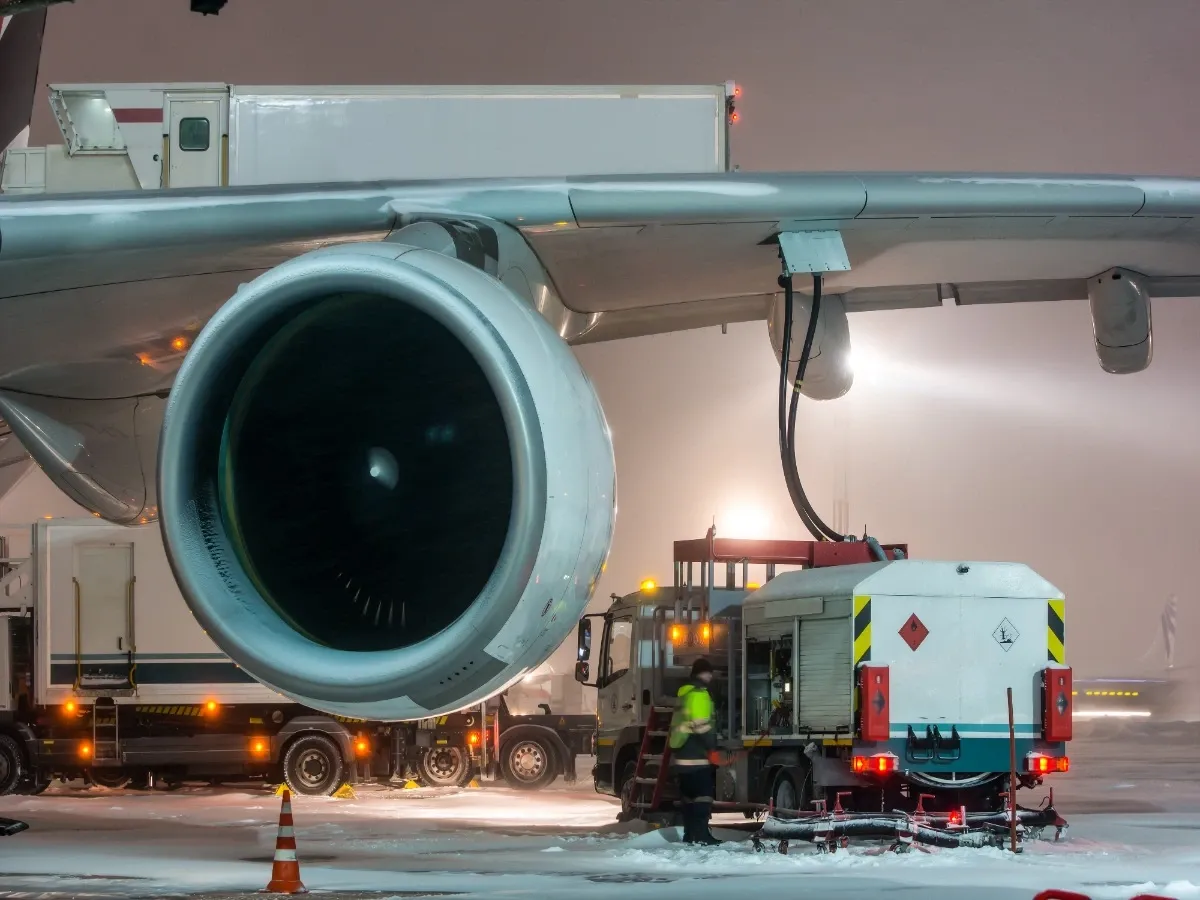
PSU oil firms—Indian Oil Corporation, Bharat Petroleum Corporation Ltd, and Hindustan Petroleum Corporation Ltd—have implemented only a 25% (₹15 per litre) staggered hike for domestic airlines. Image: Shutterstock
The government on Wednesday said it has intervened to cushion domestic air travellers from a sharp spike in aviation turbine fuel (ATF) prices caused by global energy disruptions, allowing only a partial and staggered increase in jet fuel rates for domestic airlines.
In a statement, the Ministry of Petroleum and Natural Gas said ATF prices, revised monthly based on international benchmarks, were expected to rise by more than 100% from April 1 due to the closure of the Strait of Hormuz and the “extraordinary situation” in global energy markets.
“To insulate domestic travel costs from the substantial increase in international prices, PSU oil marketing companies, in consultation with the Ministry of Civil Aviation, have passed only a partial and staggered increase of 25 per cent (₹15 per litre) to the airlines,” the ministry said in a post on X.
The ministry said the remaining increase will not be immediately passed on to domestic carriers.
However, airlines operating international routes will have to bear the full increase in ATF prices, consistent with what they pay in global markets, it added.
ATF prices jump
The calibrated approach comes even as ATF prices were more than doubled on Wednesday in line with international trends.
According to state-owned fuel retailers, jet fuel rates in Delhi were hiked by ₹1,10,703.08 per kilolitre, or 114.5 per cent, to a record ₹2,07,341.22 per kl.
This is the second consecutive monthly increase in ATF rates.
The previous peak was recorded in 2022, when rates had surged to around ₹1.1 lakh per kl following the Russia-Ukraine conflict.
Jet fuel accounts for nearly 40% of an airline’s operating costs, making carriers highly sensitive to changes in ATF prices.
The surge in fuel costs comes at a time when airlines are already facing operational challenges, including longer flying times on certain international routes due to airspace closures linked to the ongoing West Asia conflict, leading to higher fuel burn.
Domestic cap removed
The government’s move also comes days after it lifted temporary caps on domestic airfares that were imposed in December to curb unusually high ticket prices following large-scale disruptions in IndiGo flights.
In an order issued on March 20, the Ministry of Civil Aviation said the fare caps were withdrawn from March 23 after operations stabilised, but asked airlines to maintain pricing discipline.
“Airlines shall ensure that fares remain reasonable, transparent and commensurate with market conditions, and that passenger interests are not adversely impacted,” the ministry had said, warning that any excessive or unjustified surge in fares would be viewed seriously.
Civil Aviation Minister Ram Mohan Naidu had earlier indicated that the impact of higher ATF prices could start reflecting in fares from April.
Fuel surcharge
Meanwhile, airlines have already begun passing on part of the rising fuel costs through surcharges.
The Air India group has imposed a ₹399 surcharge on domestic routes and flights to SAARC destinations, while increasing levies on long-haul international routes.
IndiGo has introduced a fuel charge effective March 14, ranging from ₹425 on domestic sectors to ₹2,300 for Europe-bound flights, while Akasa Air has implemented surcharges between ₹199 and ₹1,300 per sector depending on flight duration.
State-owned Indian Oil Corporation, Bharat Petroleum Corporation Ltd and Hindustan Petroleum Corporation Ltd revise ATF and LPG prices on the first day of every month in line with international benchmarks and exchange rate fluctuations.
Related News

About The Author
Next Story