
Business News
Gold jewellery demand to slump 15%, worst in a decade outside COVID-19 year: CRISIL
.png)
4 min read | Updated on May 22, 2026, 15:31 IST


SUMMARY
The jewellery retail sector’s sales volumes are expected to decline 13-15% year-on-year after an 8% drop in the previous fiscal.
Stock list
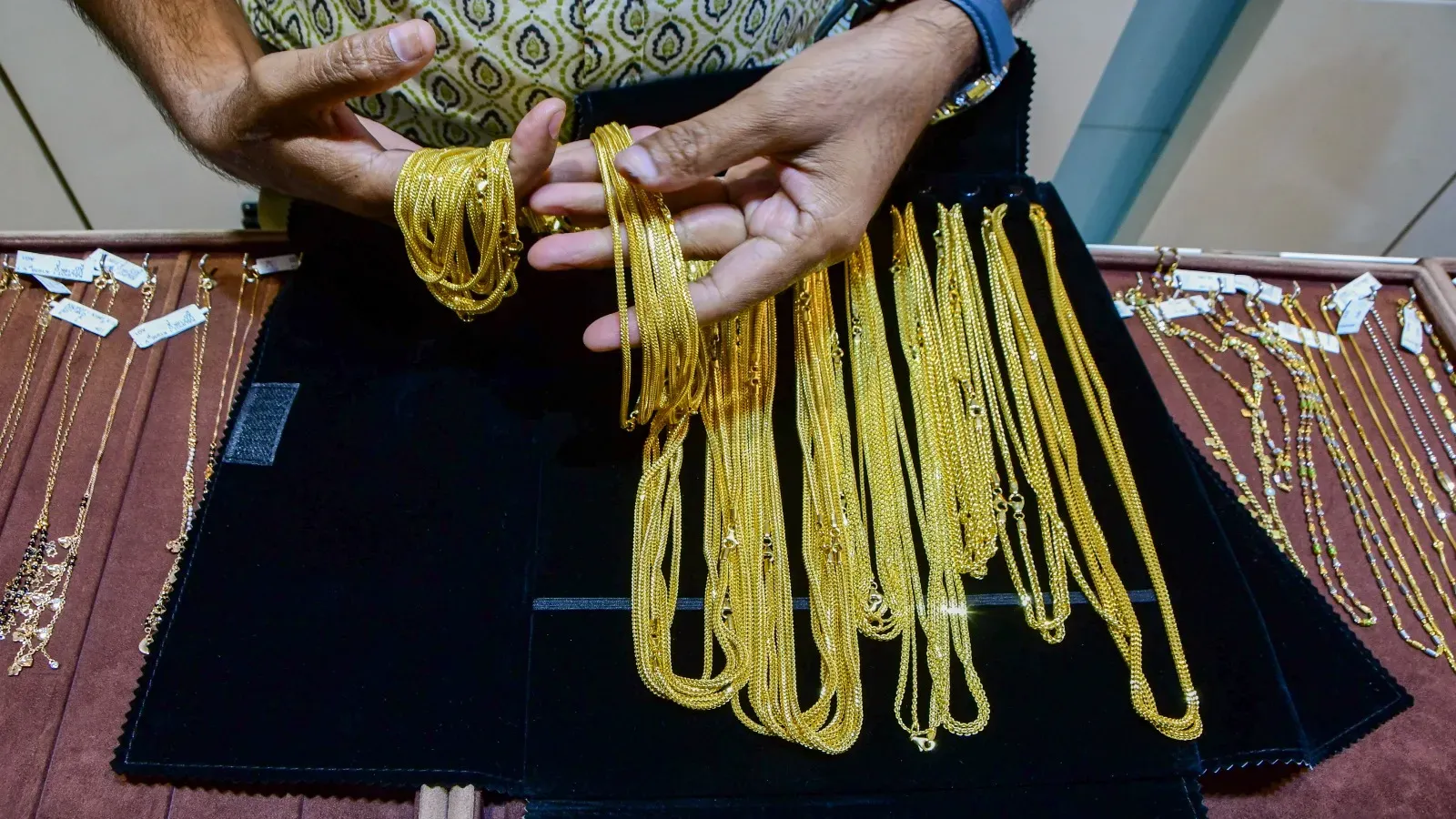
A jewellery shop employee displays gold chains at a store in Kalbadevi after Prime Minister Narendra Modi urged Indians to stop buying gold for a year, in Mumbai, Monday, May 11, 2026. (PTI Photo)
India’s organised gold jewellery retail sector is expected to witness its weakest sales volume in a decade this fiscal year, excluding the pandemic-hit FY21, according to a report by Crisil Ratings.
The sector, comprising jewellery, gold coins and bars, is projected to see sales volumes decline 13-15 per cent year-on-year in FY27 after an 8% contraction in the previous fiscal, as surging gold prices and a recent hike in import duty would weigh on consumer demand.
However, organised retailers are likely to post a robust 20-25% growth in revenues this fiscal due to significantly higher gold prices, which will boost realisations and cash accruals.
The analysis, based on 70 organised gold jewellery retailers accounting for nearly one-third of the sector’s revenues, said high gold prices would increase inventory holding costs and dependence on bank borrowings, though credit profiles are expected to remain stable.
In FY 2025-26, India imported around 720 tonnes of gold leading to foreign currency outflow of about USD 72 billion.
The central government recently raised customs duty on gold from to 15% from 6% to reduce the trade deficit and support the currency, which is expected to further dampen demand for gold jewellery.
The move followed Prime Minister Narendra Modi's appeal for households to postpone gold purchases and cut discretionary foreign exchange spending to help the country cope with higher oil and fertiliser costs.
The hike effectively reversed the customs duty reduction announced in the Union Budget for 2024-25, when the government had lowered the import tax to 6% to support the domestic gems and jewellery industry, reduce local prices and discourage smuggling.
India is the world's second-largest gold consumer after China, and imports most of its bullion requirements to meet demand from the jewellery sector.
Says Himank Sharma, Director, Crisil Ratings, “The central government's decision to more than double the customs duty on gold to 15 % from 6% will be a significant deterrent to demand for gold jewellery.”
“While we see a notable shift towards gold bars and coins driven by investment demand, that is unlikely to fully offset the decline in overall demand. As a result, volume of the gold jewellery retail sector will decline 13-15% on year to 620-640 tonne this fiscal, a level not seen in the past decade,” Sharma added.
Domestic gold prices surged nearly 55% last fiscal due to elevated global prices amid geopolitical uncertainties and a weakening rupee against the US dollar.
The sharp rise in prices has hurt affordability, prompting consumers to shift towards lightweight and lower-carat jewellery in the 16-22 carat range, along with studded jewellery, the report noted.
On the other hand investment demand for gold has strengthened over the past two fiscals, with jewellery sales falling around 25% while sales of gold bars and coins surged over 50 per cent.
The report said gold prices currently hovering around ₹1.6 lakh per 10 grams for 24-carat gold would lead to 35-40% higher realisations this fiscal.
Although retailers may offer deeper discounts and incur higher promotional expenses to boost sales volumes, absolute earnings before interest, taxes, depreciation and amortisation (EBITDA) are expected to rise around 20% this fiscal.
Higher cash accruals are also expected to partly offset the impact of increased inventory costs, with inventory holding periods likely to rise to 160-180 days from 150 days in the previous fiscal.
“Organised retailers are expanding cautiously through franchise-led models, which is improving capital efficiency and widening their reach into Tier 2 and 3 cities,” said Gaurav Arora, Associate Director, Crisil Ratings.
“While overall debt will increase by a third this fiscal to maintain higher inventory levels for new and existing stores, credit profiles will remain stable supported by improved revenues from higher realisations, and healthy cash accruals,” he added.
According to the report, the total outside liabilities-to-adjusted net worth ratio of organised gold jewellery retailers is expected to rise to around 1.5 times by March 2027 from 1.2 times a year earlier, while median interest coverage is likely to moderate to 5-6 times from about 7 times last fiscal.
About The Author
Next Story

