
Business News
From fuel economy targets to EV ‘super credits’: Govt notifies new CAFE norms for passenger vehicles

3 min read | Updated on September 30, 2026, 12:12 IST


SUMMARY
The rules cover M1-category vehicles such as cars, SUVs and MPVs and will assess manufacturers based on the weighted average mass and fuel consumption of their eligible vehicle fleets.
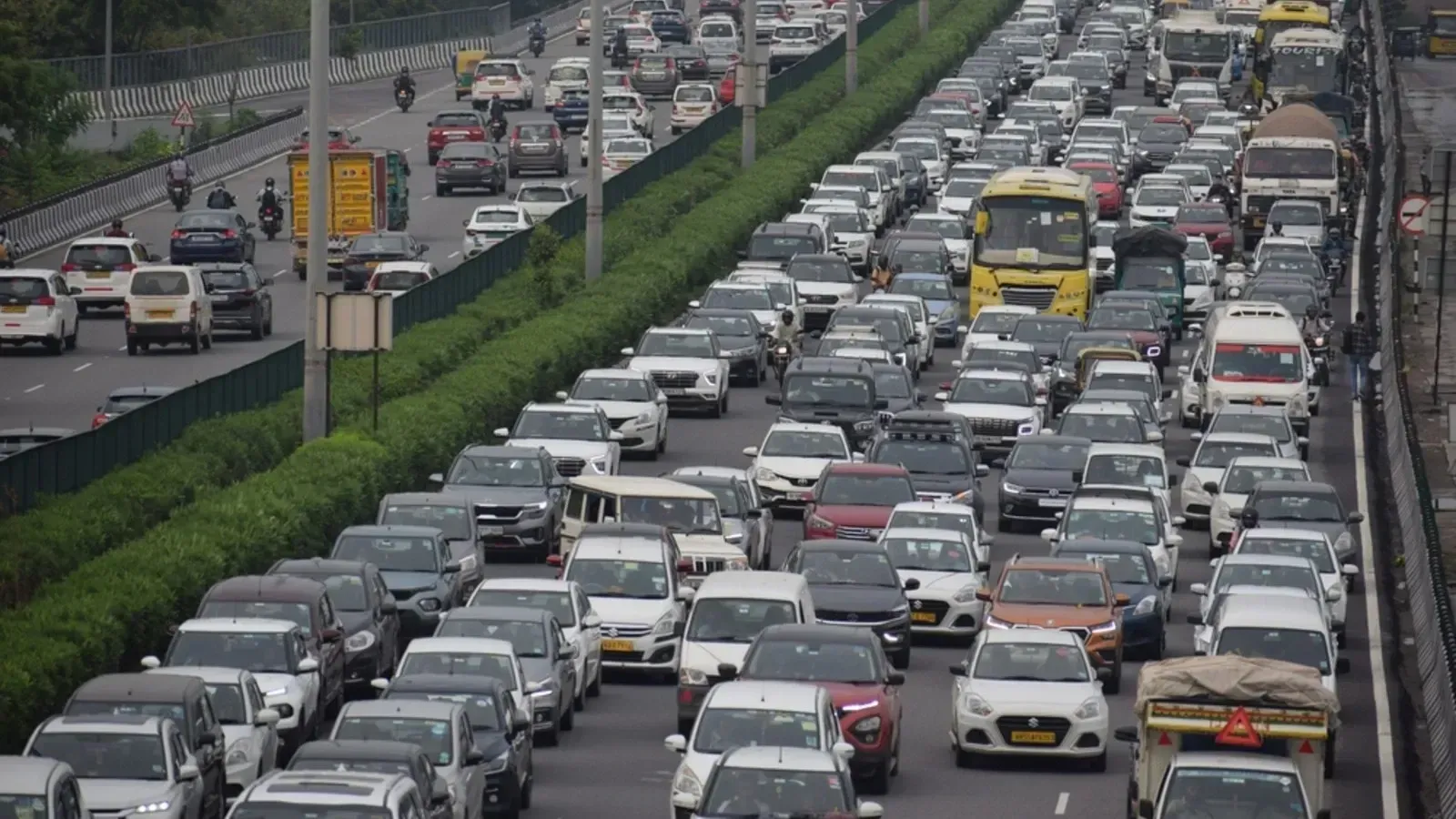
The new Corporate Average Fuel Economy (CAFE)-III norms for passenger vehicles, which will come into effect from April 1, 2027.
The government has notified new Corporate Average Fuel Economy (CAFE) norms for passenger vehicles, requiring automobile manufacturers to meet progressively tighter fuel consumption standards and carbon-emission limits from April 1, 2027, to March 31, 2032.
The notification, issued by the power ministry on September 29, specifies annual average fuel consumption standards for M1 category motor vehicles for a five-year period beginning April 1, 2027.
According to the government, the CAFE 2027 regulations establish a “modern, technology neutral and performance based regulatory framework” that seeks to “accelerate the adoption of advanced fuel-efficient technologies and cleaner propulsion systems.”
The new norms broadly cover passenger cars, including hatchbacks, sedans, special utility vehicles, and MPVs, manufactured or imported for sale in India.
The draft CAFE-3 regulations had initially proposed a concession for lightweight petrol cars (under 909 kg) to keep them affordable, but the final norms eliminated this benefit.
The standards will be calculated on the Modified Indian Driving Cycle (MIDC) based on the weighted average unladen mass of vehicles manufactured or imported for sale by each manufacturer.
The norms cover the weighted average fuel consumption of a manufacturer's eligible vehicles rather than prescribing a separate fuel economy target for every individual model.
The new framework introduces a petrol-equivalent fuel consumption methodology that enables uniform comparison across petrol, diesel, CNG, LPG, electric and hybrid vehicles.
The notification provides separate conversion factors for diesel, LPG, CNG and electricity.
Electric vehicles, for instance, will have their energy consumption measured in kWh per 100 km and converted into petrol-equivalent consumption.
The rules also allow manufacturers to claim specified reductions in fuel consumption for certain eligible technologies, including start-stop systems, tyre pressure monitoring systems, regenerative braking, six-speed or higher transmissions, and micro-hybrid motor-generators, among others.
The new regulations offer "super credits" for Battery Electric Vehicles (BEVs), Range-Extended Electric Vehicles (REEVs), Plug-in Hybrid Electric Vehicles (PHEVs), Strong Hybrid Electric Vehicles (SHEVs) and flex-fuel vehicles, making it easier for manufacturers to meet fleet emissions targets when producing alternative-fuel models.
Manufacturers will have to declare the CO2 performance of each model under both the existing MIDC and the Worldwide Harmonized Light Vehicles Test Procedure (WLTP) for vehicles sold from April 1, 2027.
Manufacturers that perform better than their applicable target will earn credits, while those exceeding the target will incur debits.
Credits and debits will be maintained in a manufacturer passbook and can be carried forward within the compliance block.
Manufacturers will also be allowed to trade or exchange credits with other manufacturers to meet compliance requirements. Those with debit balances can buy credits from the Bureau of Energy Efficiency.
The price for such credits has been fixed at ₹2,500 per gram of CO2 per km in 2027-28, rising annually to ₹4,500 in 2031-32.
The Ministry of Road Transport and Highways will be responsible for enforcing provisions relating to testing, calculations, reporting, conformity of production and other compliance-related methodologies.
Manufacturers will be required to meet their annual average fuel consumption standard from the 2027-28 fiscal year.
The first compliance block will cover three years from 2027-28, while the second will cover two years from 2030-31.
Small-volume manufacturers producing or importing fewer than 1,000 eligible vehicles in a reporting period are exempt from meeting a specific CAFE target but will continue to report their annual average actual fuel consumption.
The passenger vehicle segment accounts for a substantial share of India's transport energy demand and remains an important contributor to fossil-fuel consumption.
About The Author
Next Story

