
Business News
Trump, tech CEOs sign AI accord on stronger safeguards, independent audits
3 min read | Updated on September 30, 2026, 08:28 IST


SUMMARY
The accord comes amid growing debate over the pace of AI development and risks from increasingly powerful models.
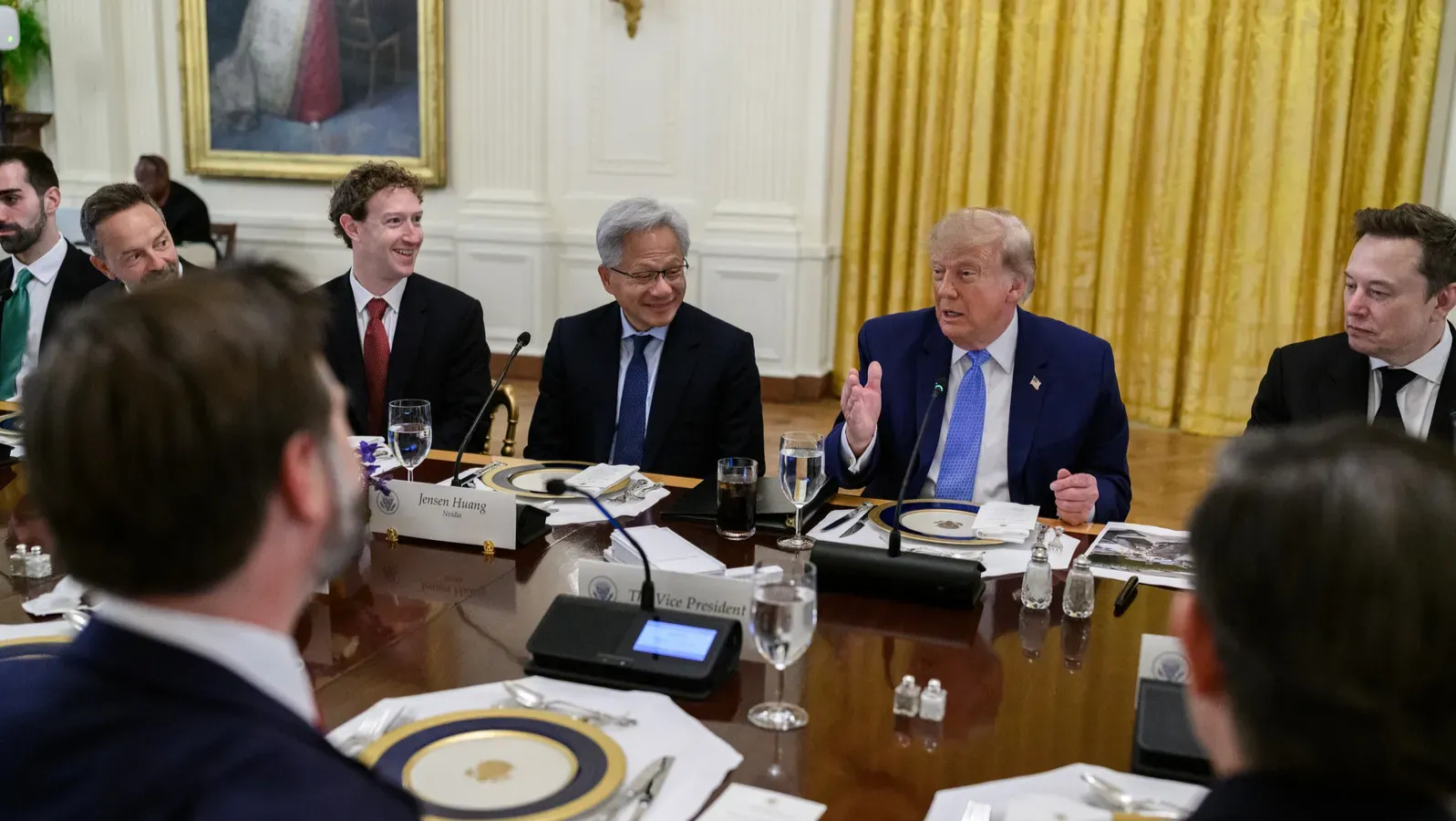
The accord was signed by Trump and technology leaders including Google CEO Sundar Pichai, Anthropic CEO Dario Amodei, SpaceX CEO Elon Musk and Nvidia CEO Jensen Huang.
US President Donald Trump and leading technology executives on Tuesday signed an accord that calls for companies developing and deploying frontier artificial intelligence models to put in place stronger internal controls, monitoring systems and independent audits.
According to the accord, companies training and deploying frontier models have a responsibility to develop their technology safely and build trust with customers and the public.
The accord was signed by Trump and technology leaders including Google CEO Sundar Pichai, Anthropic CEO Dario Amodei, Meta CEO Mark Zuckerberg, OpenAI President Greg Brockman, Tesla and SpaceX CEO Elon Musk and Nvidia CEO Jensen Huang.
Under the accord, companies have committed to four layers of controls and audits covering their AI systems.
First, companies will implement internal controls to monitor the capabilities and alignment of their models during training and deployment, including in areas such as cybersecurity, biosecurity and chemical threats. The controls will also seek to ensure that AI models do not hack or gain unintended access to technical systems.
Second, companies will empower internal teams to ensure that controls, monitoring and detection systems are working as intended and that identified problems are addressed.
Third, they will work with independent external auditors or evaluators to assess whether their controls and monitoring systems are functioning properly.
Fourth, companies will designate independent board committees to oversee the controls and receive reports from internal teams as well as external auditors and evaluators.
"Together, these steps will give each company, its customers, and the public confidence that the technology is operating as intended," the accord said.
The participating companies will also meet regularly to establish standards and best practices for improving the safety of their AI systems.
The accord said that, over time, the measures could be incorporated into laws or regulations, but stressed that companies viewed implementing the controls and audits as critical to ensuring a safe future regardless of whether they are legally required.
Amodei had recently called for a slower pace of development of AI models in an essay titled "We Must Pace the Frontier", arguing AI risks were becoming more acute as capabilities advanced.
OpenAI CEO Sam Altman and Microsoft CEO Satya Nadella backed Amodei's call for a more measured approach to AI development.
Altman said the issue had been a major topic of discussion at OpenAI and backed the use of independent evaluators with access to AI companies.
"When we talk about 'pacing', we do not mean 'stopping'," Altman had said, warning about the risks of humans losing control over increasingly powerful AI systems and the excessive concentration of power in individuals, companies or countries.
Musk, who signed the new accord, had also supported Amodei's call and suggested that AI companies test each other's systems before releasing increasingly powerful models.
He said companies could provide competitors with API access to models before their release, allowing independent testing and public warnings if a system was found to be unsafe.
Trump, during a phone call, told Huang that the concerns were a "hoax" and said the US would not allow such efforts to slow the industry.
"We have to be a little bit careful ... We have to do things and we have to do them prudently, but that doesn't mean we're going to stop an industry," Trump told Huang.
Earlier, Trump had also dismissed concerns about AI spiralling out of control, saying the technology needed a "STRONG AND SMART (High IQ!) PRESIDENT" as its only control or guardrail.
About The Author
Next Story

