
Upstox Originals
Rapido’s Ownly has early momentum, but can it scale?
6 min read | Updated on April 06, 2026, 14:29 IST


SUMMARY
What if your ₹119 pizza actually cost ₹119, with just GST on top? No other fees. That’s the idea Rapido is exploring with Ownly, a zero-commission platform built around “honest pricing”. It’s going after thousands of restaurants left out of Zomato and Swiggy. But can this actually work, especially in a market where platforms typically charge 15–30% commissions to make the economics hold?
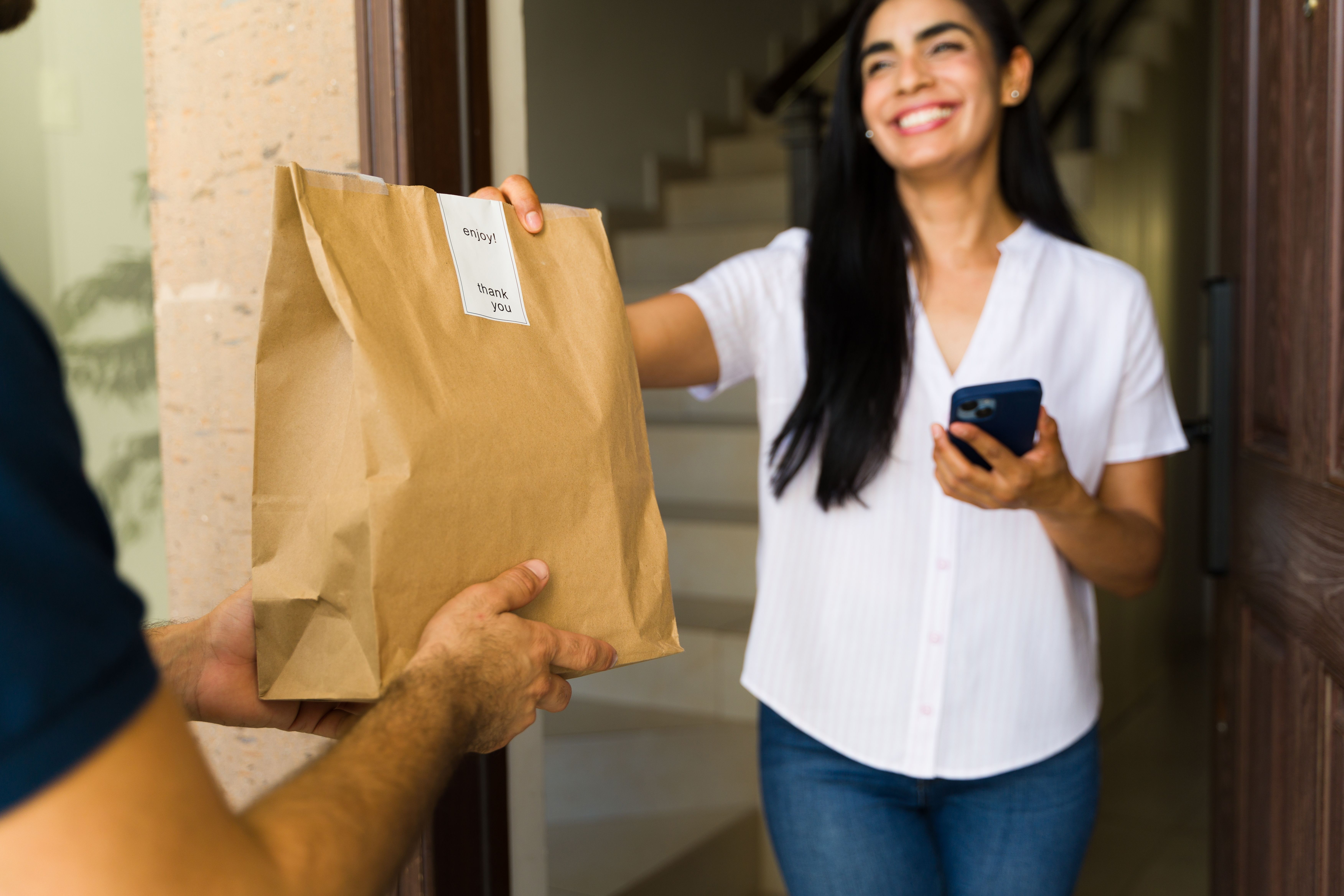
As of March 26, Raido’s Ownly is is clocking ~5,000 daily orders in Bengaluru
Ordering food online often costs more than eating out. Let’s be honest, every time you see the final bill, you look at it and wonder, wait, didn’t cost so much when I was ordering it? Fees and commissions sneak in and stack up, and currently, it's not like there is a choice.
Or, is there?
On March 3, 2026, Rapido officially launched its standalone food delivery app, Ownly, across Bengaluru, marking its full-scale entry into food delivery. As of March 26, the platform is clocking ~5,000 daily orders, per Inc42, signalling early-stage adoption.
Interestingly, the app follows a “restaurant-first, zero-commission approach”, something we’ll get into next.
Rapido had already been testing Ownly quietly since August last year in pockets like Koramangala, HSR Layout, and BTM Layout. Now, with a citywide rollout, it’s clearly moving from pilot mode to serious competition.
Ownly is a full-stack platform, handling everything from restaurant discovery to delivery, and already claims close to 20,000 restaurant partners.
Rapido’s move comes at a time when India’s food delivery market, estimated at roughly $8 billion annually, is largely controlled by Swiggy and Zomato.
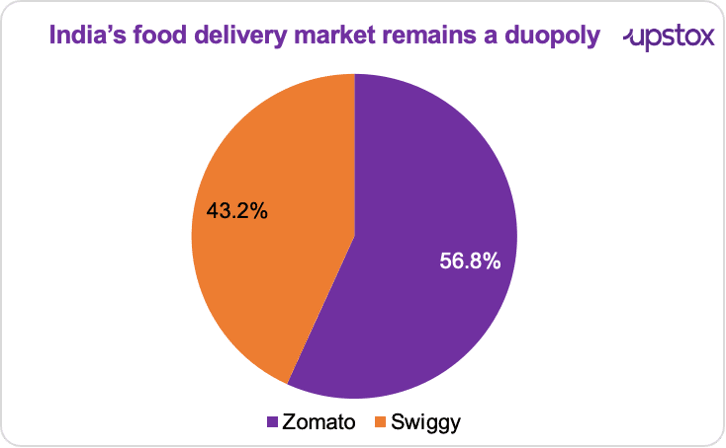
Data as of Q3FY26
What’s more interesting, though, is how this model actually works.
What is the restaurant-first, zero-commission model? So, what’s Rapido actually trying to change here?
According to CEO Aravind Sanka, the real opportunity isn’t just competing with Swiggy and Zomato, it’s going after the huge chunk of restaurants that aren’t even online yet.
In Bengaluru alone, there are over 1 lakh FSSAI-licensed restaurants, but fewer than 30,000 are listed on the big platforms. That leaves nearly 70,000 restaurants invisible online, and that’s exactly where Ownly is focusing.
The idea is simple - bring these offline restaurants online using a zero-commission, restaurant-first approach, much like Rapido earlier did with auto-rickshaws.
Ownly wont take a cut from restaurant orders. Which means restaurants don’t have to inflate prices just to stay profitable on the platform. And in turn, customers can see prices much closer to what they’d pay offline.
Now, how is Ownly going to earn money?
Right now, Ownly’s revenue model is simple, and heavily dependent on customers.
The platform primarily earns through a delivery fee of around ₹30, along with GST. In line with its “no hidden charges” positioning, Ownly has removed all restaurant-side fees entirely.
However, beyond this, Rapido hasn’t yet clarified what the long-term revenue strategy will look like, whether it plans to introduce ads, subscriptions, or other monetisation streams.
Has this model been tried before, and did it actually work?
Versions of this have popped up multiple times.
Take Swiggy, for instance. Back in 2023, it launched something called Launchpad, offering 0% commission for the first month to new restaurant partners. The idea was simple: get more restaurants online, let them save on commissions initially, and help them grow.
But there was a catch, it was temporary. After the initial period, the usual commission structure kicked back in.
Even Zomato started with the idea. It experimented with zero-commission for takeaway orders during Covid and even hinted at broader zero-commission models linked to performance or profitability milestones. But again, these weren’t scaled as a permanent shift across the platform.
If Zomato and Swiggy’s zero commission didn’t last, will Ownly really change the game?
Well, some things work in Ownly’s favour, and some don’t.
Rapido seems to have done this before
At first glance, Rapido might seem like it already has the answer.
Rapido isn’t entering food delivery like a typical newcomer. In its mobility business, it already operates a bike-taxi network across 600 cities, giving Ownly instant access to delivery supply without spending years building it.
It built this network by starting with bike taxis, initially limiting itself to Bengaluru, before expanding into autos and cabs with a focus on short-distance, affordable rides.
Along the way, it started zero-commission models for auto and cab drivers, replacing per-ride cuts with subscription-style pricing. This helped it scale rapidly, competing with Uber and Ola. Between January 1 and February 28, 2026, Rapido clocked 73.96 million monthly users, ahead of Uber (39.05 million) and Ola (28.15 million).
But the question is, can Rapido repeat this here?
Well, Rapido’s zero-commission play worked in its mobility business because the economics are fundamentally asset-light.
Ride hailing platforms primarily act as demand-supply matchmakers. Once a ride ends, there’s no inventory, no production cycle, and limited post-transaction costs, keeping marginal costs low.
Food delivery works very differently.
It’s a high variable cost business, where profitability depends on earning from every order.
That’s why platforms like Zomato and Swiggy charge commissions, their revenue scales with order value, helping offset these fluctuating costs.
Ownly breaks this link. Instead of commissions, it relies on a flat delivery fee. So its revenue per order stays fixed, while costs can keep changing.
That’s the challenge.
So while zero commission works in mobility, in food delivery every additional order carries a real cost.
Which means what worked for rides doesn’t automatically translate to food.
There’s also the ecosystem challenge
Over time, incumbents have built sticky user habits through loyalty programs (Zomato Gold, Swiggy One) and integrations with quick commerce services like Blinkit and Instamart. So ordering food isn’t just about food anymore, it’s part of a larger routine people are already used to.
That said, Ownly does come with an advantage.
Transparent pricing
On existing platforms, customers are becoming more aware of the additional charges added at checkout.
That’s where Ownly finds some opening, the way competitors make money.
A customer in Bengaluru compared the price of the same pizza across platforms when Ownly launched. What looked like a ₹119 pizza didn’t stay ₹119 for long. Once additional charges kicked in, the final bill on platforms like Zomato climbed to around ₹190.
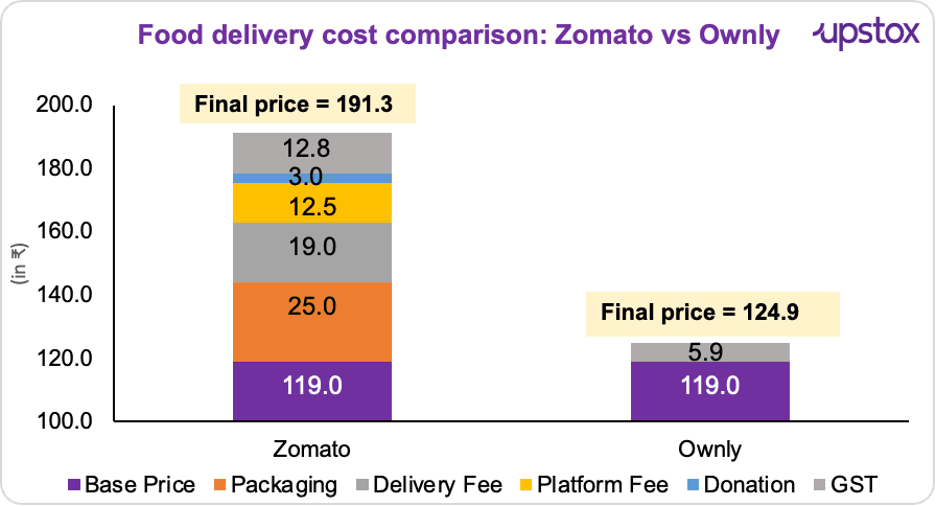
Source: Hindustan Times *Data as of March 4, 2026
And just after this, by late March 2026, platform fees had climbed to about ₹14.90 on Zomato (from ₹12.5 in early March) and ₹17.58 on Swiggy. Back in 2023, these fees were as low as ₹2.
So, Ownly may address some of the pricing concerns. But whether it can sustain the economics at scale remains to be seen.
In a nutshell
The real opportunity may lie in bringing a new set of offline restaurants online, rather than directly competing with incumbents. If Ownly can unlock that supply, it could carve out its own space in the market. If not, it risks running into the same constraints that others have faced.
About The Author
Next Story



