
Upstox Originals
Hormuz crisis: Will Indian pharma exports suffer?

6 min read | Updated on March 06, 2026, 14:26 IST


SUMMARY
Oil prices are in the news again due to the closures at the Strait of Hormuz. However, a secondary impact of this closure is on Indian pharma exports. Nearly $2 billion of Indian pharma exports are at imminent risk. Besides that, a supply crunch of APIs and a strengthening dollar could lead to further challenges.
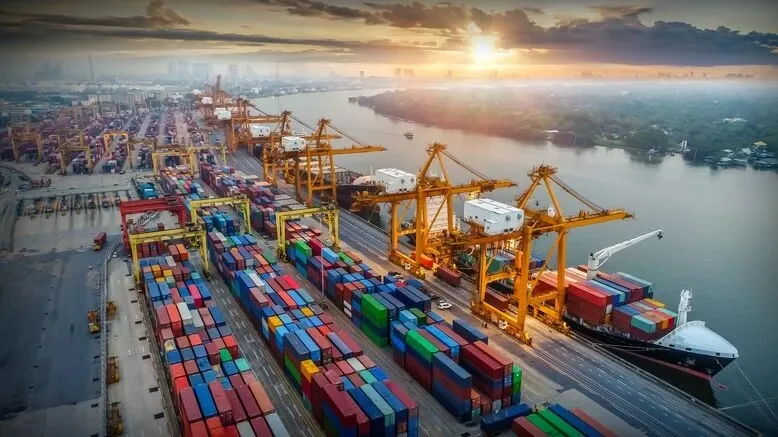
Nearly $2 billion of Indian pharma exports are at imminent risk | Image: Shutterstock
Just when global trade was grappling with tariffs and policy uncertainty through 2025, another challenge emerged; this time from a critical shipping route.
The Strait of Hormuz, a passage linking the Persian Gulf to the Arabian Sea, has now been closed, due to tensions in the middle-east, sending shockwaves through global shipping lanes.
Overall maritime traffic through the route has plunged by nearly 70%, leaving 18 loaded and 37 unloaded tankers from global shipping fleets stranded inside the Persian Gulf, since its closure.
Well, most of the headlines so far have been about oil. That’s not surprising, a big share of the world’s energy shipments moves through these waters.
But here’s the thing. Oil isn’t the only thing travelling through these routes. A lot of industries depend on them to move raw materials and finished goods across continents. And India’s pharmaceutical sector is one of them.
India exported $30.5 billion worth of pharmaceuticals in FY25, accounting for about 7% of India’s total merchandise exports of roughly $437 billion. Here’s what you need to know:
- Around 6% of India’s pharma exports are at immediate risk, as they head to West Asia (the Middle Eastern region including the UAE, Saudi Arabia, Oman, Iraq, Iran, among others). Most of these shipments pass through the Strait of Hormuz.
- India supplies nearly 40% of Iran’s generic medicine requirements.
- A large share of this trade also moves through Dubai, which acts as a major logistics hub where medicines are consolidated and re-exported to other countries in the middle east region.
If shipping conditions tighten, cargo that would normally move smoothly could face delays, rerouting, or longer transit times.
Raw material supply chains could tighten
A large share of active pharmaceutical ingredients (APIs) comes from China, while high-end key starting materials (KSMs), specialty intermediates and advanced chemicals are often sourced from European suppliers.
Many of the chemicals used to make these drug ingredients are derived from petrochemical feedstocks that move through Gulf shipping routes, including the Strait of Hormuz.
In FY25, India imported about $4.35 billion worth of APIs, bulk drugs and intermediates, with roughly 73–74% coming from China.
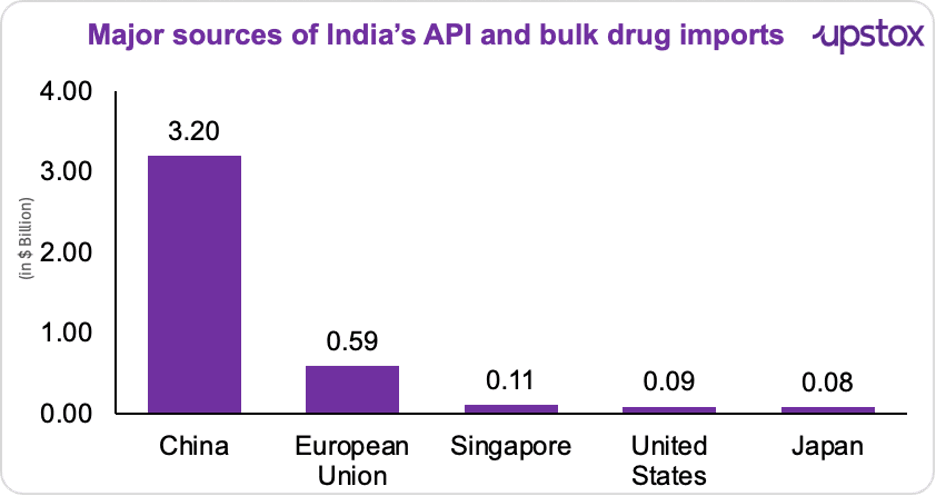
Source: PIB
Logistics and power costs could climb
There’s another problem for drugmakers, rising costs.
Making pharmaceutical ingredients is energy-intensive. In fact, power alone accounts for about 20–25% of production costs for bulk drug and API manufacturers. So when oil prices rise, manufacturing medicines becomes more expensive.
Then there’s the logistics side. If sea routes remain disrupted, exporters may try shifting urgent shipments to air cargo. But that isn’t a simple solution either. Air-freight rates jumped nearly 400% within 48 hours of the Strait of Hormuz disruption as companies rushed to secure cargo space.
That means sending medicines by air suddenly becomes far more expensive, and not always practical for large shipments.
Some manufacturers, including Dr. Reddy’s, have already warned that prolonged disruptions could create inventory pressures as transport capacity tightens.
Energy and currency pressures
Rising oil prices and a weaker rupee are also pushing up input costs for drugmakers. The Indian rupee has slipped to around ₹92.3 per dollar in 2026, while Brent crude is hovering near $80–82 per barrel amid fears of disruptions to oil flows through the Strait of Hormuz.
That matters because many pharmaceutical solvents, reagents and intermediates are derived from petrochemical feedstocks. As crude prices rise and imports become costlier, manufacturing expenses for Indian drugmakers could increase.
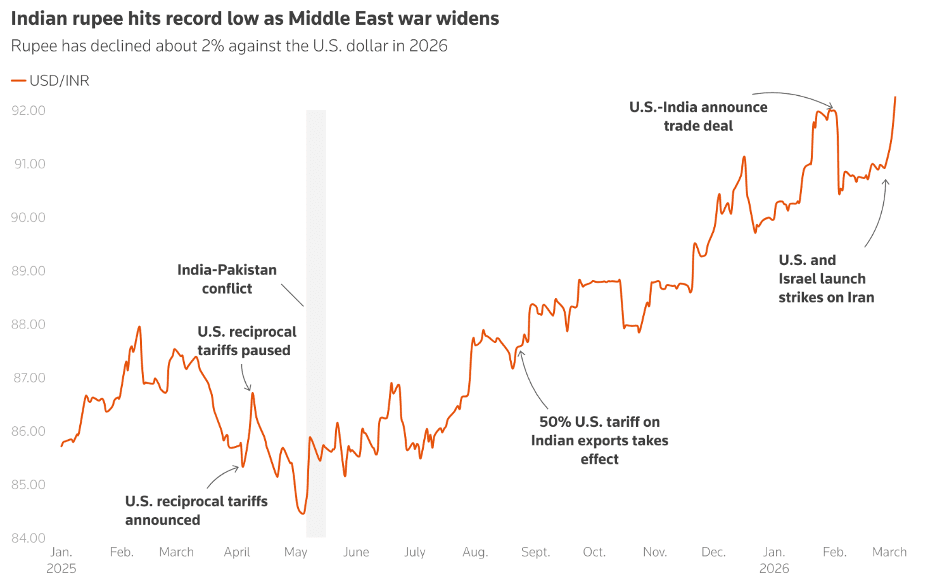
Source: Reuters
Shipping routes stretch as risks rise
With the Strait of Hormuz closed and the Red Sea still risky because of Houthi attacks, many shipping companies are avoiding these routes.
Instead, ships are being sent around Africa’s Cape of Good Hope, a much longer route. This can add 10–20 extra days to journeys between Asia and Europe.
For pharmaceutical shipments, these delays can be a problem. Many medicines, like vaccines, insulin and biologics; need strict temperature-controlled transport, so longer journeys can increase both costs and the risk of spoilage.
A look at past disruptions
The Strait of Hormuz has never been fully shut, but shipping there has been disrupted before. During the “Tanker War” in the 1980s, Iran and Iraq attacked oil tankers moving through the Persian Gulf.
The immediate shock was in oil markets, but higher crude prices and freight costs also raised the cost of petrochemical inputs used in drug manufacturing. Back then India’s pharma industry was much smaller. India largely managed the situation by continuing shipments under tighter security and absorbing higher freight and insurance costs, as global navies escorted vessels through the Gulf.
The episode showed how disruptions in key shipping routes can increase costs and delay supplies for global industries, including pharmaceuticals.
How is the industry dealing with the disruption now?
For now, most companies are trying to stay ahead of the situation rather than react once delays hit.
Many manufacturers are leaning on buffer stocks of raw materials to keep production running. Typically, companies hold 3-6 months of inventory, a strategy shaped by lessons from the pandemic and more recent shipping challenges in the Red Sea. Companies are also activating contingency plans such as:
- Exploring alternative routes, including direct India–Europe air cargo or using ports in Saudi Arabia and Oman where possible
- Using hybrid logistics models, combining air and sea transport to reduce delays
- Diversifying supply chains through nearshoring or dual sourcing
At the same time, Indian pharma firms are closely tracking updates from logistics players like Emirates SkyCargo and DP World, as well as government bodies such as the Directorate General of Foreign Trade (DGFT) and the Pharmaceuticals Export Promotion Council of India (Pharmexcil).
Looking ahead
For now, the industry is managing the disruption with inventory buffers and careful supply planning. But manufacturers warn that the situation could become more challenging if shipping disruptions continue.
A prolonged disruption could tighten supplies of key ingredients, raise manufacturing costs and slow the production of essential generics. Much will depend on how long tensions persist and whether global shipping routes stabilise in the coming months.
Disclaimer: Views and opinions expressed in the article are the author's own and do not reflect those of Upstox.
About The Author
Next Story



