
Upstox Originals
Bridging continents: The Panama Canal and its global impact
.png)
5 min read | Updated on January 27, 2025, 15:20 IST


SUMMARY
Recent news articles have been highlighting upcoming political challenges around the Panama Canal. What exactly is this canal and why is it so crucial? In this article, we explore critical details about this man-made waterway, which connects the Atlantic and Pacific Oceans. The canal facilitates almost $270 billion in global trade and is crucial for smooth global trade. Read on to learn more.
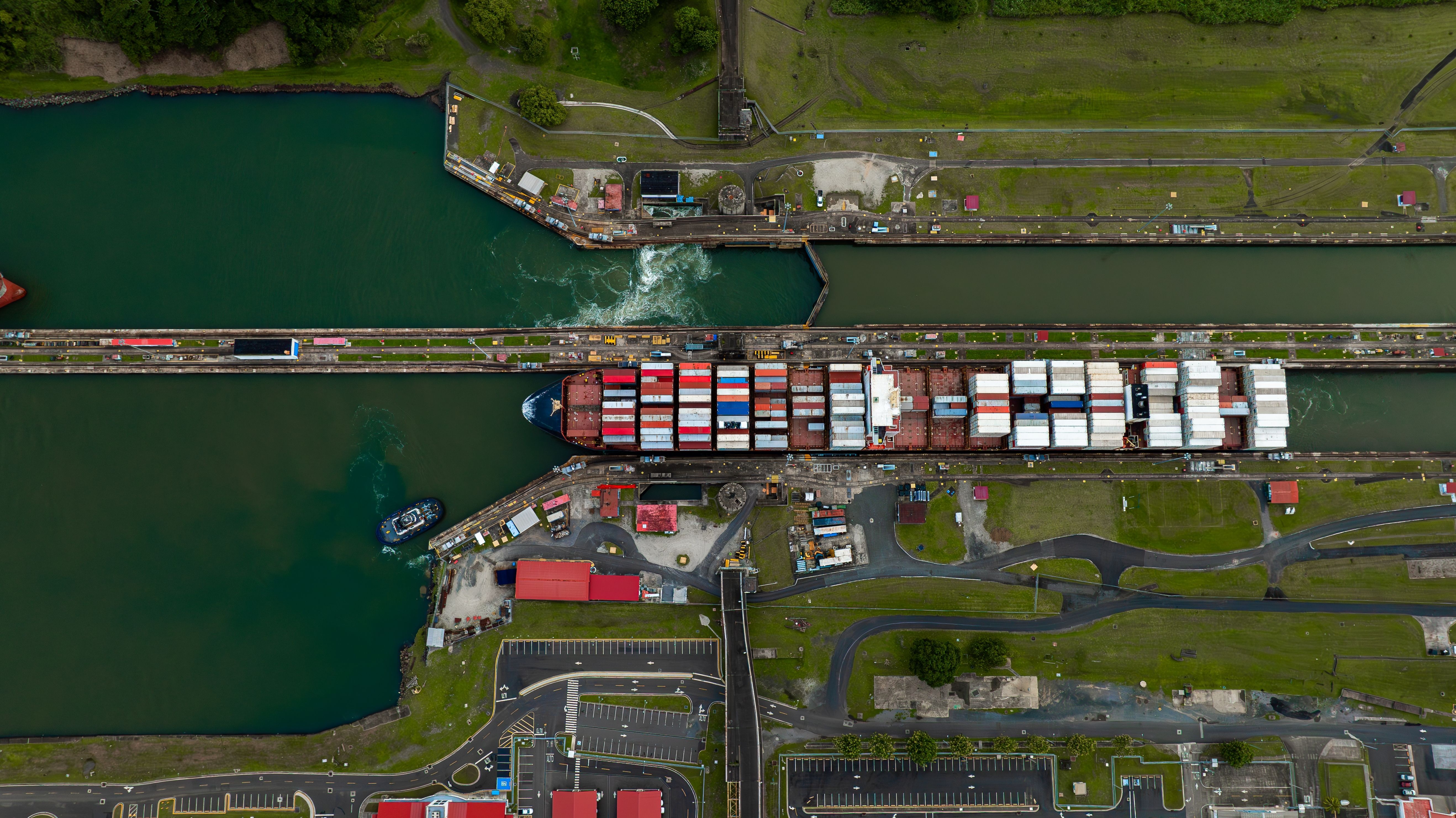
Around $270 billion worth of trade is carried out via the Panama Canal
What is it?
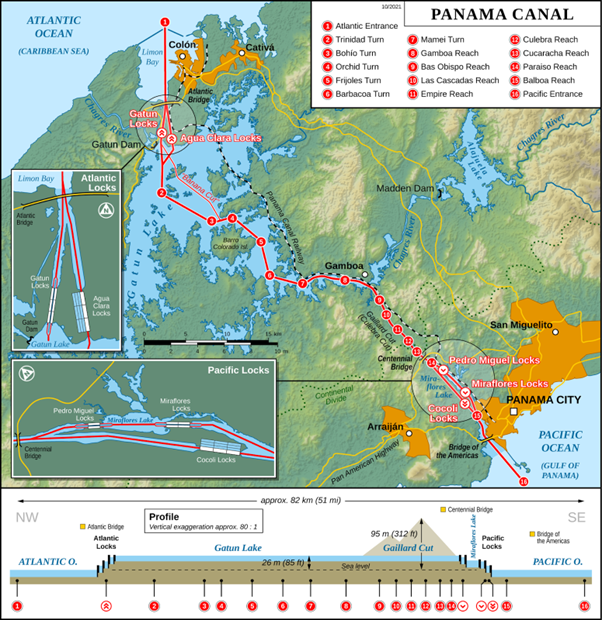
The Panama Canal is a huge and important man-made waterway. It's located in Panama, a country in Central America, and connects the Atlantic and Pacific oceans. It acts as a giant shortcut for ships! Instead of sailing all the way around the tip of South America, a long and arduous journey, they can just go through this canal, saving time and fuel, and hence money.
Source: Wikipedia
Here's what makes the Panama Canal so interesting:
It uses a large artificial lake: Gatun lake, an artificial lake spanning more than 400 sq.km is the primary waterway used by Panama Canal to help ships transit by providing adequate quantities of water to elevate ships and traverse oceans.
It was built through a mountain range: The canal cuts through the Continental Divide, which is the highest point of land separating the two oceans. They had to dig a huge channel called the Culebra Cut to make this happen.
It's a major part of global trade: Many ships travel through the Panama Canal every year, carrying all sorts of goods between different countries. The canal is so busy that they even had to make it bigger recently to allow even larger ships to pass through like the Panamax ships with an astounding length of 300 meters.
Who controls it?
The French tried to build it in 1881 first but ran into problems around 1889, so the United States took over and finished it in 1914. Panama was in control of the canal for a while, but then the United States took control of it and the surrounding area for many years. It wasn't until 1999 that Panama finally got full control of the canal back.
The Panama Canal is run by the Panamanian government through an organisation called the Panama Canal Authority (ACP). Since December 31, 1999, Panama has had full control over the canal, after sharing it with the United States for a while.
The canal is a vital source of income for Panama. In 2022, it added about $2.5 billion directly to Panama’s national treasury. When you add in indirect contributions, the canal makes up more than 6% of Panama's GDP.
How much trade goes through it?
Around $270 billion worth of trade passes through the canal every year. The US is the biggest user, with about 40% of its container traffic going through the canal every year. In fact, in 2024 alone, the Panama Canal transported an incredible 211 million long tons of cargo, to put it in simple words that’s almost equal to the weight of about 140 million cars!
Normally, about 40 ships can pass through the canal each day, but this number can change depending on water levels and other factors. For example, in June 2024, the daily capacity was 32 ships.
In terms of time, the canal helps save almost one month. For example, instead of going through the canal, a ship travelling from New York to Los Angeles would have to sail an extra 8,000 nautical miles around Cape Horn, the southern tip of South America. If we assume a speed of ~15 knots, that would mean approximately 22 long days!
From basic commodities to high-tech products, the canal is crucial for moving a huge range of goods around the world.
What would happen if things went south?
This isn’t just a “what if” scenario either. Back in 2019, the Panama Canal had serious trouble because of El Niño, a weather pattern that dried up Gatun Lake, which provides the freshwater needed to operate the canal’s locks. The low water levels meant ships couldn’t carry as much weight, and some had to take alternative routes like the Suez Canal or sail around South America. This caused delays, higher shipping costs, and disruptions to global trade—especially for goods moving between Asia and the Americas.
To explain this even further, let’s look at what happened in 2021 with the Suez Canal. You might remember seeing funny memes about it online, but for global shipping, it was anything but funny—it was a complete nightmare.
It all started with the Ever Given, a giant ship as long as the Empire State Building (that’s 1,300 feet!). It got stuck across the Suez Canal, blocking ships from passing in either direction. This caused a massive trade standstill, stopping nearly $10 billion worth of goods every day. It also led to big delays in deliveries around the world, which made things worse for industries already struggling with COVID-19 delays.
So, who would be most impacted by any challenges here? Some countries would feel the impact more than others:
-
The United States: Around 40% of goods shipped in and out of the US pass through the Panama Canal. This means industries like farming, manufacturing, and energy would face big problems.
-
China: China relies heavily on the canal to export goods from its factories. Without it, shipping costs would go up, which could hurt China’s economy.
-
Latin American countries: Places like Panama, Colombia, Costa Rica, and Ecuador depend on the canal to trade with the rest of the world. Panama, in particular, would suffer because the canal makes up more than 6% of its economy.
Outlook
The new US regime has indicated its intent to ‘take back’ the Panama Canal. The current Panama government has protested against the same. Leaving the politics aside, any disruptions to the canal’s smooth functioning can be a serious challenge to global trade. It can disrupt the supply chains of key products and lead to an inflationary environment that could spook the markets. As such, this situation remains a key monitorable for investors.
About The Author
Next Story



