
Personal Finance News
KOSPI crash today: Tax expert explains how to handle capital gains or losses in ITR

5 min read | Updated on June 08, 2026, 20:21 IST


SUMMARY
Foreign shares are treated as capital assets and any loss arising on their transfer would be characterised either as a short-term capital loss (STCL) or a long-term capital loss (LTCL).
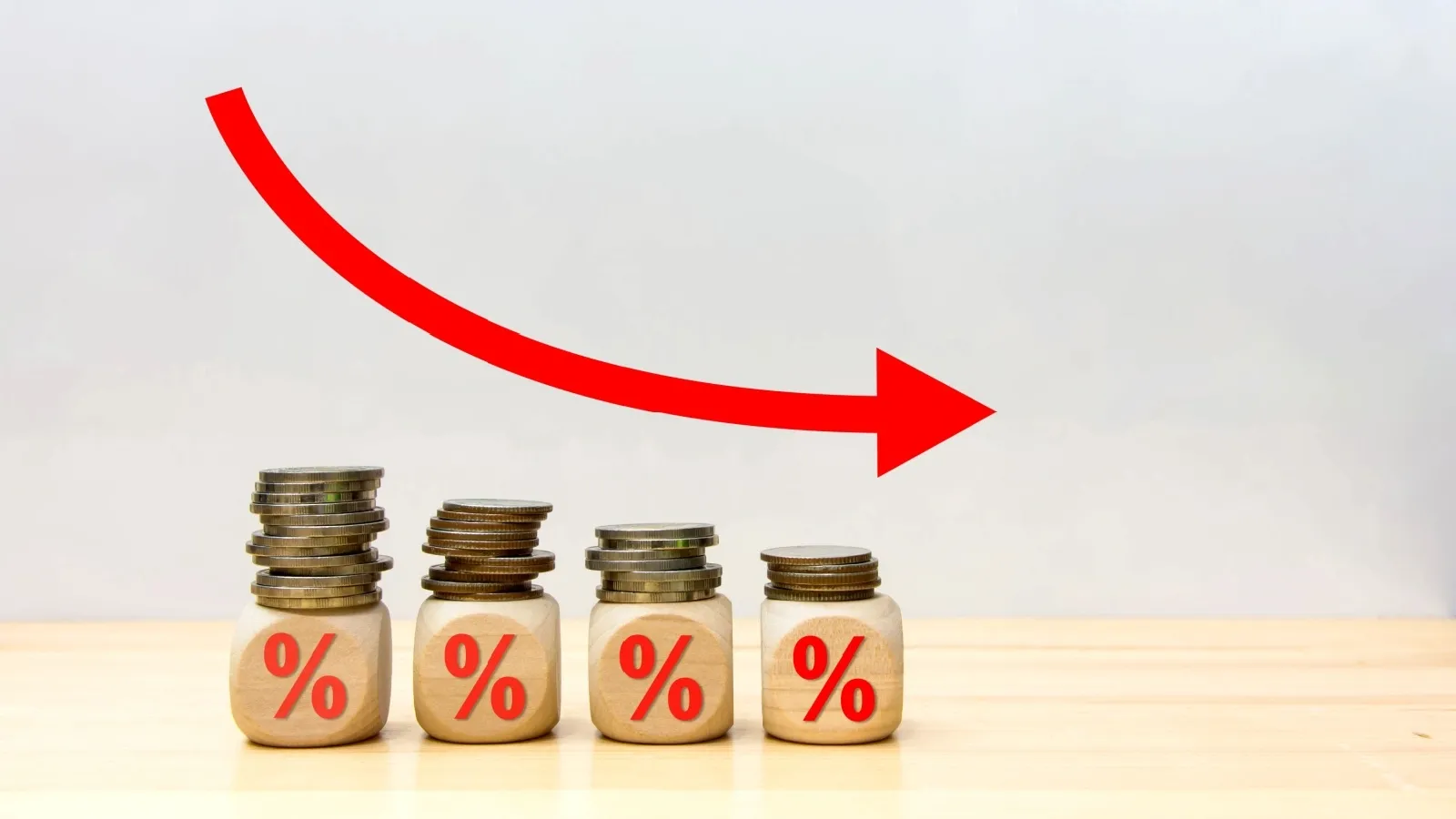
Here's how to deal with capital gains and losses from foreign markets. | Image: Shutterstock
Here's a guide to help you with inputs from CA Dr Suresh Surana.
How to handle capital losses from Korean markets
If an Indian tax resident invests in shares listed on a foreign stock exchange (for example, South Korean stocks) and incurs a loss on their sale, such loss is generally eligible for set-off and carry forward under the Income-tax Act, subject to the normal provisions governing capital gains, according to the expert.
Foreign shares are treated as capital assets and any loss arising on their transfer would be characterised either as a short-term capital loss (STCL) or a long-term capital loss (LTCL), depending on the period of holding.
Where the foreign shares are held for not more than 24 months immediately preceding the date of transfer, the resultant loss would ordinarily be regarded as STCL.
"In terms of Section 70 and Section 71 (corresponding to Section 108 of the ITA 2025), STCL can be set off against both short-term capital gains and long-term capital gains arising in the same financial year," Dr Surana said.
"If the loss cannot be fully absorbed during the year, section 74 permits the unabsorbed loss to be carried forward for a period of eight assessment years (tax years in case of ITA 2025) immediately succeeding the assessment year in which the loss was first computed," he added.
The carried-forward STCL can subsequently be set off against any capital gains (whether short-term or long-term).
However, if the foreign shares qualify as a long-term capital asset, the resulting LTCL can be set off only against long-term capital gains in accordance with section 74.
"Any unabsorbed LTCL may also be carried forward for eight assessment years and can be set off only against long-term capital gains during such period," Dr Surana said.
To avail the carry-forward benefit, the taxpayer must file the return of income within the due date prescribed under section 139(1). Failure to file the return within the prescribed due date generally results in the forfeiture of the right to carry forward capital losses.
"For instance, if the South Korean shares were sold at a loss in June 2025 (i.e., during Financial Year 2025-26 relevant to Assessment Year 2026-27), the loss may first be set off against eligible capital gains earned during FY 2025-26. Any unabsorbed balance can be carried forward and set off against eligible capital gains arising in the subsequent eight assessment years, i.e., up to Tax Year 2033-34 or Assessment Year 2035-36, provided the return for FY 2025-26 is filed within the due date under section 139(1)," Dr Surana said.
Investing in Korea: Key tax rules to know
| Topic | Key point |
|---|---|
| Foreign stocks taxation | Korean shares treated as capital assets in India |
| Type of loss | Classified as STCL (<24 months) or LTCL (>24 months) |
| STCL set-off | Can be adjusted against both STCG and LTCG |
| LTCL set-off | Can be adjusted only against LTCG |
| Carry forward | Losses can be carried forward for 8 years |
| Filing requirement | Must file ITR on time to carry forward losses |
| Cross-market set-off | Gains/losses from Korean and Indian shares can be adjusted (based on type) |
| DTAA/FTC benefit | Foreign tax paid may be claimed as credit in India |
How to handle capital gains from Korean markets
As per the Income-tax Act, capital gains and losses are classified based on their nature (short-term or long-term) and not on whether they arise from Indian or foreign shares. "Accordingly, gains earned on South Korean stocks may generally be adjusted against losses from Indian equity investments, subject to the capital loss set-off provisions," Dr Surana said.
He further explained that a short-term capital loss (STCL) can be set off against both short-term and long-term capital gains, whereas a long-term capital loss (LTCL) can be set off only against long-term capital gains. "Therefore, losses from Indian equity investments may be adjusted against gains from Korean shares if the nature of the gain and loss permits such set-off in manner as aforementioned in response to Q1."
According to the expert, in the case of foreign stocks, taxpayers should also consider the applicability of the relevant Double Taxation Avoidance Agreement (DTAA) and foreign tax credit (FTC) provisions. "Where taxes have been paid in the foreign jurisdiction on capital gains or related income, relief may be available in India through the FTC mechanism, subject to satisfaction of the prescribed conditions and documentation requirements."
Related News

About The Author
Next Story

