
Personal Finance News
NPS Swasthya: PFRDA issues operational guidelines; 24 FAQs on eligibility, contributions, withdrawals and insurance

8 min read | Updated on September 19, 2026, 07:53 IST


SUMMARY
PFRDA has issued NPS Swasthya 2026 guidelines. Check 24 FAQs on eligibility, contributions, healthcare withdrawals, insurance, exit rules and more.

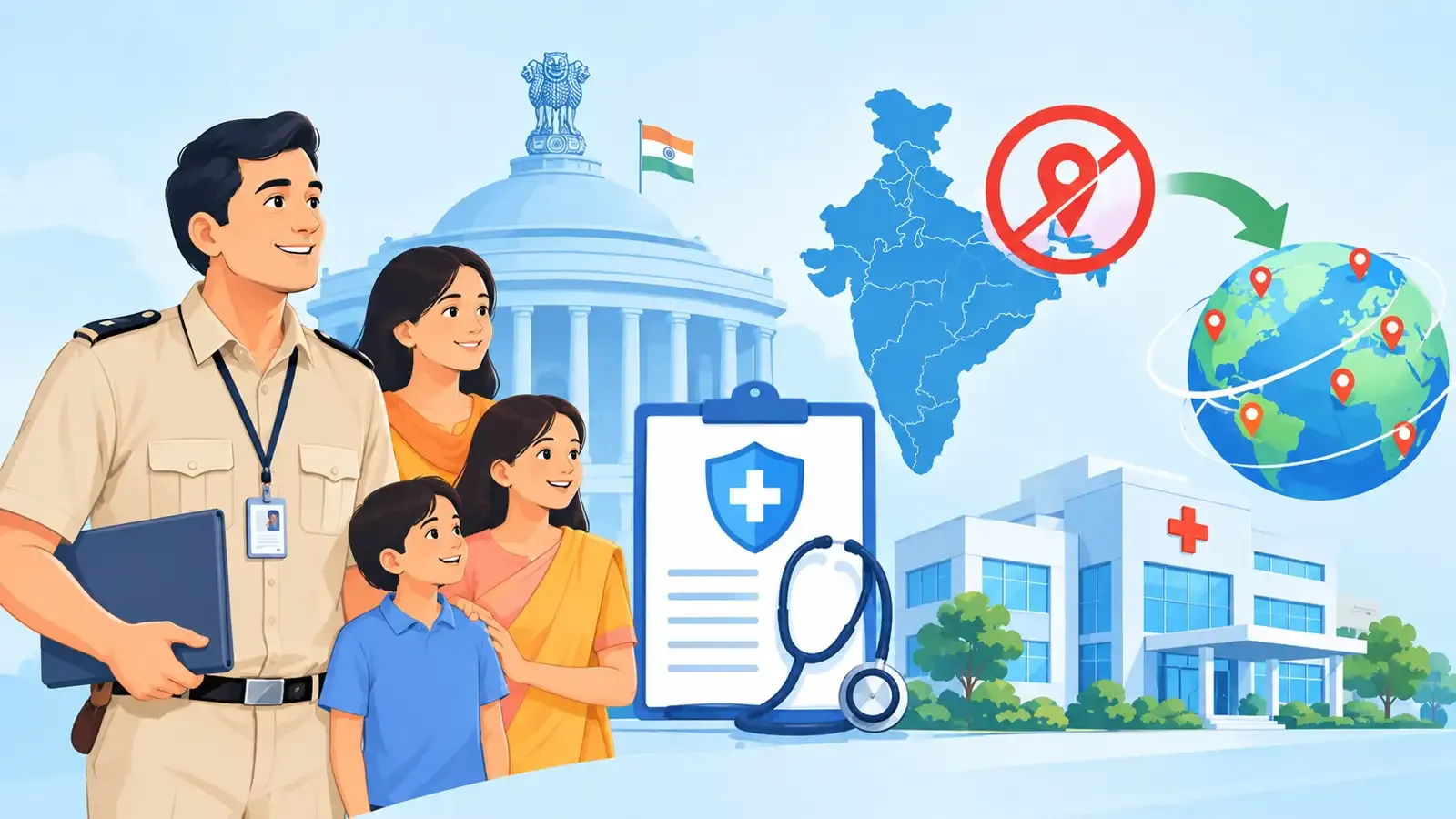
The new guidelines now set out the eligibility, contribution, withdrawal, insurance, exit and servicing provisions for NPS Swasthya,
The scheme provides greater flexibility for healthcare-related withdrawals and specified exit options to enable subscribers to meet eligible healthcare expenses in an efficient and timely manner.
Here are 24 key FAQs based on the NPS Swasthya operational guidelines issued by PFRDA through its circular dated September 18, 2026.
NPS Swasthya means the pension scheme for a specific purpose introduced under Regulation 4A of the Pension Fund Regulatory and Development Authority (Exits and Withdrawals under the National Pension System) Regulations, 2015, to facilitate retirement savings together with such healthcare benefits and insurance policy as may be specified under these Guidelines.
Any individual eligible to join NPS may enrol under NPS Swasthya, subject to these Guidelines.
NPS Swasthya shall comprise an account with an NPS Swasthya investment scheme and a separate super top-up health insurance policy.
The Insurance Policy shall be mandatory for enrolment under NPS Swasthya. The NPS Swasthya Account and the Insurance Policy shall remain legally and operationally distinct.
The minimum initial contribution shall be at least the applicable first-year Insurance Policy premium, inclusive of applicable taxes; annual maintenance charges of ₹200, plus applicable taxes, payable to HBA through PFs for undertaking servicing of NPS Swasthya scheme; and ₹1,000 towards investment in the NPS Swasthya account.
The minimum subsequent contribution to NPS Swasthya shall be ₹10.
The charges applicable to NPS under the All Citizen Model, as specified by the Authority, shall apply to NPS Swasthya. In addition, the PF may levy a charge up to 0.08% per annum of the AUM of the NPS Swasthya corpus, plus applicable taxes, for managing the NPS Swasthya.
The PF may also levy annual maintenance charges of ₹200, plus applicable taxes, payable to HBA through PFs for undertaking servicing of the NPS Swasthya scheme.
All charges shall be disclosed to the subscriber before enrolment and upon any change therein. No charge other than a charge permitted or approved by the Authority shall be recovered from the subscriber.
A subscriber may make a partial withdrawal towards Eligible Healthcare Expenses, including eligible out-patient and in-patient expenses, in accordance with these Guidelines.
The amount of partial withdrawals shall not exceed twenty-five per cent of the contributions made by the subscriber to the NPS Swasthya account.
There shall be no restriction on the number of partial withdrawals. No minimum waiting period shall apply to the first or any subsequent partial withdrawal.
The partial withdrawal amount shall not be paid to the subscriber. The amount shall be settled with the concerned hospital, healthcare provider or other eligible entity towards the Eligible Healthcare Expenses, in accordance with the prescribed fund-flow process given in the SoP.
An NPS Swasthya account shall be closed upon normal exit, premature exit, non-availability of funds to renew insurance, or death of the subscriber.
Closure of the NPS Swasthya account shall not affect any other NPS account maintained by the subscriber.
A subscriber may transfer funds from an existing NPS scheme under the All Citizen Model to the NPS Swasthya account, subject to the amount being limited to meet the applicable deductible under the Insurance Policy.
The exit provisions applicable to non-Government subscribers under the Pension Fund Regulatory and Development Authority (Exits and Withdrawals under the National Pension System) Regulations, 2015, shall apply to NPS Swasthya.
Where the available balance may be insufficient for renewal premium, the PF shall, where practicable, alert the subscriber at least 90, 60 and 30 days before renewal. The applicable grace period and consequences of non-payment shall be disclosed clearly.
If premium remains unpaid after the applicable grace period and cover lapses, the NPS Swasthya shall be treated as closed.
In such cases, the NPS Swasthya scheme shall be closed and merged to an NPS scheme under the All Citizen Model. Where the subscriber does not have an existing NPS scheme under the All Citizen Model, the NPS Swasthya scheme shall be changed into an NPS scheme under the All Citizen Model.
Coverage unit: subscriber, spouse and up to two dependent children as one family floater; parents are excluded.
The Annual Aggregate Deductible options are ₹10,000, ₹50,000, ₹1 lakh and ₹3 lakh, with corresponding Family Floater Sum Insured of ₹1 lakh, ₹5 lakh, ₹10 lakh and ₹30 lakh.
Subscriber entry age is 18 to 70 years. Entry-age premium cohorts are 18 to 40 years; above 40 to 60 years; and above 60 to 70 years. Renewal may continue up to and including age of 85 years, subject to premium, policy terms and applicable law.
The nomination provisions applicable to non-Government subscribers under the Pension Fund Regulatory and Development Authority (Exits and Withdrawals under the National Pension System) Regulations, 2015, shall apply to NPS Swasthya.
The NPS Swasthya schemes offered under the Regulatory Sandbox shall be discontinued upon implementation of these Guidelines.
Existing subscribers under the NPS Swasthya scheme offered under the Regulatory Sandbox shall be provided an option to migrate to an NPS Swasthya scheme offered under these Guidelines, in the manner specified by the Authority.
Such subscribers may also opt to merge their NPS Swasthya Scheme to an NPS scheme under the All Citizen Model, in accordance with the prescribed process. Where the subscriber does not have an existing NPS scheme under the All Citizen Model, the NPS Swasthya scheme shall be changed into an NPS scheme under the All Citizen Model.
The PF, CRA and other intermediaries concerned shall facilitate such migration or transfer and ensure continuity of the subscriber's records, benefits and applicable insurance coverage, in accordance with the prescribed process.
The initial waiting period is 30 days, except for accident as provided in the final policy wording. The pre-existing disease waiting period is 12 months. The specified disease or procedure waiting period is 12 months, subject to the final Insurance Policy and applicable insurance law.
A subscriber may change from one NPS Swasthya scheme to another at the time of renewal of the insurance policy, in the manner specified by the Authority. Such change may involve a change of PF and the associated insurance policy.
A subscriber may opt for premature exit from the NPS Swasthya account where eligible inpatient healthcare expenditure in a single instance exceeds the amount permissible through partial withdrawal.
On premature exit, the accumulated NPS Swasthya corpus shall first be utilised towards the eligible in-patient healthcare expenditure. In case of any remaining balance, NPS Swasthya scheme shall be closed and merged to an NPS scheme under the All Citizen Model. Where the subscriber does not have an existing NPS scheme under the All Citizen Model, the NPS Swasthya scheme shall be changed into an NPS scheme under the All Citizen Model.
Any Insurance Policy already in force shall continue for its remaining policy period, in accordance with its terms and applicable insurance law.
The subscriber shall be able to lodge a grievance through the Pension Sahayak platform which will enable subscribers to lodge grievances against any stakeholder namely PF, CRAs, POPs, HBAs, Insurers, etc for quick and effective resolution of its grievance.
The insurer shall be responsible for grievance redressal arising out of claim settlement process and any incidental matters to super top-up health insurance policy, in terms of applicable IRDAI Regulations.
The new guidelines now set out the eligibility, contribution, withdrawal, insurance, exit and servicing provisions for NPS Swasthya.
Related News
About The Author
Next Story

