
Personal Finance News
8th Pay Commission: Railwaymen seek special allowances like risk, hardship, hazardous duty and dress; what 7th CPC offered

5 min read | Updated on November 04, 2026, 13:17 IST

SUMMARY
The AIRF told the 8th Pay Commission that the Railways are unlike any other department, the “Second Line of Defence” after the Army, called on during calamities, war-like situations and pandemics.

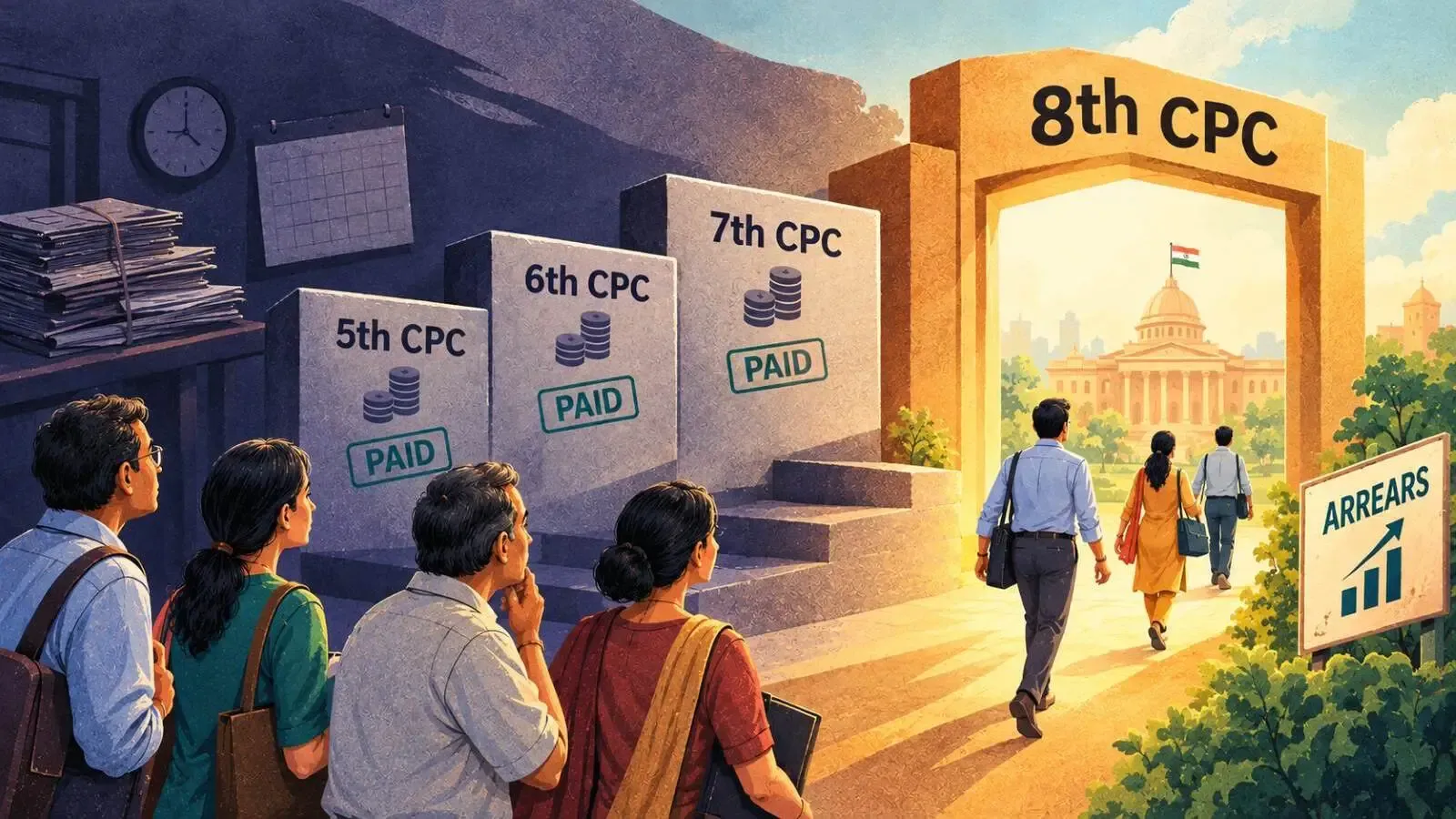
Amid AIRF's demands, what the 7th CPC did with those same heads of payment is worth noting. | Representational image/AI generated
In their interaction with the 8th CPC, the AIRF cited the number of casualties and grievous injuries sustained in the course of duty.
"It was also explained to the Pay Commission that, keeping in view the number of casualties and grievous injuries sustained during the course of employment by the Railwaymen, they should be considered for “Special Allowance”, like Risk & Hardship Allowance, Hazardous Duty Allowance, Hill Allowance and Dress Allowance to each and every category of the Railwaymen," the AIRF told all its affiliated unions on October 30, 2026,
The AIRF's demand runs directly against the approach the 7th CPC took, which was to fold such payments into a single matrix and abolish several of them outright.
AIRF's delegation, led by General Secretary Shiva Gopal Mishra and Working President J.R. Bhosale, appeared before Chairperson Justice Ranjana Prakash Desai, Member Prof. Pulak Ghosh and Member-Secretary Pankaj Jain. The two hours allotted were split four ways: general issues including minimum wage and a railway-specific allowance, then Loco and Traffic Running Staff, Track Maintainers and allied P. Way categories, and Technicians.
The Federation said that the Railways are unlike any other department, the “Second Line of Defence” after the Army, called on during calamities, war-like situations and pandemics.
Amid AIRF's demands, what the 7th CPC did with those same heads of payment is worth noting as it was the opposite of a category-by-category approach. The summary of the official 7th CPC report noted that that it recommended abolishing 52 allowances altogether, with another 36 allowances abolished as separate identities and subsumed elsewhere.
As per the 7th CPC report, allowances relating to risk and hardship were to be governed by the proposed Risk and Hardship Matrix. That Matrix was the centrepiece of 7th CPC recommendations: nine cells formed by low, medium and high risk against low, medium and high hardship, with an extra cell at the top, RH-Max, to accommodate Siachen Allowance and serve as the ceiling.
Rates run from ₹1,000 a month in cell R3H3 to ₹31,500 in RH-Max for Level 9 and above, with lower rates for Level 8 and below, rising 25% each time DA rises 50%. The Commission called it “a new paradigm intended to rationalize the myriad allowances, their categories and sub-categories that exist today.”
Within that scheme, Risk Allowance itself did not survive. Before 7th CPC, it was paid to employees “engaged in hazardous duties or whose work will have deleterious effect on health over a period of time,” at “the extant rate of ₹60 pm”. The Commission abolished it, along with Commando Allowance, Handicapped Allowance, Night Patrolling Allowance, Operation Theatre Allowance and Organization Special Pay. “These allowances have meagre rates. With the rise in pay proposed by the Commission, these allowances are no longer required,” it said.
Two of those matter particularly to the categories AIRF pressed. Night Patrolling Allowance was paid to Trackmen “to compensate for hardship faced in Night Patrolling,” at ₹10 per night and was abolished. Hill allowance fared no better. The Special Compensatory (Hill Area) Allowance was scrapped on the reasoning that “there is hardly any hardship involved at altitudes of 1000 metres above sea level,” with High Altitude Allowance extended instead.
Dress allowance was handled differently by the 7th CPC. Uniform-related allowances were “subsumed in a single Dress Allowance (including shoes),” payable annually at ₹5,000 to "Other Categories of Staff who are supplied uniform and are required to wear them regularly, like Trackmen, Running Staff of Indian Railways, Staff Car Drivers, etc"
There was, however, one gain under the 7th CPC the track staff can point to. “In recognition of the hardship faced by these employees, it is recommended that all four categories of Track Maintainers should be granted a risk and hardship allowance based on the Cell R3H2 (₹2,700 pm) of the Risk and Hardship Matrix" It added that the Special LC Gate Allowance was placed in Cell R3H3 “and suitably enhanced from its present rate.”
The distance between the two positions was therefore not about whether railwaymen face risk. The 7th CPC accepted that for Track Maintainers and priced it at R3H2 but about the instrument.
AIRF has asked for a broad Special Allowance for every category, alongside a hazardous duty allowance that does not exist in the 7th CPC's report.
The 7th CPC's answer was a matrix into which any new allowance can be “placed in the appropriate cell depending upon the severity of the risk and hardship involved.”
For the 8th CPC, the 7th CPC report leaves a choice with a clear fiscal edge: widen the matrix and re-rate its cells, or create a new allowance across the board. AIRF has now put its preference on the record, along with the casualty argument it says justify it.
Related News

About The Author
Next Story

