
Personal Finance News
5 key things to know about cheque bounce rules
.png)
4 min read | Updated on February 12, 2026, 08:53 IST


SUMMARY
The Negotiable Instruments Act of 1881 lays forth precise guidelines for determining when a rejected cheque qualifies as a crime, how complaints are filed, and who is responsible for what. Sections 138 to 143A specify who is in charge, the consequences, and the procedure for trials.
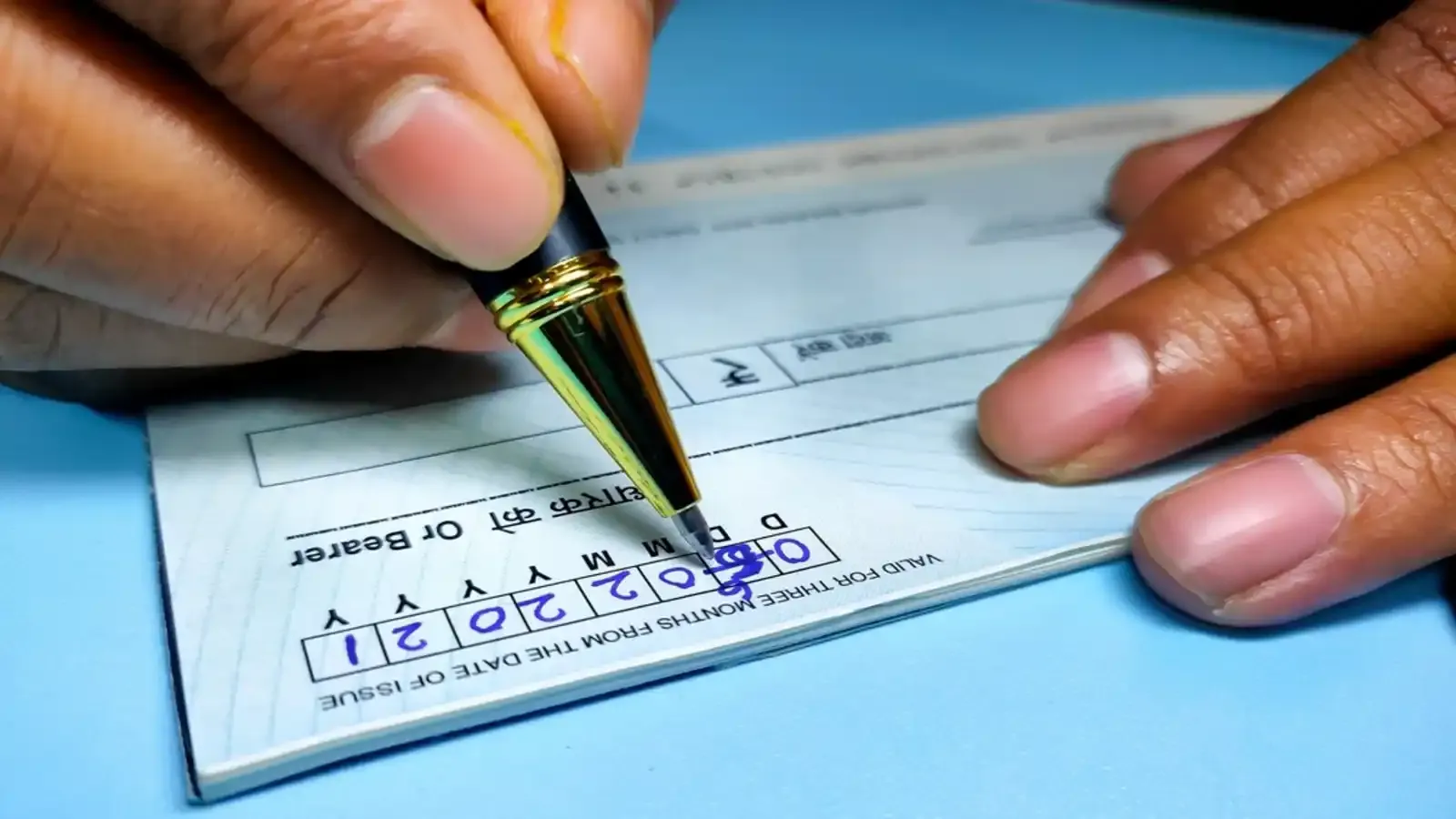
Section 140 clarifies that it shall not be a defence that the drawer had no reason to believe the cheque would be dishonoured. | Image: Shutterstock
Although cheques are one of the most popular methods of sending and receiving money, they may "bounce" when the account balance is insufficient. In India, cheque bounce instances are still a common cause of litigation.
The Negotiable Instruments Act of 1881 lays forth precise guidelines for determining when a rejected cheque qualifies as a crime, how complaints are filed, and who is responsible for what. Sections 138 to 143A specify who is in charge, the consequences, and the procedure for trials.
1. Cheque bounce is a criminal offence (Section 138)
A person commits an offence if a cheque drawn by them on an account maintained by them with a banker for payment of any amount of money to another person for the discharge, in whole or in part, of any debt or other liability, is returned unpaid due to:
-
Insufficiency of funds, or
-
Exceeding the amount arranged to be paid from that account by an agreement made with the bank.
- The cheque is presented to the bank within six months from the date on which it is drawn or within the period of its validity, whichever is earlier.
The payee or holder gives a written notice demanding payment within thirty days of receiving information of dishonour from the bank.
The drawer fails to make the payment within fifteen days of receipt of such notice.
Upon conviction, the drawer may face imprisonment for a term which may extend to two years, or a fine which may extend to twice the amount of the cheque, or both.
2. Presumption in favour of the payee (Sections 139 & 146)
The law presumes, unless the contrary is proved, that the holder of the cheque received it for the discharge, in whole or in part, of any debt or other liability.
A bank’s slip or memo bearing the official mark denoting dishonour is treated as prima facie evidence of dishonour.
These provisions place the burden on the drawer to disprove the presumption and establish a valid defence.
3. Liability of companies and responsible persons (Section 141)
When a company issues a dishonoured cheque, every person in charge of and responsible for the conduct of the business at the time of the offence is also deemed guilty, along with the company.
A person may escape liability only if they can prove:
-
The offence was committed without their knowledge, or
-
They exercised all due diligence to prevent the offence.
“Company” includes firms and other associations of individuals.
“Director” includes partners in a firm.
Government-nominated directors of public companies are exempt.
4. Filing complaints, cognisance and jurisdiction (Sections 142 & 142A)
No court shall take cognisance of any offence under Section 138 except upon a complaint, in writing, made by the payee or holder in due course.
-
The complaint must generally be filed within one month of the cause of action arising (after the fifteen-day period expires).
-
Courts may condone delay if the complainant shows sufficient cause.
-
Only a Metropolitan Magistrate or Judicial Magistrate of the First Class can try such offences.
Section 142A allows for the transfer of pending cases and ensures that multiple complaints against the same drawer are tried in the same court, preserving consistency.
5. Trial procedure and interim compensation (Sections 143 & 143A)
Cheque bounce cases are ordinarily tried summarily to ensure speedy disposal. Trials should ideally be completed within six months of filing.
In a summary trial, imprisonment may extend up to one year, with a fine, but the Magistrate may convert it into a regular trial if required.
Payment must be made within sixty days, extendable by 30 days on sufficient cause.
If the drawer is acquitted, the complainant must repay the interim compensation with interest at the RBI bank rate.
Interim compensation may also be recovered as a fine under Section 421 of the CrPC.
Related News
About The Author
Next Story



