
Personal Finance News
Gold investing in 2026: 5 interesting insights from the World Gold Council report

3 min read | Updated on March 09, 2026, 16:07 IST


SUMMARY
Gold’s long-term performance is often underestimated. Since the collapse of the global gold standard in 1971, gold prices in US dollars have generated about 9% annualised returns. According to the World Gold Council, this performance is “comparable with equities and higher than that of bonds over the same period.”
Unlike many financial assets, gold is supported by multiple sources of demand, which helps stabilise its long-term value. | Image: Shutterstock.
Gold has long been viewed as a store of value, but its role in modern portfolios goes beyond that. According to the “Gold as a Strategic Asset – 2026 Edition” report by the World Gold Council (WGC), the metal continues to play an important role as a strategic allocation for investors.
The report analyses gold’s long-term performance, diversification benefits, liquidity and behaviour during economic stress, concluding that gold remains “a strategic long-term investment and a mainstay allocation in a well-diversified portfolio.”
1. Gold has delivered equity-like returns over the long term
Gold’s long-term performance is often underestimated. Since the collapse of the global gold standard in 1971, gold prices in US dollars have generated about 9% annualised returns.
According to the World Gold Council, this performance is “comparable with equities and higher than that of bonds over the same period.”
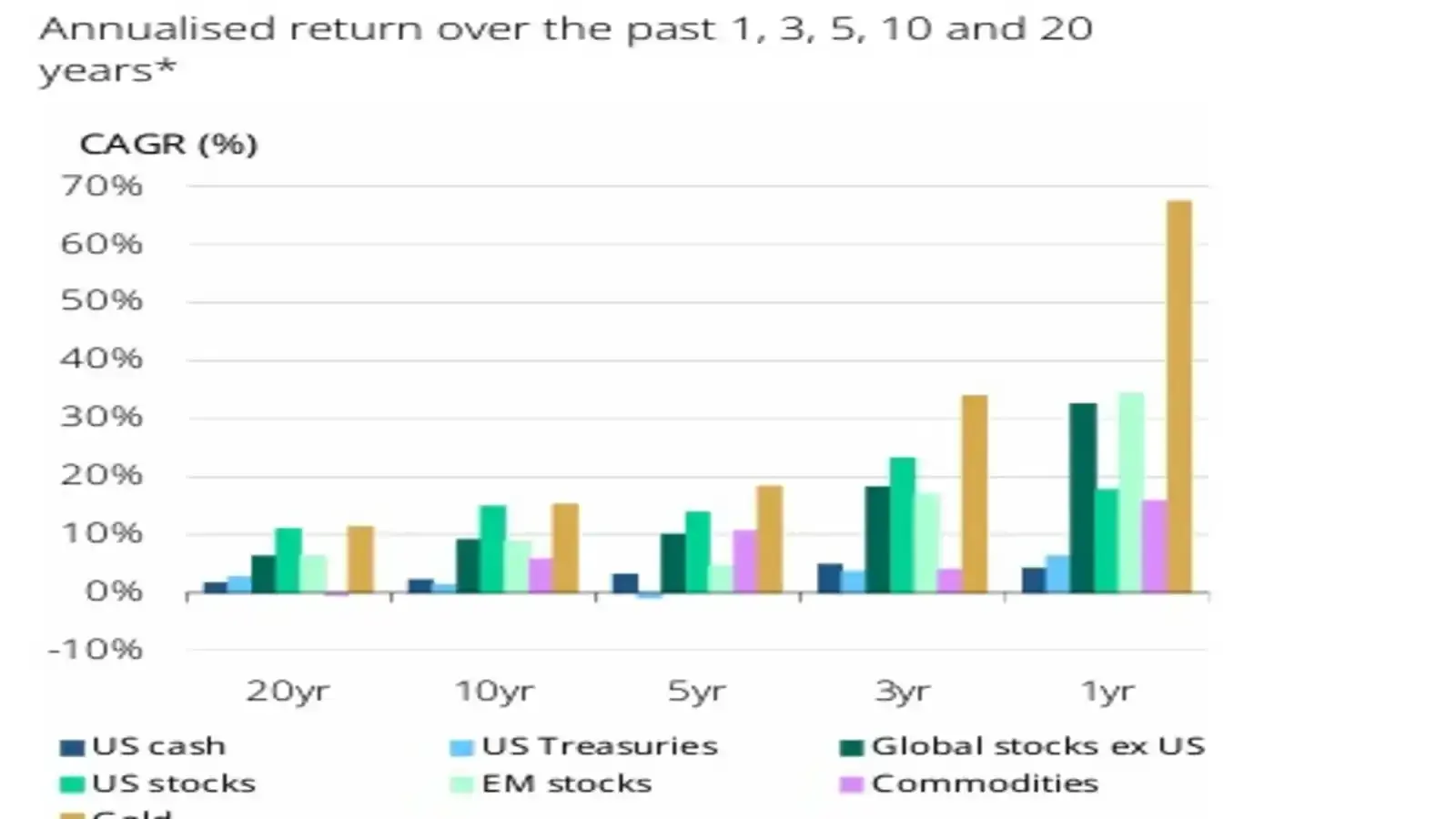
The report also finds that gold has performed strongly across multiple investment horizons, outperforming several major asset classes over 1-, 3-, 5-, 10- and 20-year periods.
2. Gold’s demand base is unusually diverse
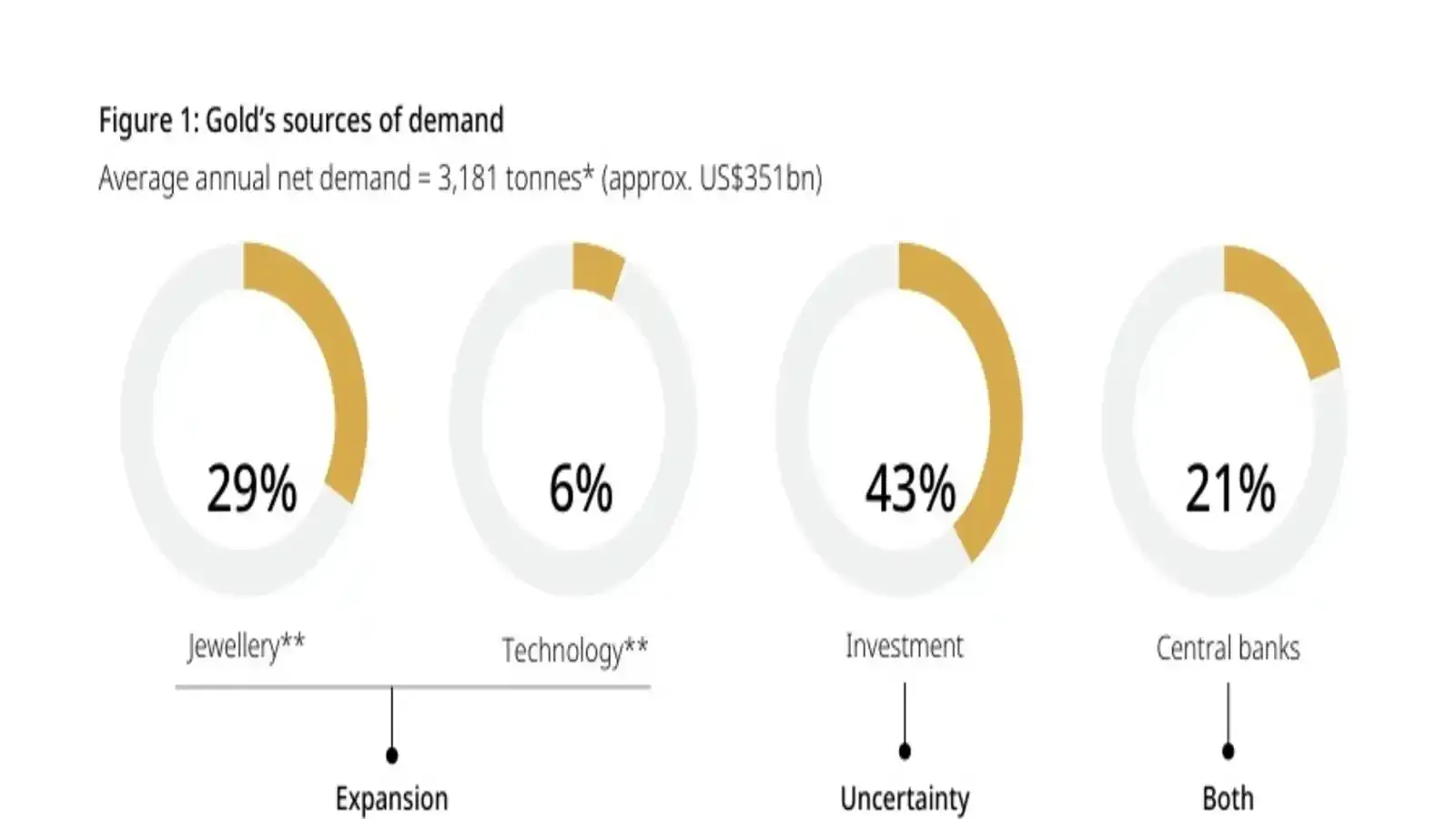
According to the World Gold Council, demand for gold comes from four main sources:
-
Investment demand
-
Central bank reserves
-
Jewellery consumption
-
Technology applications
This combination of investment and consumer demand creates resilience across economic cycles. During periods of uncertainty, investment demand tends to rise, while jewellery and technology demand often strengthen during economic expansion.
3. Gold tends to perform well during financial stress
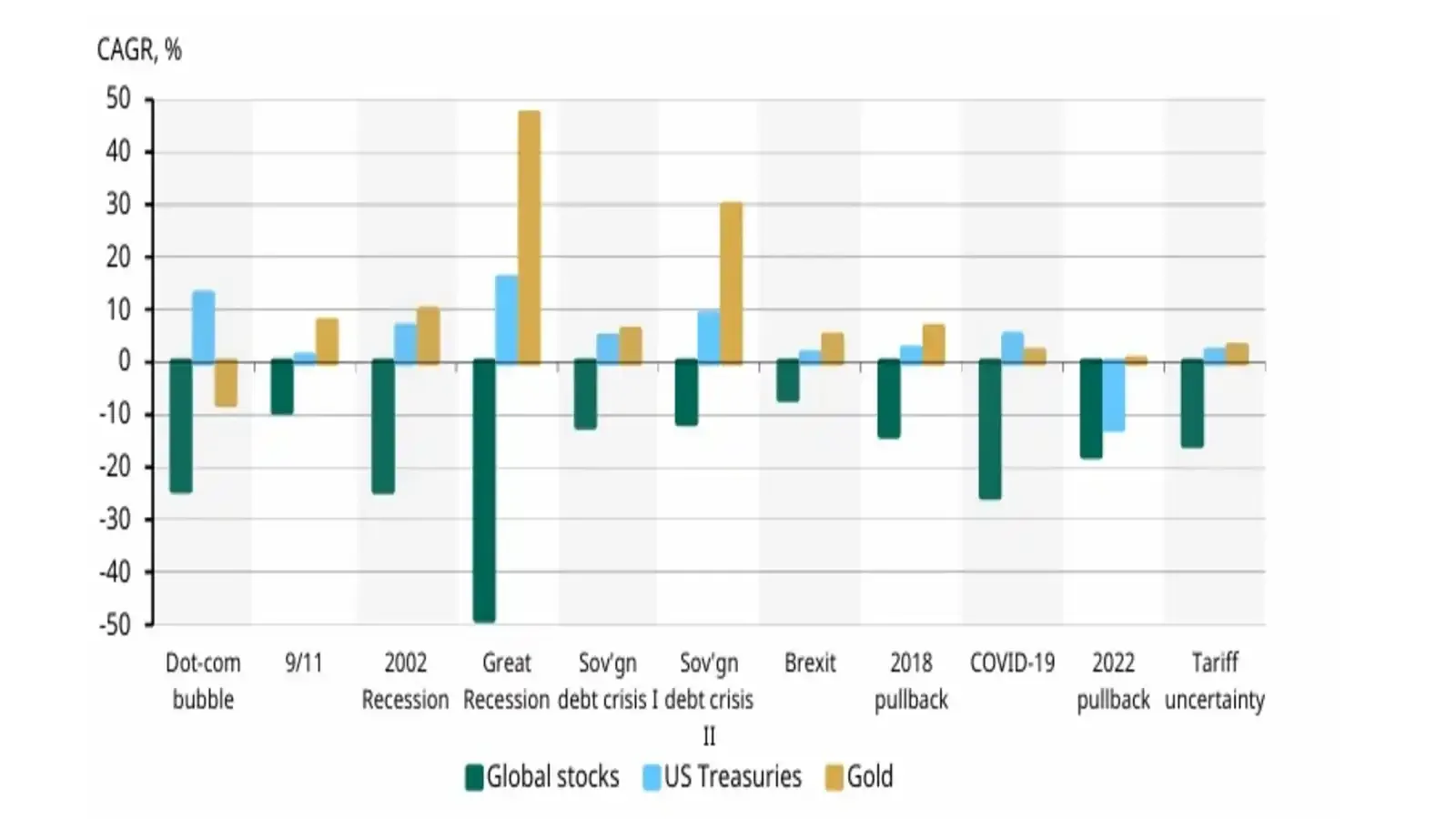
Gold’s safe-haven reputation is backed by historical data. During periods of market turmoil, investors often move funds into gold as a hedge against risk.
For example, during the Global Financial Crisis, gold prices rose about 21%, while many other assets declined.
“With few exceptions, gold has been particularly effective during times of systemic risk, delivering positive returns and reducing overall portfolio losses,” the World Gold Council notes.
4. Gold helps diversify portfolios
Diversification is one of gold’s most important roles in portfolio construction. The report finds that gold often behaves differently from equities and bonds, especially during market downturns.
In fact, gold’s correlation with equities tends to become more negative when stock markets fall, helping reduce overall portfolio losses.
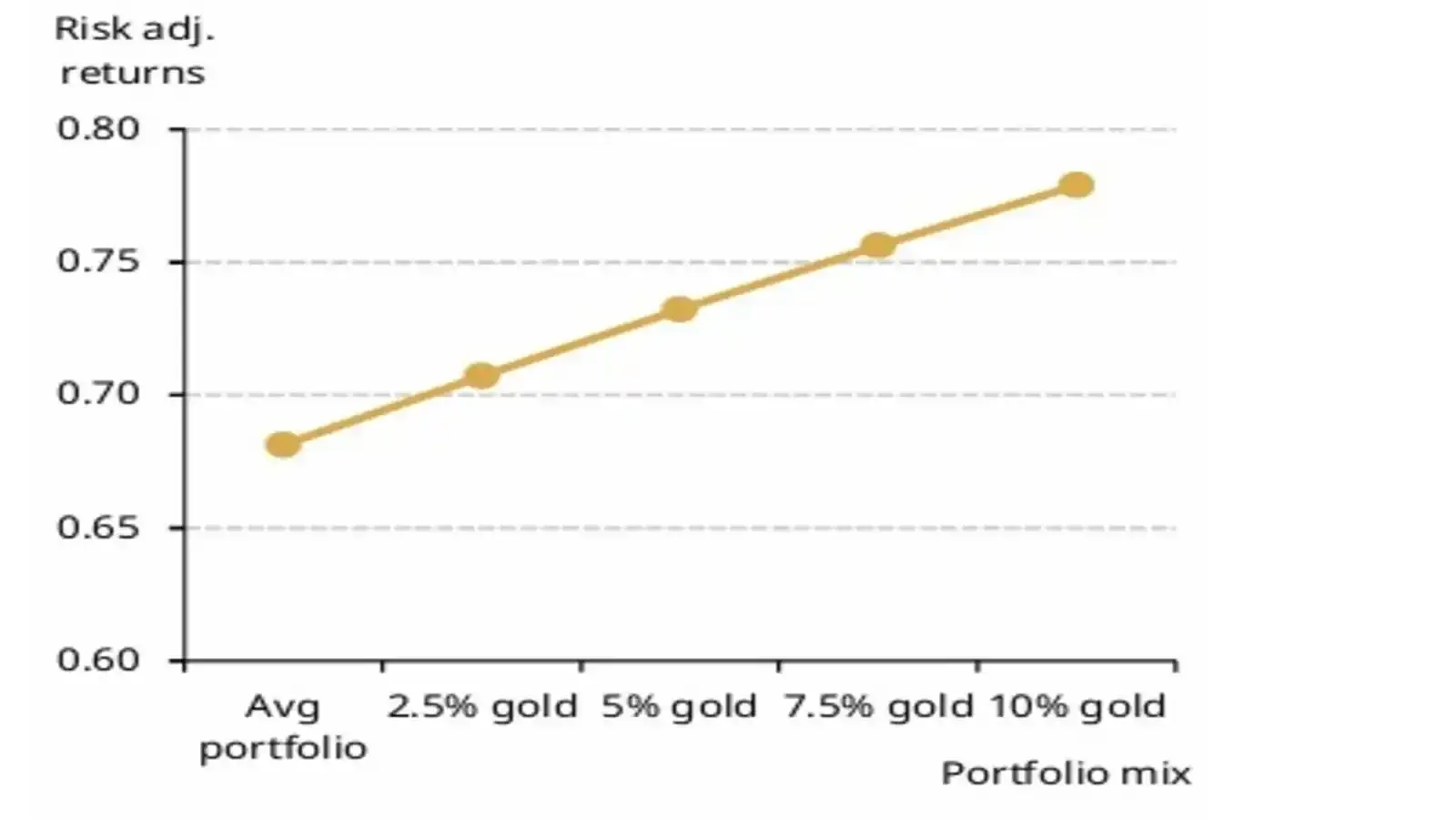
Portfolio simulations conducted by the World Gold Council show that adding 2.5% to 10% gold to a diversified portfolio can improve risk-adjusted returns while reducing volatility and drawdowns.
5. Gold markets are deep and highly liquid
Another factor supporting gold’s role as a strategic asset is the scale of the global gold market.
The report estimates that physical gold held by investors and central banks is worth about $10.9 trillion, while average daily trading volumes reached around $361 billion in 2025.
“The scale and depth of the market means that it can comfortably accommodate large institutional investors,” the World Gold Council says.
Related News


About The Author
Next Story



