
Personal Finance News
Dhanteras, Diwali 2026: 4 factors that could affect gold prices after US midterm elections, according to WGC

5 min read | Updated on October 27, 2026, 08:01 IST


SUMMARY
In an analysis published on October 22, Juan Carlos Artigas, Regional CEO (Americas) and Global Head of Research at the World Gold Council (WGC), said the impact of US elections on gold depends more on the policies that follow than on the result itself.
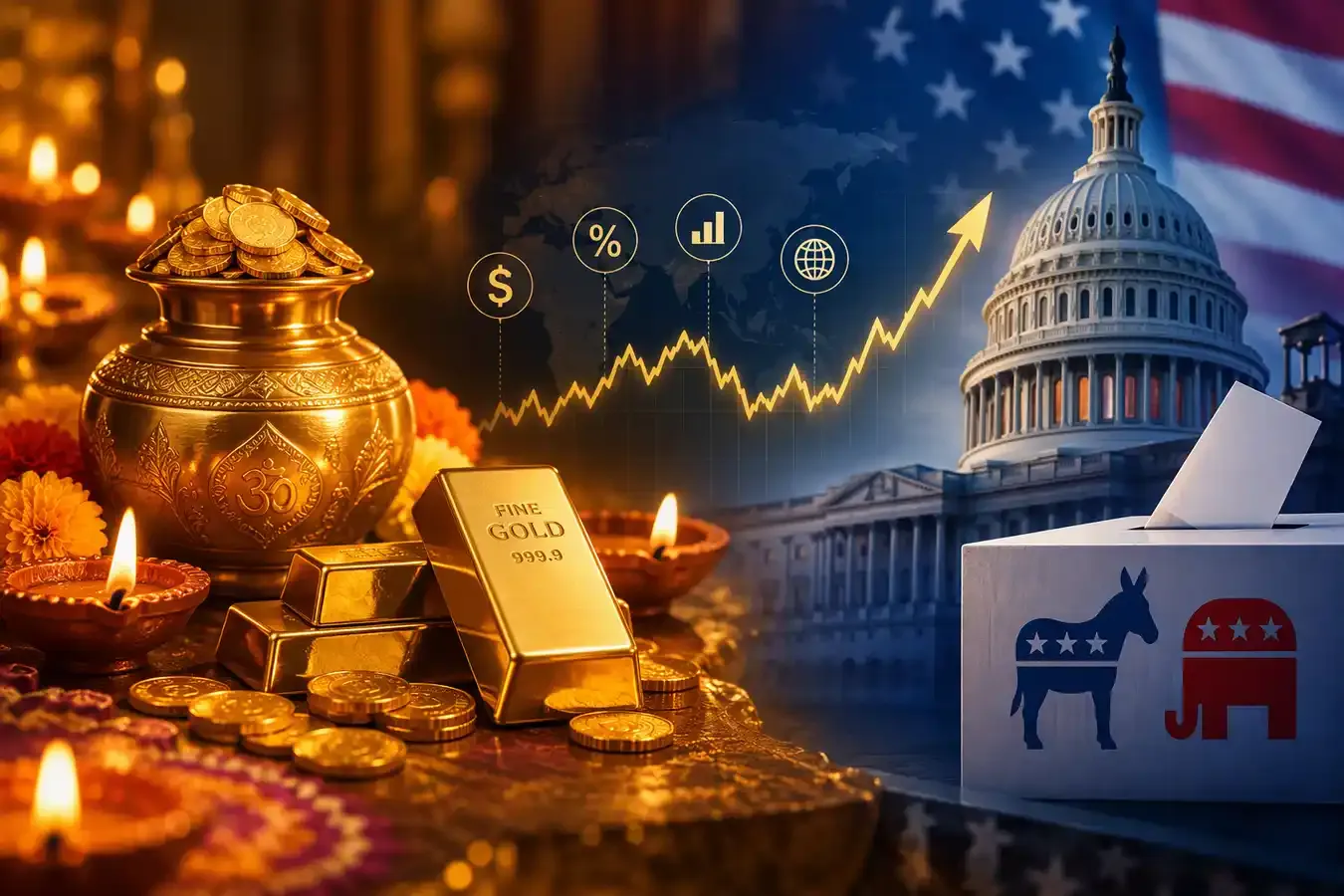
The midterms are not, by themselves, a reliable signal that gold prices will rise or fall. | Representational image/AI generated
With Dhanteras and Diwali approaching, gold prices will be in focus for Indian buyers as the US prepares for its November midterm elections.
In an analysis published on October 22, Juan Carlos Artigas, Regional CEO (Americas) and Global Head of Research at the World Gold Council (WGC), said the impact of US elections on gold depends more on the policies that follow than on the result itself.
“Historically, the outcome of US elections has not had a consistent or significant effect on gold’s performance,” Artigas wrote.
1. US fiscal policy and government deficit
A change in congressional control could limit the Trump administration's ability to pass legislation that increases the budget deficit. However, the effect on gold would depend on whether the deficit narrows or expands.
Artigas wrote: “A contracting deficit could put pressure on gold but an expanding one would further support it.”
A smaller deficit could ease concerns about government borrowing and inflation, potentially reducing demand for gold as a hedge. An expanding deficit, on the other hand, could provide support to the metal.
The WGC also noted that pressure on US tariffs could affect the deficit, making the direction of fiscal policy an important factor to watch after the elections.
2. Iran conflict and war funding
The US midterms could also influence decisions on war funding and the course of the Iran conflict.
According to the WGC, Democratic control of Congress could limit war funding and potentially encourage de-escalation. This could ease energy prices and inflation expectations, while lower bond yields and a weaker US dollar could support gold.
Artigas wrote: “On balance, we believe this could generally be supportive of gold, even though its geopolitical premium might subside.”
The effect could be mixed, however. Lower geopolitical tensions could reduce demand for gold as a safe-haven asset. The WGC also noted that de-escalation could reduce the perceived need for some central banks and sovereign wealth funds to mobilise their gold holdings.
3. AI regulation and technology stocks
Artificial intelligence regulation is another factor identified by the WGC. Democratic control could constrain support for AI or lead to tighter regulation, potentially putting further pressure on technology stocks.
The report notes that investors are already questioning whether large-scale AI spending will deliver the returns expected. If technology stocks weaken, household wealth and spending could come under pressure, affecting economic growth.
Artigas wrote: “Weaker equities, softer growth expectations, lower yields, and potentially a weaker dollar, would likely support gold.”
However, this outcome is not guaranteed. The impact on gold would depend on how markets respond to changes in regulation and whether other economic factors offset the effect.
4. Political uncertainty and executive powers
A Democratic-controlled Congress could make it harder for the Trump administration to advance its legislative agenda. The WGC said this could lead the administration to make wider use of executive orders and emergency powers.
Artigas wrote: “The resulting institutional conflict, legal challenges and less predictable policymaking could raise both political and geopolitical risk premia, potentially supporting gold.”
Continued friction between Congress and the administration could also make US foreign policy less predictable. According to the WGC, this could reinforce longer-term incentives for investors and central banks to diversify their reserves into gold.
The report also considers the possibility of Republicans maintaining control across the board. In that scenario, the effect on gold could be mixed.
Artigas wrote: “Overall, we would expect gold investors, especially those outside the US, to continue supporting gold demand as they have done over the past 18 months.”
What India's gold market is telling us ahead of Dhanteras
The global political backdrop comes as seasonal gold demand in India begins to gather pace.
In a separate report published on October 20, Kavita Chacko, Research Head for India at the WGC, said: “Seasonal demand is gathering traction as the market enters the key festive and wedding period.”
What it means for gold buyers this Dhanteras
For Indian buyers, the US midterm elections are one of several factors to watch during the festive season. International gold prices, the rupee-dollar exchange rate and domestic demand will all influence the price paid in India.
The WGC's two reports point to different but connected forces: global policy uncertainty could influence investment demand and international prices, while seasonal buying and price sensitivity will shape the domestic market.
About The Author
Next Story

