
Market News
Week ahead: US bond yield, NSE listing, oil prices, new US sanctions bill among key market triggers to watch
.png)
6 min read | Updated on September 20, 2026, 11:11 IST


SUMMARY
In the week ahead, the NSE listing will be the main domestic event, while the new US sanctions law targeting buyers of Russian energy creates a fresh risk for India's oil imports. The September 24 meeting between US President Donald Trump and Chinese President Xi Jinping will shape global risk appetite through discussions on tariffs, critical minerals and technology restrictions.

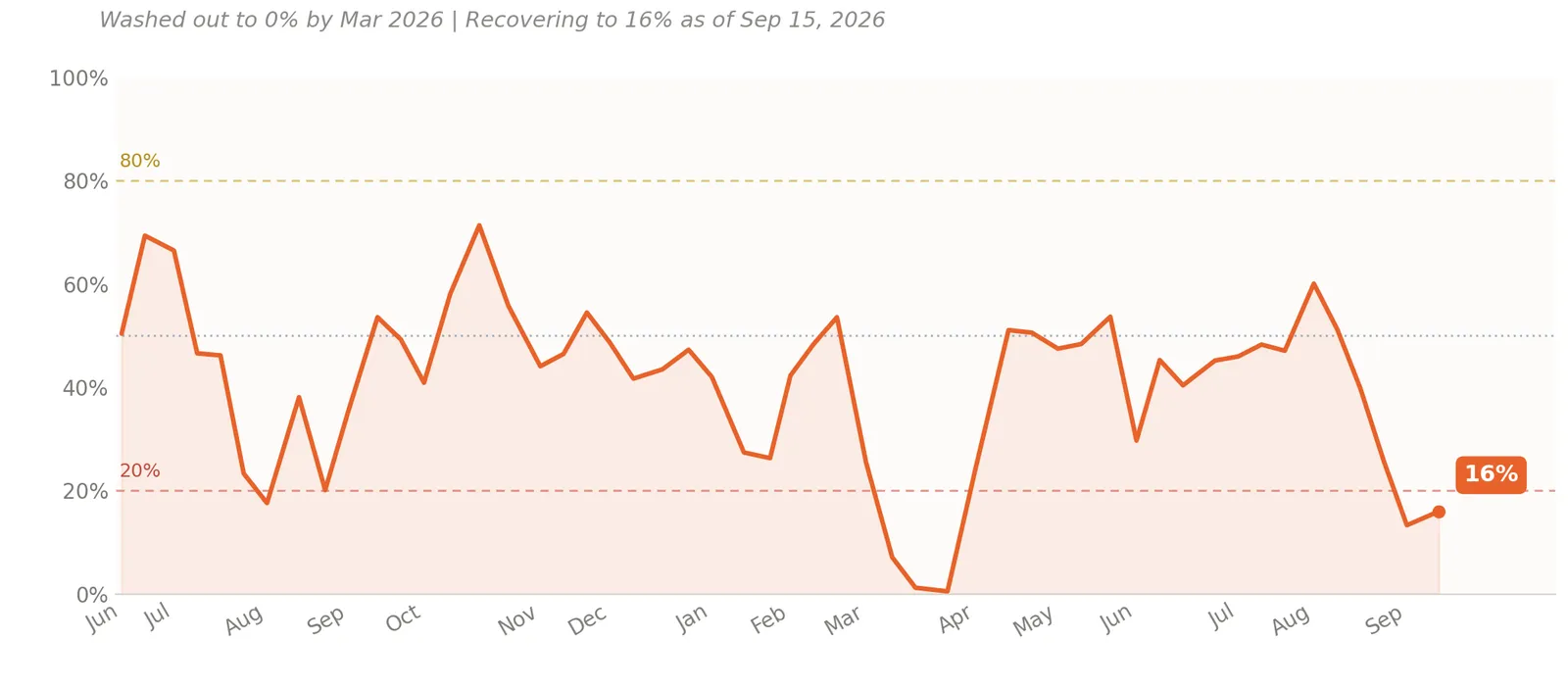
Market breadth remains deeply weak, with only 16% of NIFTY50 stocks trading above their 50-day moving average (DMA) as of September 18.
Indian equities extended their weekly losing streak to six weeks, the second longest such run since 2026. The NIFTY50 declined 0.2% to 23,346 during the week, while the Sensex fell 0.6% to 74,294. Easing crude-oil prices and value buying supported the Friday recovery, but oil above $100 a barrel, higher global bond yields and cautious foreign participation continued to limit risk appetite.
The broader-market participation remained weak but relatively stable. The NIFTY Midcap 150 index was nearly unchanged at 22,901, while the NIFTY Smallcap 250 index declined 0.2% to 18,287. Sectorally, ten of the sixteen major sector indices ended the week lower.
Relative to the NIFTY50's 0.2% weekly decline, FMCG (+0.9%), Pharma (+0.9%), Healthcare (+0.7%) and Metals (+0.4%) sectors outperformed. On the flip side, the Defence (-3.8%), Consumer Durables (-2.7%) and Automobiles (-0.6%) were the underperformers.
The week's main global policy events added to volatility. The US Federal Reserve raised interest rates by 25 basis points to 3.75–4.00% on September 16, while the Bank of Japan lifted its policy rate from 1% to 1.25% on September 18. The prospect of tighter global liquidity weighed on rate-sensitive assets. Additionally, Tata group stocks also came under pressure on Friday amid uncertainty around a potential Tata Sons listing and leadership issues. Strong demand for the NSE IPO diverted some liquidity from the secondary market.
The listing will also create a new valuation benchmark for India's listed capital-market ecosystem. BSE faces the most direct comparison as investors assess the two exchanges on valuation, market share, transaction volumes and growth. MCX provides exposure to commodity trading.
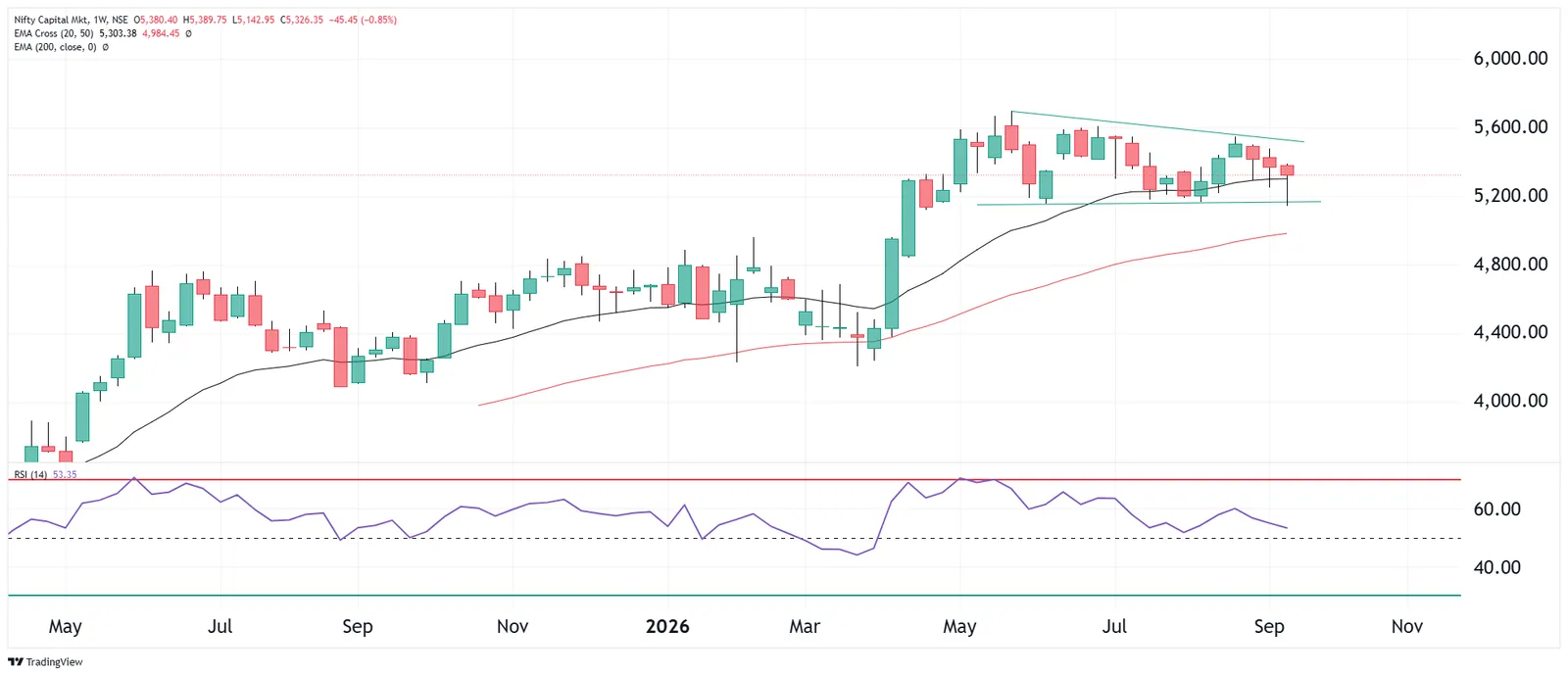
The backdrop is not uniformly positive. The NIFTY Capital Market index declined 0.8% last week and underperformed NIFTY50. Weaker trading activity, regulatory changes, transaction costs and competitive pressure remain the principal risks. NSE's options-trading volume is about 27% below its 2024 peak, showing why the sustainability of market participation matters beyond the initial listing gains.
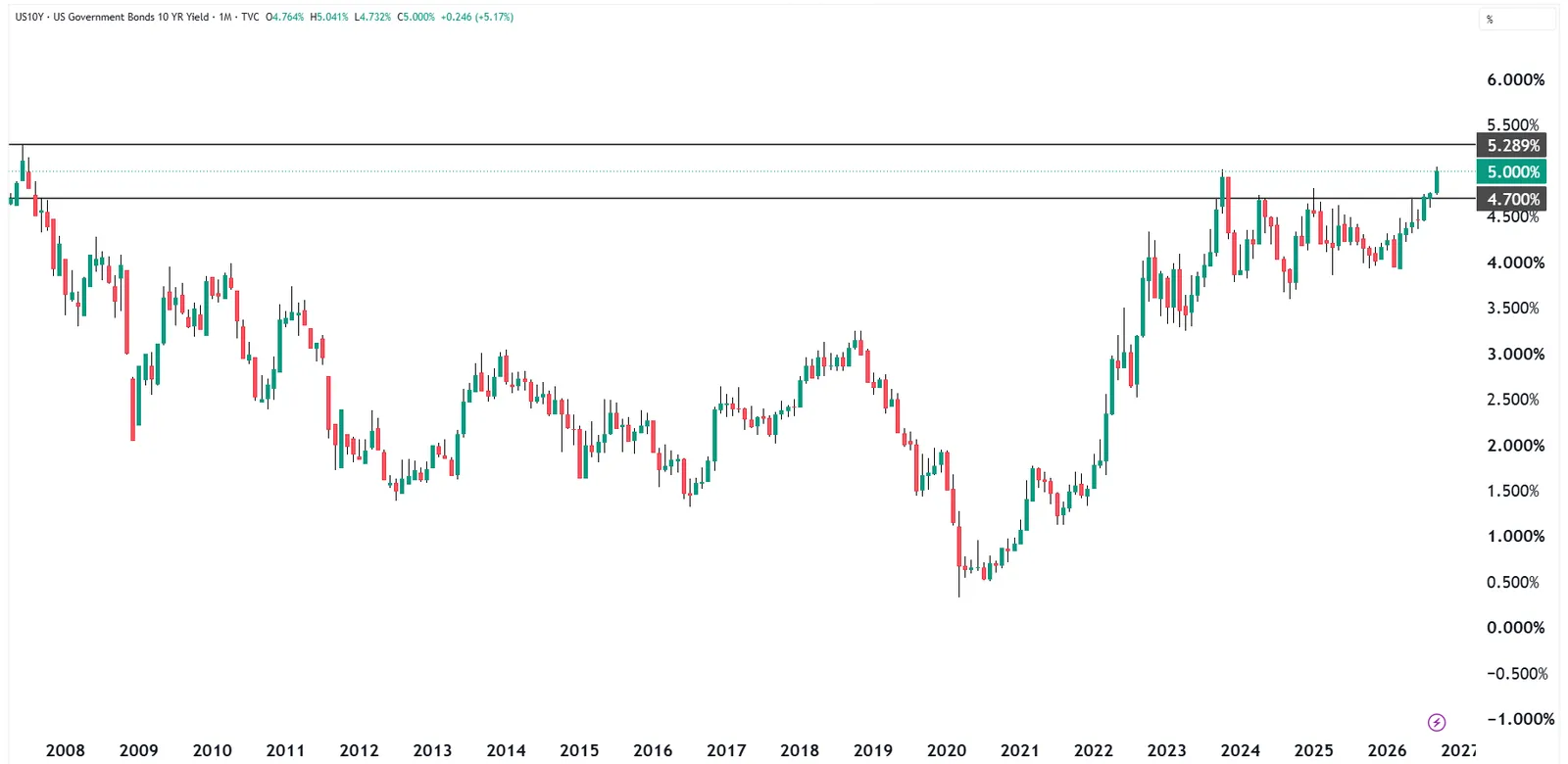
The September 24 meeting between US President Donald Trump and Chinese President Xi Jinping will be the other major global trigger. Markets will look for an extension of the tariff truce that expires on November 10. A constructive outcome could support Asian equities, metals and other cyclical sectors. The scheduled macro calendar is comparatively light and is likely to remain secondary to these geopolitical developments.
Market breadth
Market breadth remains deeply weak, with only 16% of NIFTY50 stocks trading above their 50 day moving average as of September 18. The reading has fallen sharply from around 60 % in August, confirming that the recent market weakness is broad rather than being driven by only a few heavyweight stocks. Such an oversold reading can support a tactical bounce, but a more durable recovery would require breadth to move back above the neutral 50% mark.
Foreign investors positioning
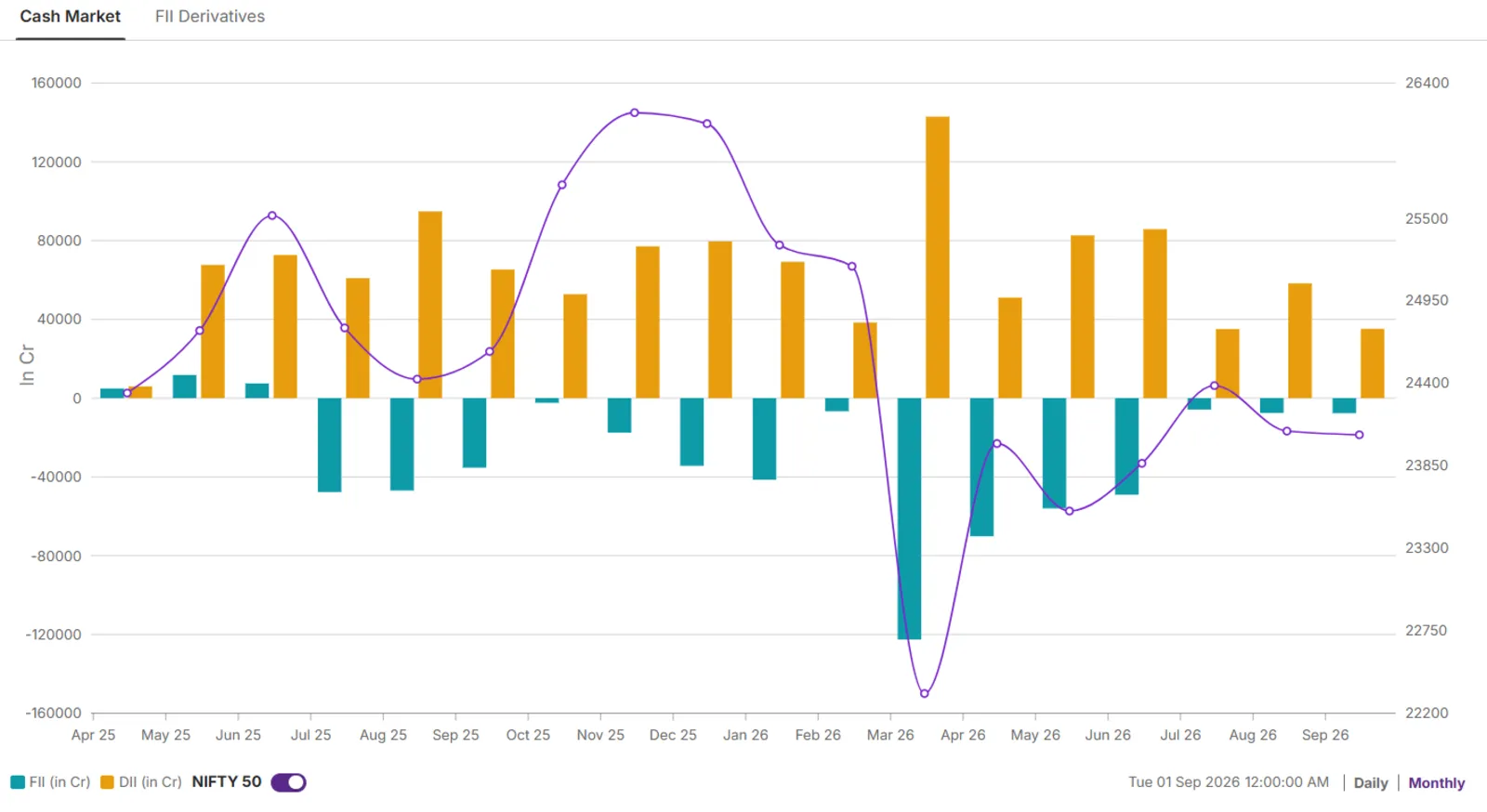
Foreign investors remain net sellers of ₹7,040 crore in the September month with index-futures positioning of net short open interest at about 2.88 lakh contracts. Meanwhile, the Domestic institutions (DIIs) continued to provide the main liquidity support. DIIs bought ₹36,218 crore in the September month so far, offsetting foreign selling during the same period.
NIFTY50 outlook
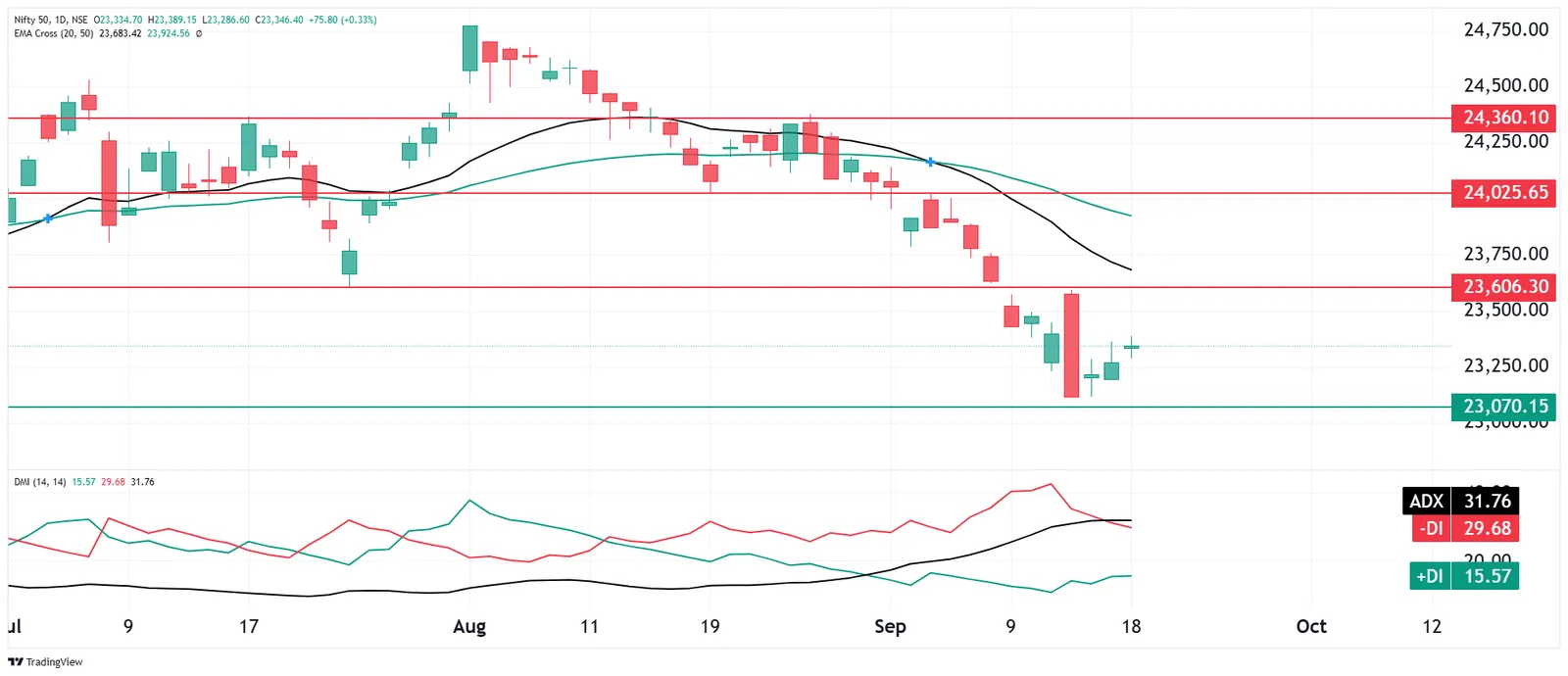
The NIFTY50 index is trading below its falling 20 day EMA and 50 day EMA. The directional indicators also favour sellers, while an ADX reading of 31.76 confirms that the prevailing downtrend still has strength. Friday's recovery should therefore be viewed as an attempt to stabilise rather than a confirmed reversal.
The immediate range is defined by resistance at 23,606 and support at the June low near 23,070. If NIFTY50 sustains above 23,606 and reclaims the 20 day EMA near 23,683, the recovery can extend towards 24,026, followed by 24,360. If the index closes below 23,070, the existing bearish structure would strengthen and open the door for another leg of downside.
Disclaimer:
Derivatives trading must be done only by traders who fully understand the risks associated with them and strictly apply risk mechanisms like stop-losses. We do not recommend any particular stock, securities, or trading strategies. The securities quoted are exemplary and not recommendatory. The stock names mentioned in this article are purely to show how to do analysis.
About The Author
Next Story

