Market News
Why are milk prices rising again in India? Amul, Mother Dairy and Nandini hike rates by up to ₹8 per litre from November

9 min read | Updated on November 12, 2026, 11:14 IST

SUMMARY
After Nandini milk price hike of ₹8 per litre in November 2026 in Karnataka, Amul and Mother Dairy have announced yet another milk price hike in the Delhi NCR. Major cooperative dairy federations and private dairy brands have done multiple milk price hikes this year. Here’s why
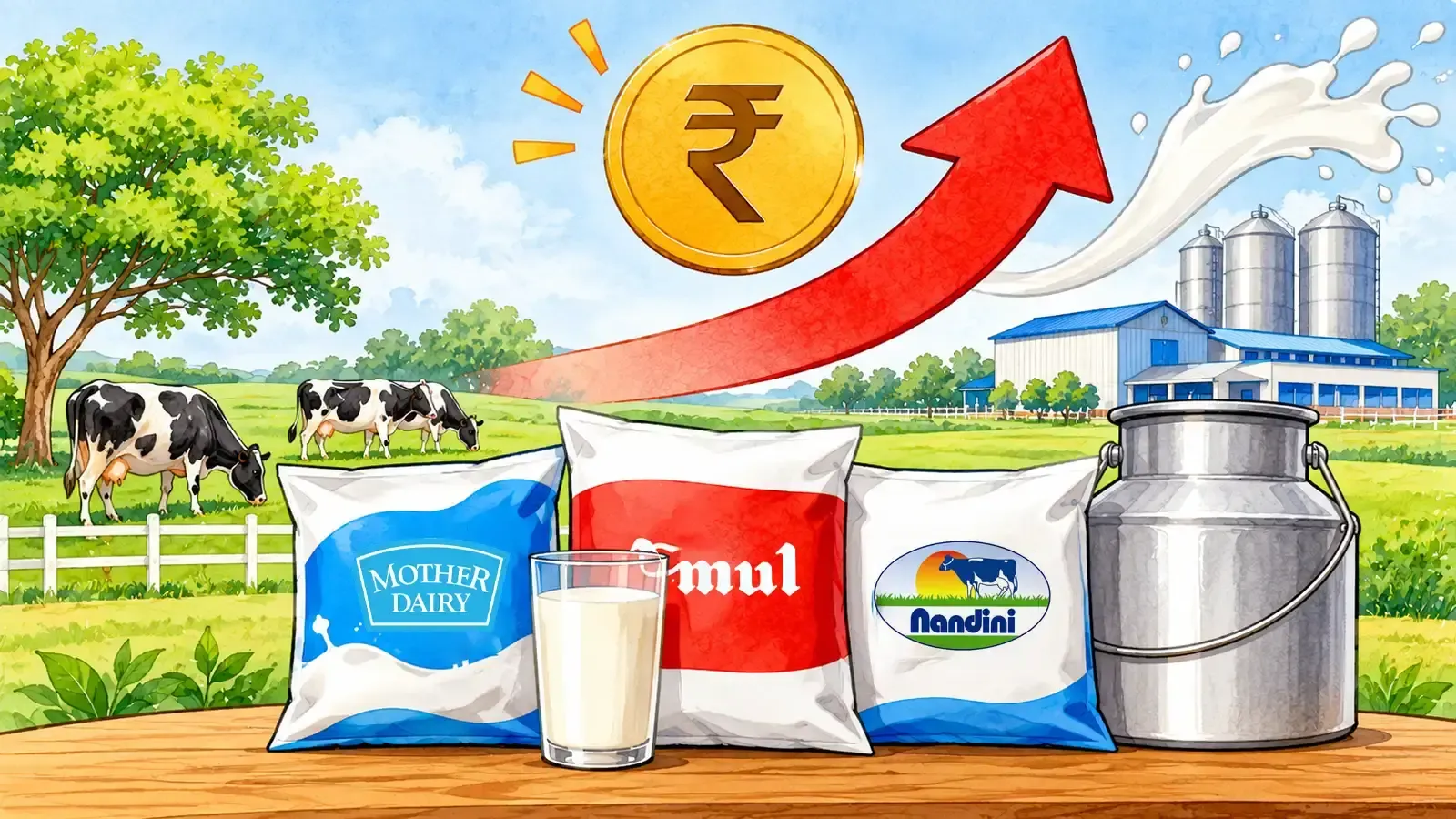
Gokul Dairy in Maharashtra, Aavin in Tamil Nadu, Milma in Kerala and many others have hiked retail milk prices between ₹2 and ₹4 per litre.
Amul and Mother Dairy has announced yet another milk price hike in the Delhi NCR region. Two of India’s leading milk and milk products manufacturers has increased prices by ₹2 to ₹4 per litre. This is second milk price hike announced by Amul and Mother Dairy in 2026 and comes just few days after Karnataka-based popular dairy brand Nandini increased prices by ₹8 per litre starting November 1, 2026.
Milk price hike is not confined to few states but major state-backed and cooperative dairy federations have hiked milk prices in 2026 mainly due to sharp increase in input costs, including higher prices of cattle feed, packaging and fuel costs.
Gokul Dairy in Maharashtra, Aavin in Tamil Nadu, Milma in Kerala, Jaipur Dairy (Saras) in Rajasthan and many others have hiked retail milk prices between ₹2 and ₹4 per litre this year. Private dairy brands including Dodla, Heritage and others have also raised prices in the similar range.
Milk price are getting costlier in India despite November marking the start of dairy flush season as cooler winter temperatures, abundant post-monsoon green fodder, and seasonal calving cycles naturally boost milk production in cattle and buffaloes.
Milk price hike by various companies in 2026
| Company | Price hike announced | Effective new milk price* |
|---|---|---|
| Mother Dairy (Delhi-NCR) | ₹2 to ₹4 per litre from 12 Nov 2026 across cow milk varieties. Hike of ₹2 per litre in May 2026 | ₹65 per litre |
| Amul (Delhi-NCR) | ₹2 to ₹4 per litre from 12 Nov 2026 across major variants. Hike of ₹2 per litre in May 2026 | Around ₹65 per litre |
| Nandini (Karnataka) | ₹8 per litre on toned milk from 1 Nov 2026; up to ₹12 on other variants | ₹54 per litre for basic toned milk |
| Gokul (Maharashtra) | Increased price by ₹2 per litre across Maharashtra | ₹60 to ₹68 per litre across different brands |
| Heritage, Dodla, Tirumala (Tamil Nadu) | ₹2 to ₹4 per litre between July and September 2026 | ₹61 per litre for basic toned milk |
| Saras, Jaipur Dairy (Rajasthan) | ₹2 per litre from May 2026 | ₹56 per litre for basic toned milk |
| Verka (Punjab) | ₹2 per litre from May 2026 | ₹65 per litre |
| Aavin (Tamil Nadu) | No retail hike in the September revision; farmer price up ₹6 per litre | Retail price remains unchanged |
| Milma (Kerala) | Price hike of ₹4 per litre across variants | ₹56 per litre for basic toned milk |
A steep hike in retail milk prices affects consumers' budgets. Take an example of Nandini milk which has increased prices by ₹8 per litre. A family in Bengaluru buying 1 litre a day would pay ₹8 more daily, or ₹240 more over a 30-day month. The monthly milk bill would move from ₹1,380 to ₹1,620. Meanwhile, a person buying half a litre a day would pay about ₹120 more per month. A family in Delhi-NCR buying a litre of Mother Dairy cow milk every day will spend about ₹60 more over a 30-day month.
Milk price hike create cascading ripple effect
Milk price hike does not happen in isolation as it impacts the entire dairy value chain. Milk which is a key raw material makes many value added products like paneer, curd, ghee, butter, milk powder and many more expensive. This price hike impacts the entire value chain and affect the consumers' monthly budgets.
Expensive feed and fodder
What cattle eat impacts how much milk they give. As per NDDB, feed and fodder account for 70-75% of the cost of milk production. According to cattle traders, cattle feed costs in September 2026 were 15-20% higher than in September 2025.
WPI data compiled by IndiaInflation show that in September 2026, wholesale prices of oilseed cakes (excluding mustard cake), soyabean and rice bran, all used in cattle feed, were up nearly 40%, 32% and 21% YoY respectively. A September report from Wayanad in Kerala said the price of a 50 kg bag of cattle feed has jumped by ₹300 in just two months from ₹1,350 to ₹1,650.
The price of maize, another important ingredient in cattle feed, has increased as well. As of early November, maize was selling at about ₹29 to ₹30 per kg in major mandis, above the 2026-27 minimum support price of ₹24.10 per kg. Heritage Foods' management said a repeat of last year's production drop and price hikes is not normally seen, and pointed to this being an El Nino year. When the cost of cattle feed rises, farmers may cut back on feed, which lowers yields, or ask for a higher price for milk.
Rising costs of diesel and packaging
Milk is a perishable commodity. It has to be collected quickly, chilled and moved from villages to plants and then to consumers. When diesel gets costlier, so does transporting milk.
Retail diesel prices in Delhi increased from ₹87.67 to ₹95.20 per litre in May, a rise of 8.6%. Bulk diesel prices went up by about ₹22 per litre in March. Fuel and power prices in September were 25.85% higher YoY. The cost of packaging also increased. As per the same WPI data, the price of LDPE film, the plastic used to make milk pouches, was up about 31% YoY in September.
Fuel price increases are beyond the control of dairies. Amul increased prices in May citing higher costs of cattle feed, fuel and milk packaging film. Dodla's management said transport, fuel, packaging and minimum wages were running above normal levels.
Higher prices paid to farmers
The third, and a major, reason is increased procurement prices paid to farmers. The Karnataka government increased the base price at which milk is bought from farmers by 20%, from ₹35 to ₹42 per litre, and continued its ₹5 per litre incentive on top. Out of the ₹8 per litre increase in Nandini milk, ₹7 goes to farmers. Similarly, in September, Tamil Nadu raised the price Aavin pays farmers for cow milk by about 16%, from ₹38 to ₹44 per litre. However, Aavin's retail price was not changed.
By May, Amul's member unions had raised procurement prices by ₹30 per kg of fat over May 2025 levels. In June, Anand-based Amul Dairy increased its buffalo milk rate by ₹10 to ₹875 per kg of fat. The latest reports indicate that Amul has raised its fat-linked price to ₹1,000 per kg of fat, which is said to translate to more than ₹60 per litre for the milk concerned.
Both Amul and Mother Dairy give a major part of their proceeds to farmers. Amul says 80 paise out of every rupee is returned to milk producers. Mother Dairy passes on 75% to 80% of its milk sales realisation. At Dodla, procurement costs rose 15.7% while realisation rose 8.0%, so the dairy absorbed the gap.
Where does listed dairy companies stand?
Listed dairy companies have also done calibrated price increases across milk and selected value-added products to offset higher input costs.
Milky Mist management said it could absorb 3 to 5% increase in milk prices through product mix and calibrated pricing, while maintaining profitability. Milky Mist has demonstrated an ability to pass on input inflation through product pricing and a premium portfolio amid higher milk prices.
| Stock name | YTD return | Q2FY27 revenue | Q2FY27 net profit |
|---|---|---|---|
| Milky Mist Dairy | ▲117%* | ₹1,092 crore (+41.8% YoY) | ₹78 crore (+174% YoY) |
| Hatsun Agro Product | ▲ 6.7% | ₹2,898 crore (+19.3% YoY) | ₹116 crore (+5.6% YoY) |
| Parag Milk Foods | ▲ 12.9% | ₹1,241 crore (+23.1% YoY) | ₹42 crore (-8% YoY) |
| Dodla Dairy | ▼ 22.9% | ₹1,196 crore (+17.4% YoY) | ₹36.5 crore (-44.3% YoY) |
| Heritage Foods | ▼ 18.4% | ₹1,320 crore (+18.6 YoY) | ₹30.8 crore (- 39% YoY) |
As seen from the above table, dairy companies have show double-digit revenue growth but the same has not translating into profit growth for most listed players. Only Milky Mist delivered a sharp improvement in net profit during the September quarter.
Rising milk procurement costs, operating expenses and differences in product mix are creating a clear divide between earnings performances.
Another key challenge for dairy companies is the widening gap between the cost of procuring milk from farmers and the price at which they sell it to consumers. This bottleneck is clearly visible in case of Dodla Dairy and Heritage Foods which reported 15.7% and 11% YoY increase in milk procurement cost but their average milk selling price increased between 6% and 8%, which directly impacted the profitability.
Conclusion
How long will milk price hike continue? As per leading dairy companies like Dodla Dairy does not expect milk procurement prices to come down in the next few quarters. Heritage Foods said procurement prices rose further in October, but it hopes for some cooling after Diwali and believes high prices will motivate farmers to produce more milk. Key signals to watch include milk procurement prices in the Q3FY27 results, the price of cattle feed and oilseed cakes, and the results of the 21st Livestock Census.
Related News
About The Author
Next Story