
Market News
Silver hits one-year low: Why Hindustan Zinc could lose while solar stocks stand to gain

6 min read | Updated on November 18, 2026, 12:02 IST

SUMMARY
Hindustan Zinc is in the focus of investors as silver prices declined to their one-year low, while solar stocks stand to gain from the move. Here's why the key divergence exists in the market.
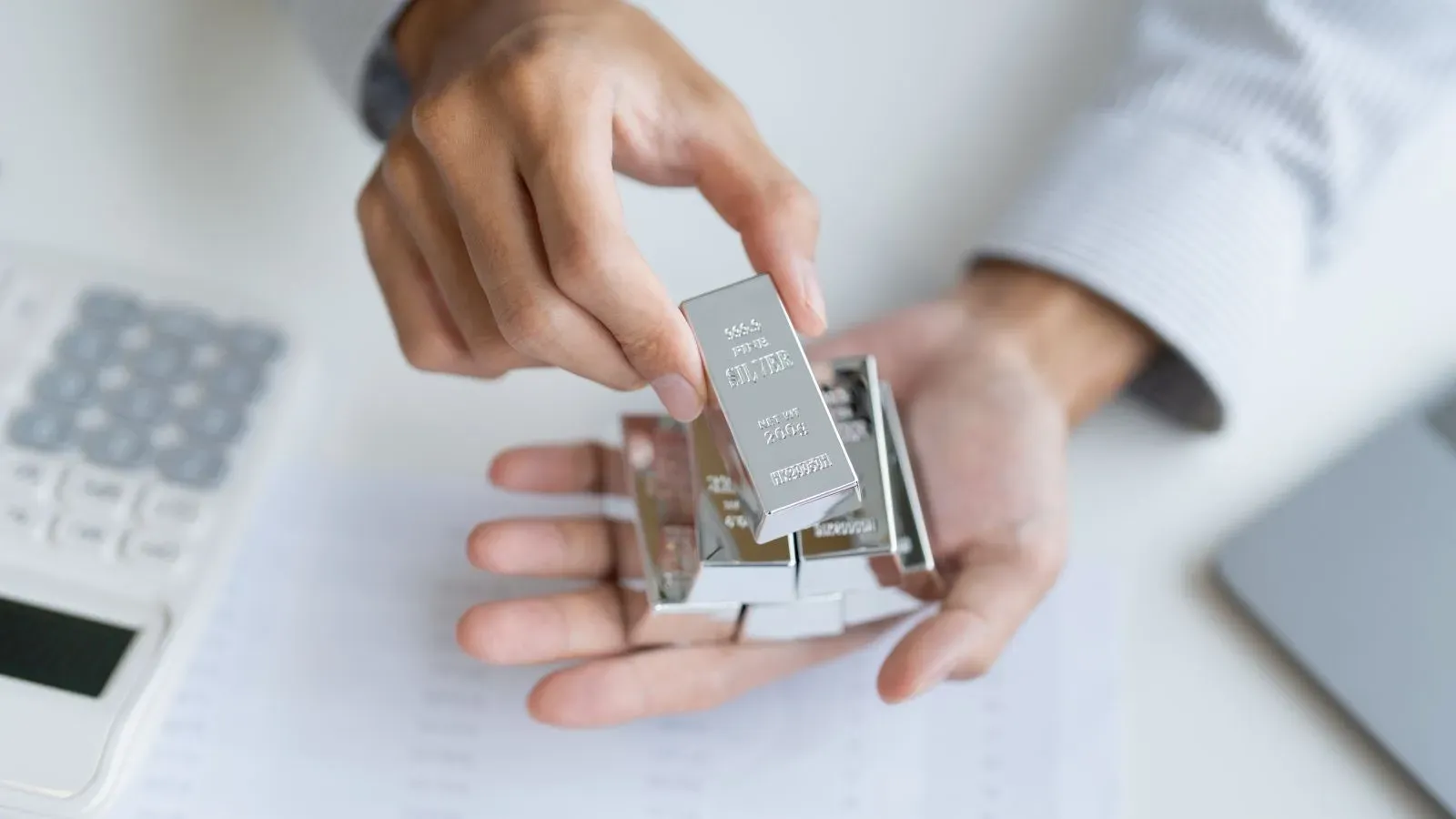
MCX silver prices (December contract) declined 3.6% or by ₹6,169 per kg on Wednesday’s market to hit an intraday and 52-week low of ₹1,63,533 per kg. | Image: Shutterstock
Silver prices tumbled to touch their one-year low, witnessing a sharp intraday correction during the morning hours on Wednesday, November 18, as investors focused on weak global market cues and a stronger value of the US dollar weighing on commodity market sentiment.
The pullback in precious metal prices, specifically silver, has turned focus towards the upstream and downstream companies of the mineral which are impacted due to the overall movement in metal prices.
With silver prices falling to a year-low level of ₹1,63,533 per kilogram (kg) on Wednesday, the impact on upstream producer Hindustan Zinc and downstream companies like Indian solar panel makers, among others, will be divergent.
Upstream producers of silver will lose out on the higher price and margin benefit in the market, while downstream customers gain from the lower cost of materials due to the pullback in commodity rates.
SFA Oxford data, a UK-based mineral research agency, suggests that more than 70% of the silver supply comes as a by-product of lead, zinc, copper, and gold mining. Countries like Mexico, Peru, China, and Russia are the largest producers of the precious metal, which has several essential uses.
In India, Vedanta Group subsidiary, Hindustan Zinc, is a primary domestic producer of silver as a by-product of its mining operations of key minerals like zinc and lead. There are no listed pure-play silver mining companies or producers in the country.
Silver hits one-year low
Multi-Commodity Exchange (MCX) data showed that the precious metal Silver prices (December contract) declined 3.6% or by ₹6,169 per kg on Wednesday’s market to hit an intraday and 52-week low of ₹1,63,533 per kg, in comparison to the previous market close of ₹1,69,702 per kg.
As of 11:02 am (IST), the silver prices were trading 2.7% lower at ₹1,65,093 per kg on Nov 18, compared to the previous market close levels.
Investors were focused on the elevated US dollar rate at 103.66 in the global market, which in turn dulls the sentiment for precious metals, as traders tend to purchase less quantity of the commodities due to the higher price, in turn impacting demand in the market.
On Wednesday, silver prices were falling as the Fed Bank of St. Louis President Alberto Musalem signalled support for multiple hikes in the coming months. A higher rate is typically negative for non-yielding precious metals.
In the case of silver, the precious metal has several use cases other than just being used to make jewellery. Silver is an essential metal used in the manufacturing process of industrial or electronic products, including solar panels, due to its naturally high electrical and thermal conductivity.
The demand for the commodity is further driven by companies using silver for manufacturing in solar panels, semiconductor chip components, automotive and aerospace components, and other applications.
How do lower silver prices impact Hindustan Zinc?
Lower silver prices in the market have a direct impact on the profitability, revenue and margins of Hindustan Zinc, as the firm produces and sells the key metal in the market as an upstream company.
In its Q2 earnings print, Hindustan Zinc posted its highest-ever quarterly revenue and profits, with the company’s income from silver sales rising 141% to ₹4,111 crore, which in turn powered the overall net profits to ₹6,412 crore.
Data also showed that the company’s silver production increased 20% year-on-year (YoY) to hit 173 tonnes during the September quarter of FY27.
The lower production cost, combined with the higher price of silver in the global market, added to the overall margin gains, with EBITDA margins coming in at 62% in the period under review.
Hence, as the financials show the benefits of the higher silver prices in the market, now with a pullback in rates, the company is expected to witness the impact of the same over the period.
How do solar stocks stand to gain?
| Company name | Current market price | 5-day returns |
|---|---|---|
| Waaree Energies | ₹2,401 | -3.9% |
| Emmvee Photovoltaic | ₹268.44 | 1% |
| Premier Energies | ₹824.65 | -6.7% |
| Vikram Solar | ₹138.54 | Nil |
| Borosil Renewables | ₹385.35 | -8.6% |
| Websol Energy System | ₹65.60 | -10% |
| Insolation Energy | ₹68.75 | -5.8% |
| Alpex Solar | ₹660 | -12.7% |
The downstream silver users, like the solar PV panel manufacturers mentioned above, are expected to benefit from silver prices hitting their one-year low levels, as the lower cost of raw materials will, in turn, reduce overall expenses in the period.
Waaree Energies, Emmvee Photovoltaic, Premier Energies, and Vikram Solar are major solar PV makers in India.
The lower input cost benefit will show up on the financials, giving the manufacturers more flexibility in pricing to competitively bid for tenders while protecting overall margins.
These solar PV panel manufacturers use silver paste, which is a good conductor of electricity, to print on the photovoltaic panels, which will collect and carry electricity generated by sunlight.
“Silver powder is turned into a paste, which is then loaded onto a silicon wafer. When light strikes the silicon, electrons are set free and the silver – the world’s best conductor – carries the electricity for immediate use or stores it in batteries for later consumption,” according to Silver Institute data.
With the increasing push for renewable energy, the demand for silver is expected to grow over time. While the immediate impact of the material cost is meaningful, the long-term outlook on the precious metal remains constructive in the market.
Related News

About The Author
Next Story

