Market News
Reliance Industries shares slump 4%, m-cap slips by around ₹80,000 crore in a single day; check details

5 min read | Updated on March 27, 2026, 14:11 IST


SUMMARY
RIL shares tanked more than 4% during the intraday trading session on Friday, March 27, wiping out around ₹80,000 crore in market capitalisation in a single trading session.
Stock list
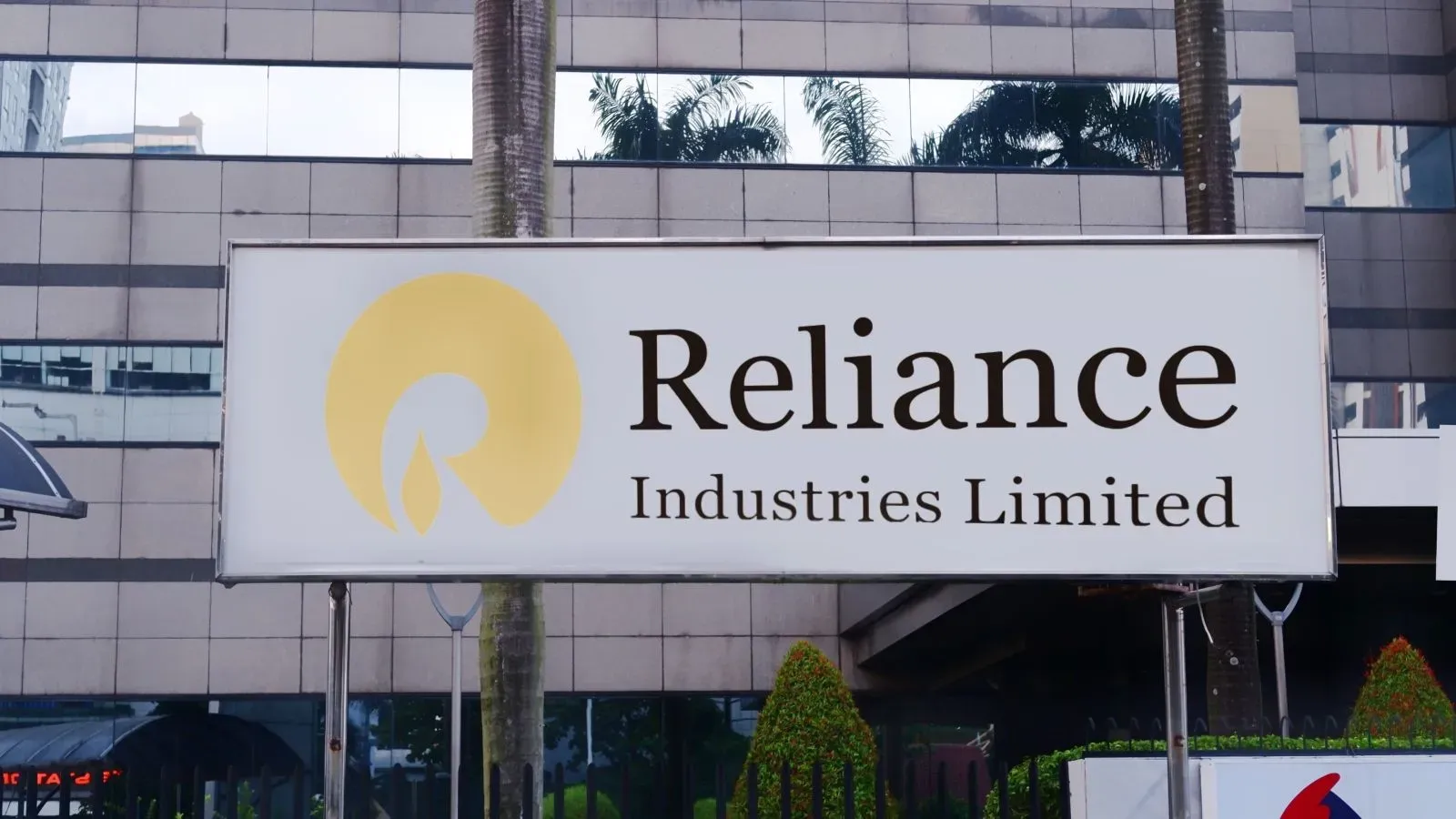
Reliance Industries shares dropped 4.1% during the intraday trading session on Friday, March 27, 2026.
Reliance’s M-Cap dropped around ₹80,000 crore to ₹18.32 lakh crore during Friday’s market session, compared to its Wednesday market close levels of around ₹19.12 lakh crore, according to the data collected from the NSE website. The stock market remained closed for trading operations on Thursday, on account of a scheduled holiday for Shri Ram Navami.
Reliance Industries shares tanked 4.23% to their intraday low level of ₹1,353.20 during Friday’s market session, compared to ₹1,413.10 at the previous market close, the NSE data showed. As of 12:45 pm, RIL shares were trading 4.13% lower at ₹1,354.80 on the stock exchange.
Shares of Reliance and other oil market companies (OMCs) have been in focus of the stock market investors in recent times due to the ongoing conflict between the United States and Iran, which risks the supply of oil to the Eastern Hemisphere. The conflict factor has been weighing down the overall investor sentiment in the market, with the rising crude oil prices due to geopolitical uncertainties.
Reliance also clarified via an exchange filing on March 26 that it rejects recent media reports alleging that the company has purchased crude oil from Iranian origin.
“The company categorically rejects recent media reports alleging the purchase of crude oil of Iranian origin. These claims are entirely baseless, factually incorrect, and misleading,” the company said in its official statement.
Export tax levy and excise duty
On March 27, Union Minister for Petroleum and Natural Gas, Hardeep Singh Puri, said that an export tax has been levied due to the skyrocketing global petrol and diesel prices. For OMCs exporting to foreign nations, this export tax is now mandated to be paid to execute their trade.
The oil minister also said that the central government has recorded a huge hit on tax revenues to ensure that the high losses for the OMCs are reduced during the sky-high crude oil prices in the global market. The tax revenue losses are to an entent of ₹24 per litre on petrol and ₹30 per litre on diesel.
While imposing an export tax, the government also reduced the excise duties in the domestic market, absorbing 30-40% of the losses of OMCs on auto fuels in an effort to provide relief to the companies amid high oil prices.
On March 26, the Finance Ministry said that the government has cut excise duty on petrol to ₹3 per litre, compared to the earlier ₹13 per litre level. The excise duty on diesel has but cut to nil from earlier ₹10 per litre levels.
Rising cost of oil
According to the Petroleum Planning & Analysis Cell data, crude oil prices (Indian basket) have touched $123.15 per barrel due to the supply crisis caused by the trade disruption on the Strait of Hormuz.
The Indian crude oil basket refers to a price comprising sour-grade crude oil from Oman and Dubai, along with sweet-grade crude oil from Brent, which is used (at a 78.71:21.29 ratio) in the Indian refineries. Hence, this basket shows the actual cost of crude oil for India.
Brent crude oil futures were trading 0.90% higher at $102.73 per bbl as of 1:33 pm on Friday, compared to the previous commodity market close level of $101.89 per bbl, according to Investing.com data. Earlier during the day, the crude oil prices were trading near the $100 per bbl level after US President Donald Trump announced a 10-day energy strike pause on Iran’s key energy infrastructure.
Despite the military strike halts, the tensions remain heightened due to Iran’s key control over the Strait of Hormuz. This is also creating a sense of uncertainty for global investors, while also raising oil supply concerns in the market.
RIL share price trend
Reliance shares were trading 4.15% lower at ₹1,354.50 as of 2:02 pm on Friday, compared to ₹1,413.10 at the previous market close, according to NSE data.
Shares of Reliance Industries (RIL) have given stock market investors more than 35% returns on their investment in five years, and over 21% returns in the last three years. The company's shares have gained 5.99% in one year, but the stock has lost 14% on a year-to-date (YTD) basis in 2026.
RIL shares have lost 2.81% in one month, and are trading 4.21% lower in the last five sessions on the Indian stock market, according to exchange data.
Reliance stock hit its 52-week high at ₹1,611.80 on January 5, 2026, while the 52-week low level was at ₹1,114.85 on April 7, 2025. The company’s market capitalisation was trading around ₹18.31 lakh crore as of 2:06 pm on March 27.
About The Author
Next Story