
Market News
Movie tickets and popcorn cost 14% more. That is how PVR Inox's profit jumped 149%

5 min read | Updated on November 23, 2026, 09:40 IST

SUMMARY
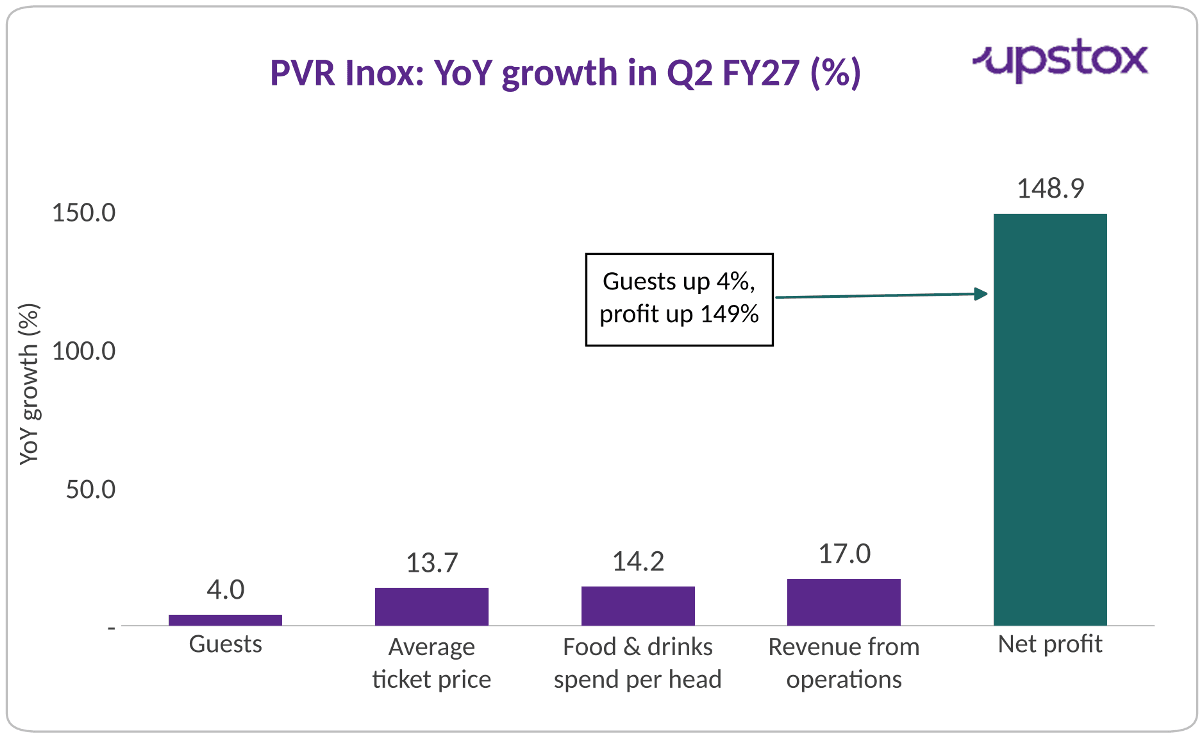
PVR Inox sold only 4% more tickets in Q2 FY27, but the average guest paid close to 14% more per ticket and spent about 14% more on food and beverages. Its costs rose much more slowly than its revenue, while interest and depreciation costs fell. As a result, a 17% rise in revenue turned into a 149% jump in net profit. The stock hit a new 52-week high on November 19.
Stock list

PVR Inox's footfalls rose 4% YoY to 46.3 million in Q2 FY27. | Image: Shutterstock
Going by PVR Inox's own averages, a family of four that watched a movie at one of its cinemas between July and September last year spent about ₹1,584, including snacks. This year, the same outing cost about ₹1,804. That is ₹220 more for a single trip to the movies.
Did the higher prices keep people away? PVR Inox's footfalls rose 4% YoY to 46.3 million in Q2 FY27. Its consolidated net profit attributable to shareholders rose 149% YoY to ₹263.1 crore, from ₹105.7 crore a year ago.
So most of the extra money came from the average visitor spending more on each visit, on both the ticket and the popcorn.
| PVR Inox scorecard | Q2 FY26 | Q2 FY27 | Change |
|---|---|---|---|
| Guests (million) | 44.5 | 46.3 | 4% |
| Occupancy | 28.7% | 30.4% | 1.7 percentage points |
| Average ticket price (₹) | 262 | 298 | 14% |
| Food and beverage spend per head (₹) | 134 | 153 | 14% |
| Revenue from operations (₹ crore) | 1,799.6 | 2,105.1 | 17% |
| Net profit attributable to shareholders (₹ crore) | 105.7 | 263.1 | 149% |
| Net profit margin on revenue from operations | 5.9% | 12.5% | 6.6 percentage points |
Where the extra ₹280 crore came from
In Q2 FY27, PVR Inox earned about ₹1,829 crore from tickets and food, compared with about ₹1,548 crore in Q2 FY26. That is roughly ₹280 crore more.
Now imagine that every guest had spent the same amount as a year earlier. The 4% rise in footfalls would then have added only about ₹63 crore. The remaining ₹218 crore, or about 78% of the increase, came from people paying more per visit.
So, is PVR Inox selling more tickets, or simply pricier ones?
Why the average ticket got costlier
This does not mean every ticket cost 14% more. Part of the increase came from what people chose to watch. Collections of English films in India rose 87% YoY to ₹1,024 crore in Q2 FY27, led by Spider-Man: Brand New Day at ₹608 crore. The Odyssey, which grossed ₹233 crore, drew strong demand for premium IMAX screens, where tickets cost more.
On the earnings call, management said about 60% of the rise in food and beverage spend per head came from higher value and about 40% from higher volume. Roughly 60% of these sales come from just two products, popcorn and Pepsi, and around 85% of people who walk in eat something at the cinema.
PVR Inox also runs cheaper offers, such as ₹99 weekday morning shows, ₹149 Friday first shows and front-row seats from ₹79. Even so, the average ticket price rose 14%.
How a 17% sales rise became a 149% profit jump
Many of a cinema's expenses, such as rent, salaries and electricity, have to be paid whether the hall is full or half empty.
In Q2 FY27, revenue from operations grew 17% YoY to ₹2,105.1 crore. Employee costs rose only 5%, and rent about 12%. Payments to film distributors and the cost of food rose at about the same pace as sales. Total expenses rose about 6%.
In rupee terms, revenue from operations rose by ₹305.5 crore, while profit before tax rose by ₹205.7 crore, from ₹145.1 crore to ₹350.8 crore. In other words, the rise in pre-tax profit was about two-thirds the size of the rise in revenue. The net profit margin on revenue from operations more than doubled from 5.9% to 12.5%.
Lower interest and depreciation also helped
PVR Inox repaid ₹258.6 crore of debt in H1 FY27 and ended September with net cash of ₹140.7 crore (excluding lease liabilities), even after a ₹300 crore share buyback. Finance costs, which include interest on leases, fell by ₹31.6 crore YoY.
Depreciation fell by ₹20.2 crore, helped by an accounting change that extended the estimated useful life of projectors and IT equipment. Management said the revision reduced depreciation expense by about ₹21.1 crore during the quarter.
Together, lower interest and depreciation account for about a quarter of the rise in pre-tax profit. The remaining three-quarters came from higher operating profit. Excluding the accounting change, and assuming the same 25% tax rate, net profit would still have risen by roughly 130%-135%.
Can prices keep running ahead of footfalls?
India's box office grew 23% YoY to a record ₹4,443 crore in Q2 FY27. PVR Inox's own ticket revenue rose 18%. Management attributed the gap to Hindi and regional films that did well in single-screen towns.
Results also depend heavily on the film calendar. In Q1 FY27, when no film crossed ₹500 crore at the box office, PVR Inox earned a net profit of ₹56.5 crore. On the call, management said it expects the upcoming big releases to support average ticket prices.
Ramayana: Part 1 released on November 5, and King, Avengers: Doomsday and Dune: Part Three are due in December. In November, Crisil Ratings and India Ratings both revised their outlook on the company to positive, citing better profitability and its move to net cash.
PVR Inox shares hit a new 52-week high of ₹1,747.75 on the BSE on November 19, almost double their March low of ₹900.05.
Conclusion:
Going by the chain's averages, a family of four spent about ₹220 more on a movie outing this year, yet footfalls still rose 4%. For PVR Inox, higher spending per guest did most of the work, and net profit grew 149%. The next test is simple. Will moviegoers keep paying more, and will there be enough big films to justify the spending? Q3 has Ramayana, already in theatres, and three December releases. Q1 FY27 shows the other side of the story: without a film like Spider-Man, net profit was ₹56.5 crore, compared with ₹263.1 crore in Q2.
About The Author
Next Story

