Market News
India-US trade deal: Textiles, IT services, and pharma among six sectors that stand to benefit the most as Washington cuts tariffs to 18%
.png)
4 min read | Updated on February 03, 2026, 07:51 IST


SUMMARY
India-US trade deal: In a post on Truth Social, Trump said India will reduce trade barriers to zero and will also stop buying Russian oil. An additional 25% tariff penalty imposed for Delhi's refusal to halt oil purchases from Russia will be waived.

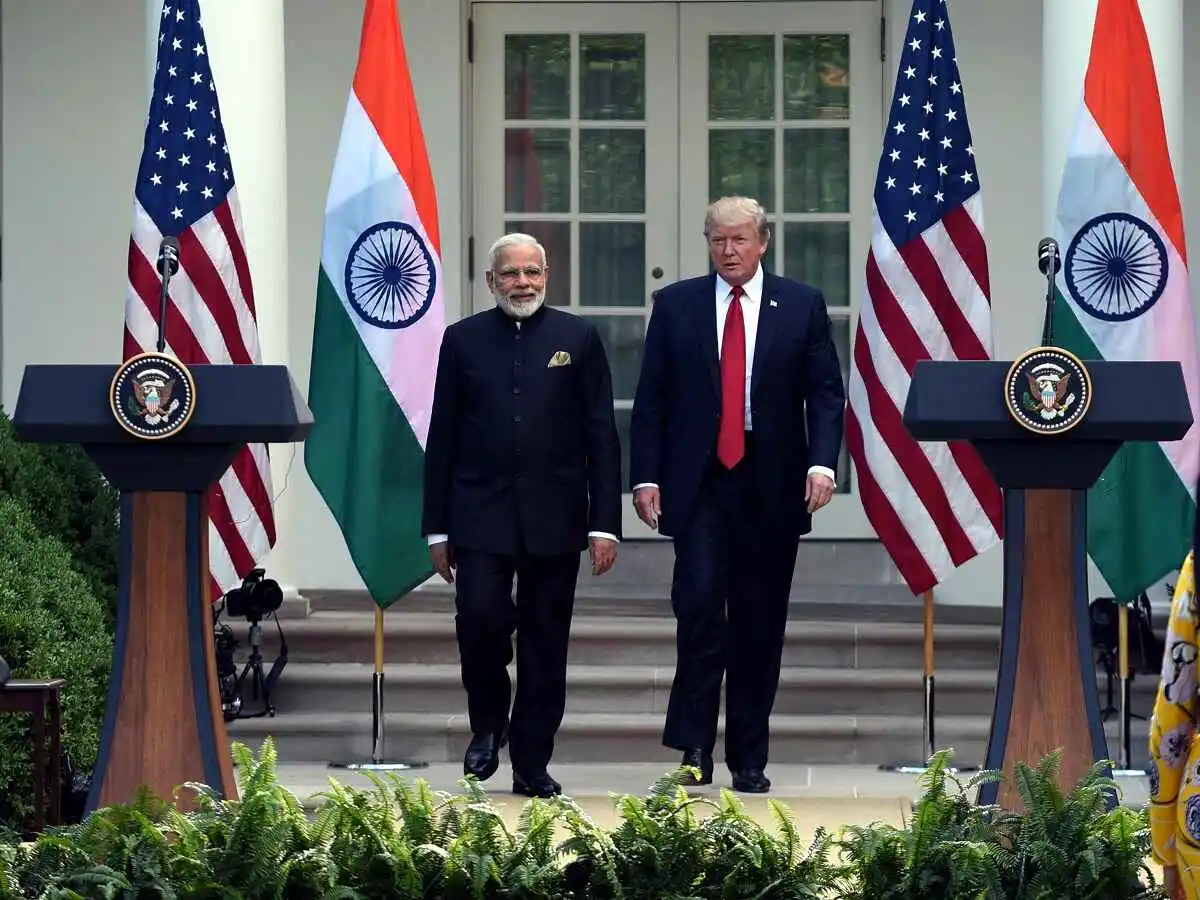
Market analysts say that the move is a welcome step and is likely to boost investor sentiment as well as the economy in a big way. | Image: Shutterstock
Further, the additional 25% tariff has also been dropped.
In a post on Truth Social, Trump said India will reduce trade barriers to zero and will also stop buying Russian oil. An additional 25% tariff penalty imposed for Delhi's refusal to halt oil purchases from Russia will be waived.
Union Minister Ashwini Vaishnaw on Monday said the India-US trade agreement is a win-win deal that will benefit citizens and industries of both countries.
In a post on X, Vaishnaw, the Union minister for information and broadcasting, said, "A trade deal between the US and India will lead to a brighter future for both countries."
"The India-US trade deal is a win-win deal. Citizens and industries of both countries will benefit greatly from this deal," he said.
Terming the US and India as the world's largest democracies and natural allies, the minister said, "Together, India and the US have huge potential to work for peace and development."
"The US and India have complementary strengths. Both countries can co-create technologies and co-develop solutions that will benefit the world," Vaishnaw added.
What market analysts say
Market analysts say that the move is a welcome step and is likely to boost investor sentiment as well as the economy in a big way.
Deepak Agrawal, CIO of Debt at Kotak Mutual Fund, said the reduction in tariffs on Indian exports to the US is indeed a welcome move, expected to boost India's economy.
"This development is likely to improve the country's balance of payments (BOP) gap, strengthen the rupee, increase foreign exchange (FX) reserves, and attract foreign institutional investors (FIIs) who had been waiting on the sidelines. Additionally, Indian equities have become more attractive as their valuation premium has narrowed over the past year," Agrawal said.
This positive macroeconomic outlook is also expected to keep interest rates stable.
Echoing similar views, Sonam Srivastava, Founder and Fund Manager at Wright Research PMS, said that the reduction in tariffs from 25% to 18% under the newly signed India–US trade deal is a meaningful positive for Indian equities, both from a sentiment and earnings visibility standpoint.
The sharp, nearly 800-point surge in GIFT Nifty reflects an immediate repricing of risk, driven by expectations of improved trade competitiveness, lower input costs for exporters, and stronger bilateral economic alignment between the two countries.
Sectors to benefit the most
From a sectoral lens, export-oriented segments such as IT services, textiles, pharmaceuticals, specialty chemicals, auto ancillaries, and select engineering goods stand to benefit the most.
Lower tariff barriers improve price competitiveness for Indian firms in the US market, which remains India’s largest export destination.
Over time, this could translate into better order inflows, margin stability, and higher capacity utilisation. Domestic manufacturing themes tied to global supply chain diversification also get reinforced.
What EEPC India said
EEPC India on Monday welcomed the announcement of a trade deal with the US under which Washington will lower the reciprocal tariff on Indian goods to 18% from the current 25% and said it could significantly boost engineering shipments.
“While the detailed contours of the agreement are yet to be made public, the Prime Minister’s message clearly mentioned lower tariffs for Made in India products, which is very good news,” EEPC India said, adding that the US remains India’s largest trading partner.
The engineering sector, which contributes nearly one-fourth of India’s total merchandise exports, is expected to be among the biggest beneficiaries of the trade deal.
EEPC India said the anticipated tariff relief could result in stronger-than-expected growth in engineering exports in the current financial year.
Macro level
At a macro level, the deal signals strategic continuity in India’s trade policy and strengthens India’s positioning as a preferred partner amid ongoing global trade realignments.
While the near-term market reaction is understandably sharp, sustainability will depend on execution, sector-specific uptake, and whether earnings upgrades follow. Still, as a signal, this is a clear risk-on trigger.
Related News
About The Author
Next Story