Market News
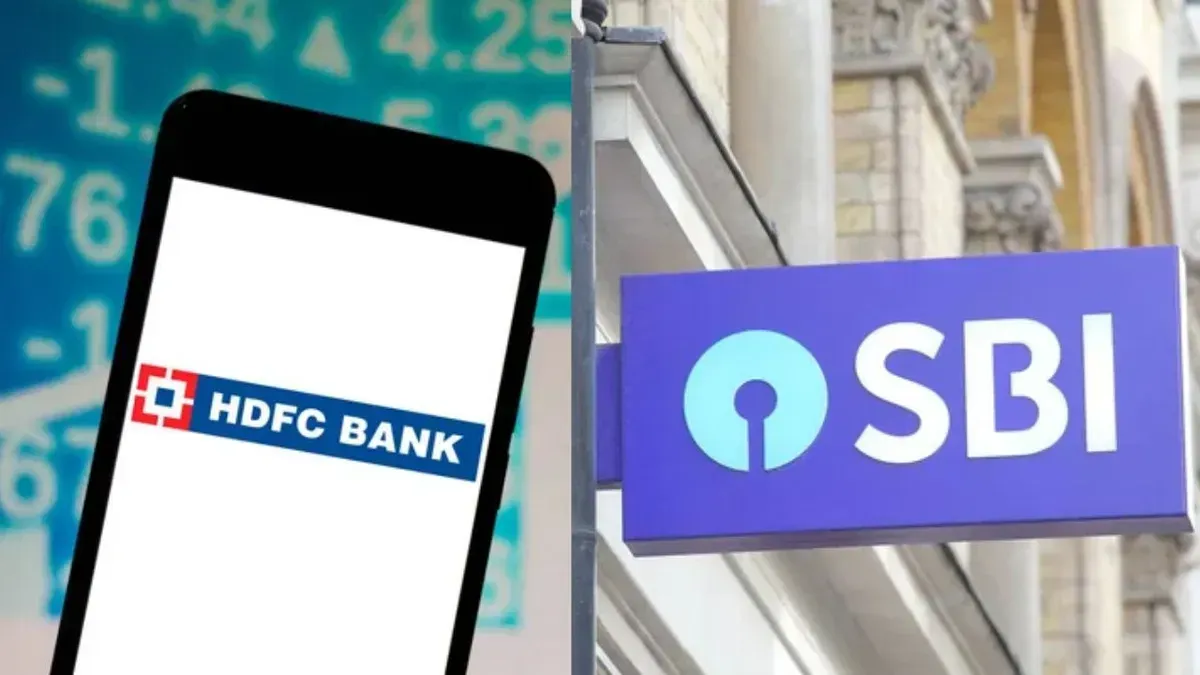
SBI vs HDFC Bank Q3 comparison: How both banks stack up on key metrics

4 min read | Updated on February 10, 2026, 09:18 IST


SUMMARY
SBI shares hit a 52-week high, reacting to strong quarterly earnings announced over the weekend. SBI competes with multiple banks in the domestic market, including private sector giant like HDFC Bank. SBI and HDFC Bank hold significant market share in the banking industry. Here’s a brief comparison of both banks based on their Q3 results.
Stock list
SBI Q3 net profit got a boost from a one-time special dividend from SBI Mutual Fund.
SBI shares are in the spotlight today following the strong quarterly results announcement. SBI stock rose over 6.5% intraday to hit a 52-week high of ₹1,139.70 apiece on NSE.
SBI Q3 results were announced on Saturday, February 7. The PSU bank reported its highest-ever standalone quarterly profit for the December quarter. Net profit stood at ₹21,028 crore, up 24.4% YoY, driven by strong growth in core income, improvement in asset quality and one-time special dividend of ₹2,200 crore from its subsidiary SBI Mutual Fund.
State Bank of India is one of the leading public sector banks and competes with private sector giants like HDFC Bank and others. Both HDFC Bank and SBI have a large pie of the Indian banking sector. HDFC Bank's market cap is around ₹14.4 lakh crore, while that of SBI is ₹10.49 lakh crore.
| Key metrics | SBI (in crore)* | HDFC Bank (in crore)* |
|---|---|---|
| Net interest income (NII) | ₹45,190 (▲9.0% YoY) | ₹32,615 (▲6.4% YoY) |
| Net profit | ₹21,028 (▲24.4% YoY) | ₹18,653 (▲11.5%YoY) |
| net interest margin (NIM) | 3.12% | 3.35% |
| Gross NPA | 1.57% (▼50 bps YoY) | 1.24% (▼18 bps YoY) |
| Net NPA | 0.39% (▼14 bps YoY) | 0.42% (▼4 bps YoY) |
| Gross advances | ₹46 lakh crore (▲15.1 YoY) | ₹28.44 lakh crore (▲11.9% YoY) |
| Deposits | ₹57 lakh crore (▲9.02% YoY) | ₹28.60 lakh crore (▲11.5% YoY) |
| Credit-deposit ratio | 72% | 99% |
As seen from the above table, SBI's Q3 net profit of ₹21,028 was higher than HDFC Bank's Q3 net profit of ₹18,653 crore. However, SBI's Q3 profit was boosted by a one-time special dividend of ₹2,200 crore from its IPO-bound asset management arm, SBI Mutual Fund. If the special dividend is removed, then SBI's Q3 net profit stands at ₹18,828 crore, which is at par with that of HDFC Bank Q3.
Net interest income (NII) and advances grow
SBI outperformed HDFC Bank in terms of net interest income (NII) and gross advances. PSU Bank reported NII of ₹45,190 crore, which rose by 15.1% YoY, while its gross advances rose 9.02% YoY to ₹46 lakh crore
Following robust growth in key performance metrics, SBI chairman CS Setty announced an upward revision in SBI’s loan growth guidance for FY26 to 13%-15%, from 12%-14%, citing a rebound in corporate lending and sustained momentum in the retail segment.
Meanwhile, HDFC Bank’s net interest income rose at a slower pace, rising 6.4% YoY to ₹32,615 crore, while gross advances jumped by 11.9% YoY to ₹28.44 lakh crore.
SBI and HDFC Bank Asset quality improves
Both banks reported improvement in asset quality during the third quarter. Gross non-performing asset (GNPA) of SBI declined 12.7% year-on-year to ₹73,637 crore, while the ratio stood at 1.57%, down 50 basis points compared to the year-ago period. Net NPAs fell 15.7% YoY to ₹18,012 crore or 0.39%, down 14 basis points. Provision stood at ₹4,507 crore, rising from ₹911 crore.
In absolute terms, HDFC Bank's gross NPA stood at ₹35,179 crore, while net NPA stood at ₹11,981 crore from 11,447 crore last year. Gross NPA and net NPA stood flat at 1.24% and 0.42%, respectively. Provision for the quarter stood at ₹2,837.9 crore.
Stock performance
So far in 2026, SBI stock has outperformed, rising over 16.2% till date, aided by robust business performance.
Meanwhile, HDFC Bank shares are down over 5% in 2026. Infact the stock was down six straight trading days in January as investors turned cautious amid concern about the high loan-to-deposit ratio (LDR). During the third quarter, HDFC Bank's LDR has gone up by 50 basis points to above 99%.
A high LDR means the bank is lending a large portion of the money it has received from depositors, which is good up to a certain point. However, if LDR remains very high for a longer period of time, then the bank may face liquidity issues, as it has less cash to meet withdrawals, and it may need to borrow money at higher costs to manage daily needs.
As per the RBI’s latest report, the banking system is currently having an LDR of 81.6%, which has increased steadily over the years because of the widening gap between the loan growth and deposit growth.
About The Author
Next Story