Market News
HDFC Bank shares fall for the third straight day, down over 5% this week; here’s why

4 min read | Updated on January 07, 2026, 15:00 IST


SUMMARY
HDFC Bank shares declined for the third straight day, falling 5% so far this week despite robust Q3 business updates. Investors have resorted to profit booking amid concerns about the high Loan-to-deposit ratio (LDR).
Stock list
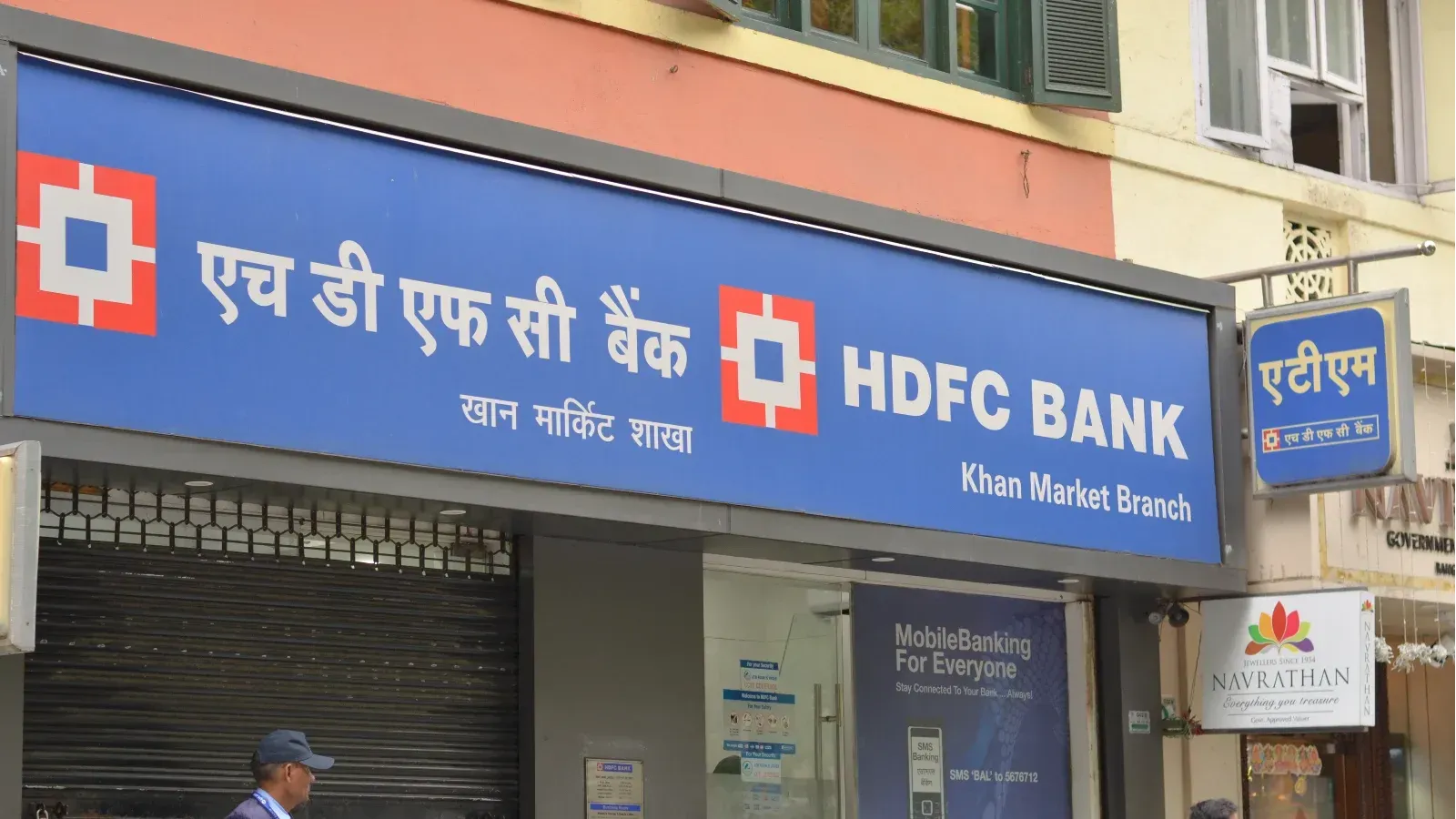
A widening gap between credit growth and deposit growth has led to a high loan-to-deposit ratio (LDR).
HDFC Bank is witnessing yet another lacklustre trading session today as the stock declined for the third straight day this week following the announcement of its Q3 business updates. At 1:00 pm, HDFC Bank shares traded at ₹948.4 apiece, down 1.43%, with a day low of ₹946 per share and a high of ₹956.45 on NSE.
HDFC Bank Q3 business update
On Monday, HDFC Bank reported an upbeat quarterly business update for the third quarter of FY26. HDFC Bank’s average advances under management rose 9% YoY at ₹28.63 lakh crore. Meanwhile, its gross advances stood at ₹28.44 lakh crore, reflecting a growth of 11.9% YoY.
Average deposits for the bank rose to ₹27.52 lakh crore, up 12.2% YoY, which includes CASA deposits of ₹8.98 lakh crore (up 9.9% YoY) and time deposits of ₹18.53 lakh crore (up 13.4%).
Loan-to-deposit ratio (LDR) concern
Despite strong business updates, HDFC Bank shares declined substantially as investors were concerned about the high loan-to-deposit ratio (LDR). During the third quarter, HDFC Bank's LDR has gone up by 50 basis points to 99.5%, as reported by CNBC TV18.
Loan-to-deposit ratio (LDR) is one of the key metrics tracked in the banking sector, which shows how much of a bank’s deposits is being used to give loans. It is calculated by dividing total loans by total deposits. For example, if a bank has ₹10,000 crore in deposits and gives ₹7500 in the form of various loans, then its LDR is 75%.
A high LDR means the bank is lending a large portion of the money it has received from depositors, which is good up to a certain point. However, if LDR remains very high for a longer period of time, then the bank may face liquidity issues, as it has less cash to meet withdrawals, and it may need to borrow money at higher costs to manage daily needs.
As per the RBI’s latest report, the banking system is currently having an LDR of 81.6% which has increased steadily over the years because of the widening gap between the loan growth and deposit growth.
Why LDR is rising consistently?
Domestic credit growth has seen a systematic rise in the last few quarters, especially after multiple rate cuts announced by the RBI. In 2025 alone central bank reduced the repo rate by 1.25% to its lowest level since July 2022. The rate cut has in general given a boost to new loan borrowings across various segments, and the recent GST cut and festive season have only added to more demand for loans like auto, gold and personal loans. As a result, domestic credit growth has remained near 12%.
Meanwhile, deposit growth has not been able to catch up with this loan growth demand as individuals are getting lower fixed deposit rates after multiple RBI rate cuts and also have the option of various other high-growth return assets compared to bank deposits.
Some experts believe a high LDR is not an alarming sign for the banking sector, as overall asset quality continues to remain stable for the segment. Also, the new liquidity coverage ratio could ease the LDR situation.
HDFC Bank block deal
HDFC Bank also saw a block deal today, wherein 1.80 crore shares of the lender changed hands. The block deal was worth around 1,756 crore as per media reports. However, the buyer and seller of the block deal were not available immediately. This block deal may also have triggered volatility in the stock price.
HDFC Bank stock performance
| 1-week | 1-month | YTD | 1-Year return | 3-Year return |
|---|---|---|---|---|
| ▼4.4% | ▼5.5% | ▼4.3% | ▲10.6% | ▲18.8% |
About The Author
Next Story