Market News
Five famous large-cap stocks that failed to give positive returns in five years; here is why

5 min read | Updated on March 13, 2026, 15:46 IST


SUMMARY
Indian markets have seen relentless selling since the start of 2026, and this has been aggravated recently in March. The major part of selling has pushed large-cap stocks into the negative territory and made their long-term returns flat-to-negative.
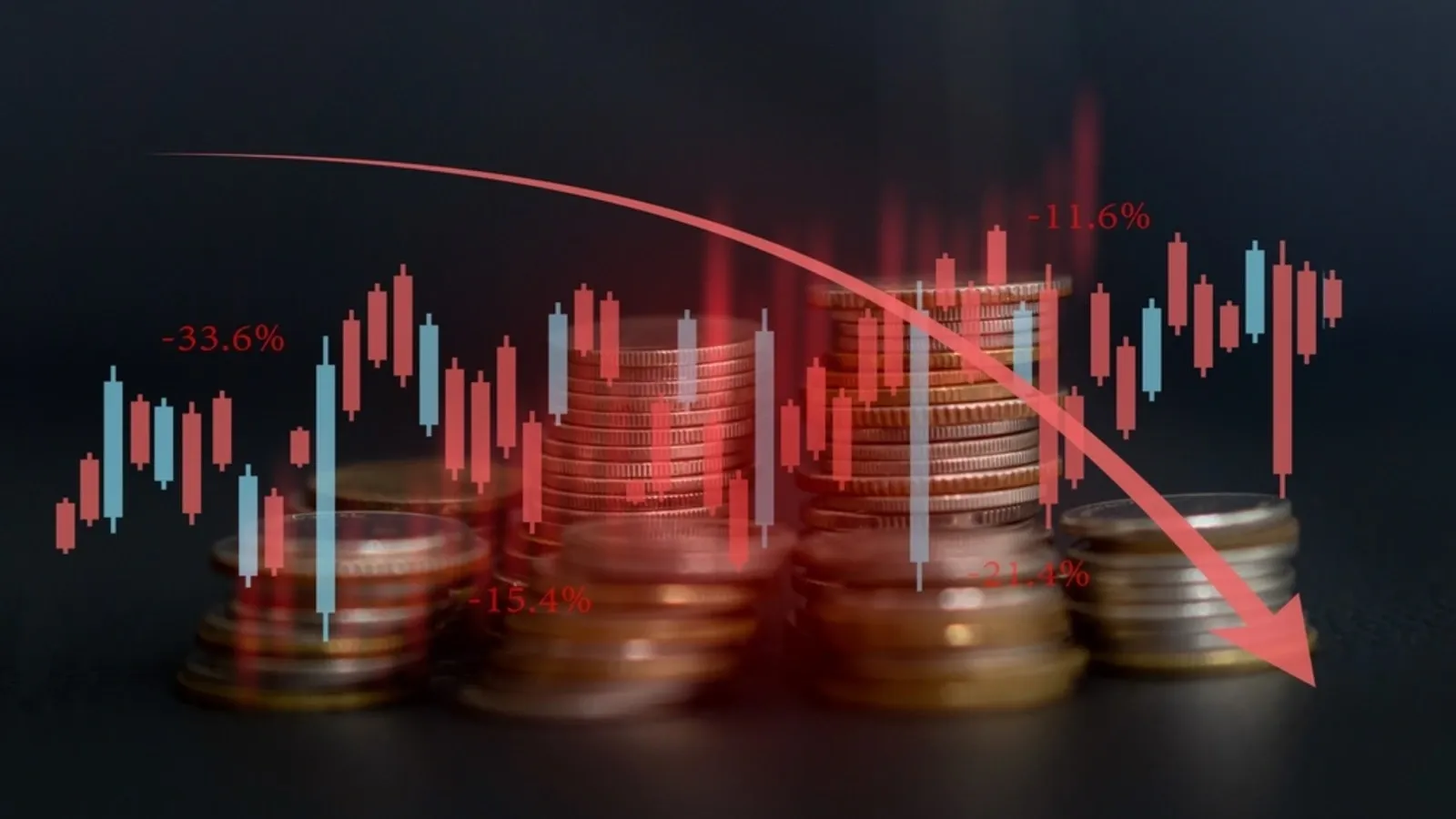
NIFTY50 fell 10% from the top amid escalating war tensions in the Middle East.
The Indian markets seem to have hit a roadblock after crude oil prices jumped over 60% since the war between Israel, the US and Iran broke out. The investors are unable to find any shelter amidst the broad-based selling in the Indian market, taking their portfolios in the downward direction. The conventional investing wisdom suggests that the large-caps or the megacaps are the best defensive plays in times like these. However, the investors didn't get any respite in the large-caps as they also felt immense selling pressure.
The widely known megacaps like Reliance Industries, HDFC Bank, Axis Bank, Infosys, TCS, Bajaj Finance, and L&T have fallen upto 15% since 2 March, leaving investors to face the brunt of the global turmoil. The high underperformance has tricked many long-term investors, as few stocks have delivered flat to negative returns for a period of five years.
Adani Green Energy Solutions
Shares of Adani Green Energy Solutions have delivered a -6% CAGR for a period of five years despite the company delivering robust bottom-line growth. During the same period, the bottom line showed a massive turnaround, growing from ₹60 crore net loss in 2020 to ₹2001 crore profit in FY25. However, the company’s debt levels remain elevated as the total borrowing rose from ₹14,866 crore to ₹88,153 crore in September 2025. Additionally, the shares also witnessed a reversion to their mean as the company traded with more than 1000x price-to-earnings in April 2022, which has since corrected down towards 84x, below the five-year median of 200x. Moreover, the company’s shareholding pattern also witnessed visible changes as the FII holding went down to 11.4% in December 2025 from 21.4% in March 2020.
Tata Consultancy Services
One of India’s top IT players, a top employer and a leading technology company, TCS has dismayed the investors with negative returns for five years. The company’s profitability growth has remained intact at 8% CAGR for the same period. The industry has been one of the top underperformers in recent months as the advancement in Artificial Intelligence has soured the investor sentiment towards them. The rise of AI is believed to be threatening the conventional business model of IT companies. Additionally, the investors have also argued that the company over these years have spent less on R&D in the field of AI and delivered heavy dividends consistently, thus missing out on the opportunity in the field of AI. In terms of ownership, the FIIs have trimmed their exposure to the stock from 15.74% in March 2020 to 10.3% in December 2025, highlighting the cause of underperformance.
HDFC Life Insurance
Shares of HDFC Life Insurance have delivered a -1.9% CAGR returns despite its strong profitability growth. The insurance sector is considered to be at the very early stages of growth as the population under insurance coverage still remains in single digits, as compared to double digits in the developed countries. Despite such tremendous potential, the shares have delivered 5% CAGR growth in profit after tax over five years, disappointing the investor expectations. Contrary to the broader trend of FII selling, the promoter group has diluted its stake in the company from 63.6% in 2020 to 50.2% in December 2025. The sharp decline in promoter holding over the five years signals lower confidence in the growth of the business.
Infosys
After TCS, another IT major is among the top five underperformers from the NIFTY50 index. Shares of Infosys are currently trading in May 2021 and delivered a -1.6% CAGR return for five years. The underperformance is largely driven by poor sentiment riding over the industry amid the rise of AI. From the record high levels of 1,948, the shares are now trading over 35% lower at ₹1,249 apiece on the NSE. In the past five years, the profitability grew by 10% CAGR vs the -1.5% returns in the same period.
Asian Paints
India’s largest paint manufacturer faces intense competitive pressure after the launch of Birla Opus in the recent past, and that has led to sharp drawdowns in the returns for its investors. The competition in the capacity and threat of losing market share has led investors to ignore the moats of the company. However, the industry too has witnessed sharp declines in demand and operational efficiency, with single-digit profitability growth at 8%. The company posted a subdued topline growth of -4% in FY25, for the first time in over a decade, which further underscored the soured investor sentiment of its shareholders. Furthermore, the FII’s gradual exit from 17.2% in 2020 to 12.7% in December 2025 has kept the stock price movement under check.
Key takeaway
Apart from the above five stocks, Vodafone Idea, Wipro, Kotak Mahindra Bank, Hindustan Unilever, HDFC Bank, LTIMindtree and Avenue Supermarts also underperformed the benchmark returns over the same period. The premium demanded in the valuation vanishes as the moats reduces when businesses mature. Most of the above listed stocks are going through similar period and face investor dissaopointment over slightest miss on the expectations.
Despite all these challenges, the index has delivered stellar returns over the five years period. The NIFTY50 rallied from 14,070 in March 2020 to 26,325 in December 2025, delivering more than 80% absolute returns and 13.3% CAGR in five years.
About The Author
Next Story