Market News
Paras Defence, Bharat Dynamics, BEL, HAL: Defence stocks rally on March 2 amid geopolitical tensions; key points to know

4 min read | Updated on March 02, 2026, 12:04 IST


SUMMARY
Defence stocks: Geopolitical tensions in the Middle East escalated sharply from Saturday following coordinated military strikes involving the United States and Israel against Iran, raising fears of a broader regional conflict.
Stock list
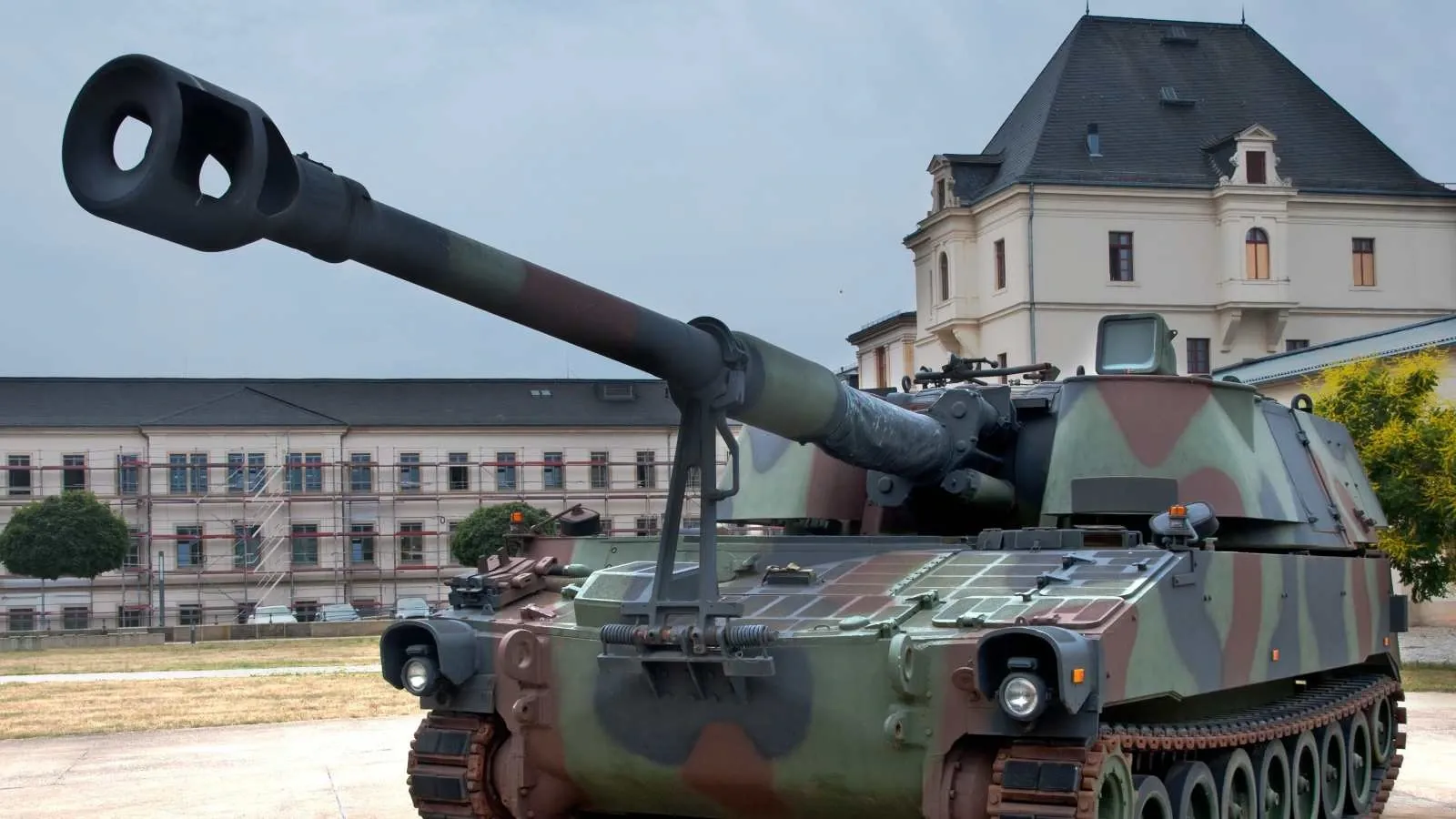
The Nifty India Defence index has jumped over 6% in the past one month and over 58% over the past 12 months. | Image: Shutterstock
The NIFTY India Defence index advanced by over 1.5% during the session. However, when last seen, the index traded 0.64% higher at 8,178.95 levels.
Out of 18 constituents in the index, nine traded in the green, and the remaining nine in the red.
The gainers included HAL, Paras Defence, BEL, Bharat Dynamics, and Solar Industries.
Paras Defence and Space Technologies shares traded around 10% higher at ₹699.30 apiece on the NSE, as the company has announced the incorporation of a new subsidiary named Paras Semiconductors.
Geopolitical tensions in the Middle East escalated sharply from Saturday following coordinated military strikes involving the United States and Israel against Iran, raising fears of a broader regional conflict.
The strikes led to the killing of Iran's Supreme Leader Ayatollah Ali Khamenei, escalating geopolitical tensions and deepening global economic uncertainty.
Israel launched a new wave of strikes on Tehran on Sunday, and Iran responded with more missile barrages, a day after the killing of Khamenei pitched the Middle East and the global economy into deepening uncertainty.
The escalation has unsettled global markets, pushing investors toward safe-haven assets such as gold while driving volatility in crude oil prices amid worries about supply constraints and wider economic fallout.
Defence stocks in India
The Nifty India Defence index has jumped over 6% in the past one month and over 58% over the past 12 months (as of the February 27 closing level).
The Nifty India Defence Index aims to track the performance of a portfolio of stocks that broadly represent the defence theme.
From the Nifty Total Market index, stocks forming part of eligible basic industries or those that obtain at least 10% of revenues from the defence industry are eligible to be included in the index and are chosen based on a six-month average free-float market capitalisation.
The weight of the stocks in the index is based on their free-float market capitalisation. Stock weights are capped at 20%.
India's defence sector: Latest updates
India's defence technology sector marked 2025 as a landmark year, recording its highest-ever annual capital inflow of $247 million (about ₹2,270 crore), according to a report by data intelligence platform Tracxn.
With this surge, the sector's cumulative funding milestone has reached $711 million (about ₹6,535 crore).
The report highlighted a significant shift in the ecosystem from exploratory venture deployments to "infrastructure-style conviction", characterised by larger cheque sizes and a focus on execution-driven capability.
India's defence tech sector has attracted $711 million in all-time equity funding across 232 rounds. Annual funding has risen from $5 million in 2016 to a peak of $247 million in 2025 YTD. Funding increased from $37 million in 2021 to $75 million in 2022, followed by $139 million in 2023 and $125 million across 42 rounds in 2024.
"Despite a lower number of rounds in 2025 YTD (30 rounds), total funding nearly doubled year-over-year, largely driven by Raphe mPhibr's $100 million Series B round. The number of annual funding rounds increased from 5 in 2016 to 42 in 2024, before moderating in 2025 YTD," Tracxn said.
The data indicated intensifying capital concentration, with top-five companies absorbing about 53% of all funding.
India-Israel ties
Last week, India and Israel elevated their "time-tested" relationship to a special strategic partnership and agreed to fast-track a long-awaited free trade deal even as Prime Minister Narendra Modi backed the Gaza peace initiative, asserting that humanity must never become a victim of conflict.
In his media statement after holding wide-ranging talks with Israeli Prime Minister Benjamin Netanyahu, PM Modi said India's security interests are directly linked to peace and stability in the Middle East and that New Delhi has been pitching for a peaceful solution to the conflict in Gaza.
Following the meeting between the two prime ministers, India and Israel inked a total of 17 agreements and documents that will provide for deeper cooperation in artificial intelligence, trade, investment, education, manufacturing, culture, maritime heritage, agriculture, and a plethora of other areas.
The two sides also vowed to expand their already close defence partnership by working towards joint development and joint production of military hardware under the framework of the transfer of technologies.
Related News


About The Author
Next Story