Market News
Wakefit IPO: Here’s how the company stacks up against Sheela Foam

5 min read | Updated on December 09, 2025, 07:49 IST


SUMMARY
Wakefit IPO opened for subscription today to raise ₹1,288.89 crore through fresh issue and offer-for-sale. The IPO will be open for subscription till December 10, followed by listing on December 15. The company competes with listed peers like Sheela Foam. This article explores the brief comparison of these two companies.
Stock list
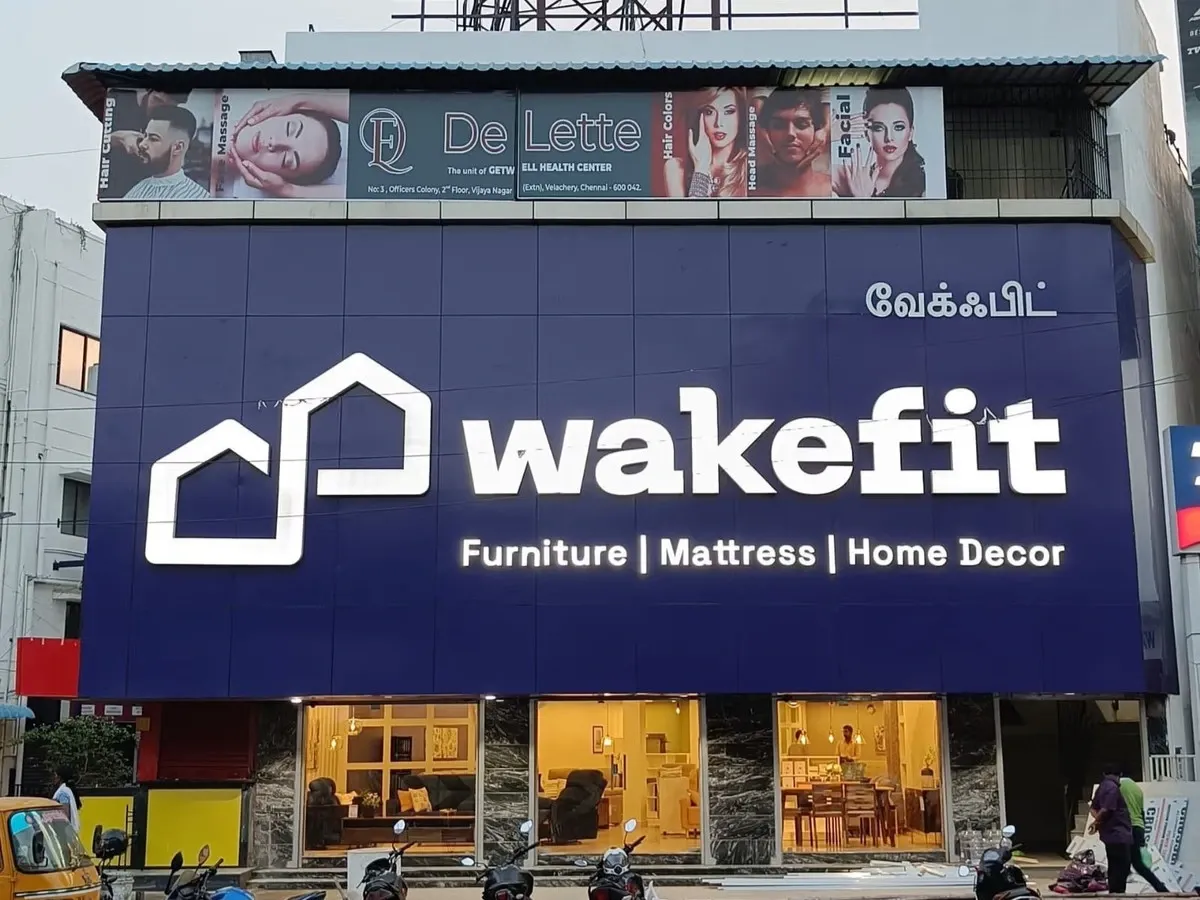
Wakefit IPO price band is between ₹185 and ₹195 per share with a lot size of 76 shares
According to the Redseer report, the company was the largest D2C company in terms of FY24 revenue in its category and the fastest homegrown player in the home and furnishings market among organised peers to achieve a total income of over ₹1000 crore in just nine years of operations.
The company is bringing its much-awaited IPO with an issue size of ₹1,288.89 crore. The public issue comprises a fresh issue of 1.93 crore shares worth ₹377 crore and an offer for sale of 4.67 crore shares of around ₹911.7 crore.
Wakefit IPO price band is between ₹185 and ₹195 per share with a lot size of 76 shares and a minimum retail outlay of ₹14,820 at the upper end of the price band. The issue will be open between 8 and 10 December, followed by tentative allotment on December 11 and listing on NSE and BSE on December 15.
Wakefit IPO net IPO proceeds will be used for business expansion with a clear focus on scaling its offline footprint. A significant share of the fresh issue is earmarked for new company‑owned stores, purchase of new equipment and machinery, as well as enhancing brand awareness.
Upon listing, Wakefit Innovations will compete with Sheela Foam, which is another listed company from the same industry.
Sheela Foam, incorporated in 1971, is a diversified comfort‑solutions leader selling mattresses and foam products under Sleepwell, Kurl‑on and the newer digital platform Furlenco, with a wide pan‑India reach and significant share of the organised mattress market.
Sheela Foam Vs Wakefit: Key metric comparison
| Key metrics | Wakefit Innovations | Sheela Foam |
|---|---|---|
| Market cap** | ₹6,373 crore | ₹6,404 crore |
| FY25 Revenue | ₹1,273 crore (▲29% YoY) | ₹3,439 crore (▲15% YoY) |
| FY25 profit/ loss | ₹35 loss | ₹97 crore (▼ 47.2% YoY ) |
| FY25 EBITDA | ₹90.83 crore (▲37% YoY) | ₹235 crore (▲12% YoY) |
| Number of stores* | 125 stores | 11,300 touchpoints |
| FY25 Mattress volume | 793,348 | 33,08,000 |
| Key brands | Wakefit | Sleepwell, Kurl-On, Furlenco, Feather Foam |
*Stores and touchpoints as of September 30, 2025 **Market cap based post-issue shares and price band
Sheela Foam consolidated revenue has risen from about ₹2,865 crore in FY22 to ₹3439 crore in FY25. The mattress segment registered an all-round volume growth of 11% and the foam segment grew by 8% in H1FY26. It showcased a healthy post‑pandemic recovery and a revenue from operations CAGR of nearly 2.02% in FY22–FY24. A core pillar of Sheela Foam’s strategy is acquisition-led consolidation to build a broader home-solutions ecosystem around its core mattress brands.
The company has acquired a substantial stake in House of Kieraya (parent of Furlenco) in multiple tranches, tightening its strategic control and enabling an omni-channel platform spanning premium mattresses, furniture sales and rentals, and strengthening its ability to compete with digital‑first challengers like Wakefit.
Financially, Wakefit remains on a robust growth trajectory: revenue from operations has risen from about ₹812 crore in FY23 to ₹1,273 crore in FY25, with H1FY26 revenue already at about ₹724 crore, underlining healthy momentum across mattresses, furniture and furnishings. The company has simultaneously built a sizable offline footprint, with its COCO regular stores expanding from 23 in FY23 to 125 as of H1 FY2026, helping it penetrate over 700 districts across 28 states and 6 union territories and strengthening its omnichannel proposition.
Overview of the Indian mattress industry
India’s mattress market is estimated at roughly ₹145–₹160 billion (about $1.7–1.9 billion) in CY24 and is projected to grow at about 10–12% CAGR by value through 2030, reaching approximately ₹270–₹300 billion ($3.2–3.6 billion). Cotton mattresses, which account for around 60% of market value today, are expected to decline toward roughly 49% by 2030 as consumers upgrade to foam, latex, hybrid and orthopaedic options. Foam mattresses, with a current value share of about 23%, are projected to rise toward 31% by 2030 on the back of better support, accessibility and branding.
Industry growth is being powered by rising health and sleep‑wellness awareness, urbanisation and premiumisation, especially in Tier‑2+ cities where cotton mattresses still dominate but consumers are steadily trading up. Organised and D2C players are innovating in hybrid and orthopaedic products, with the top eight metros contributing about 44% of the current market value, while Tier‑2+ cities are expected to grow fastest at roughly low‑double‑digit rates. Offline continues to be the primary purchase channel because buyers want to test products physically, but online and D2C platforms are rapidly gaining traction on the back of better financing and higher awareness.
Conclusion
India’s mattress and sleep‑solutions market is transitioning from an unorganised, cotton‑dominated space to a technology and brand‑driven consumer category, and the Wakefit IPO is a defining milestone in this journey. Sheela Foam offers scale, brand strength and steady execution, while Wakefit provides higher growth potential with relatively greater risk as it scales profitability. For investors, the IPO provides an opportunity to participate in a category undergoing structural upgrade, with portfolio choices guided by individual appetite for stability versus growth.
About The Author
Next Story